
Do Beagles Bark A Lot? How Noisy They Really Are at Home
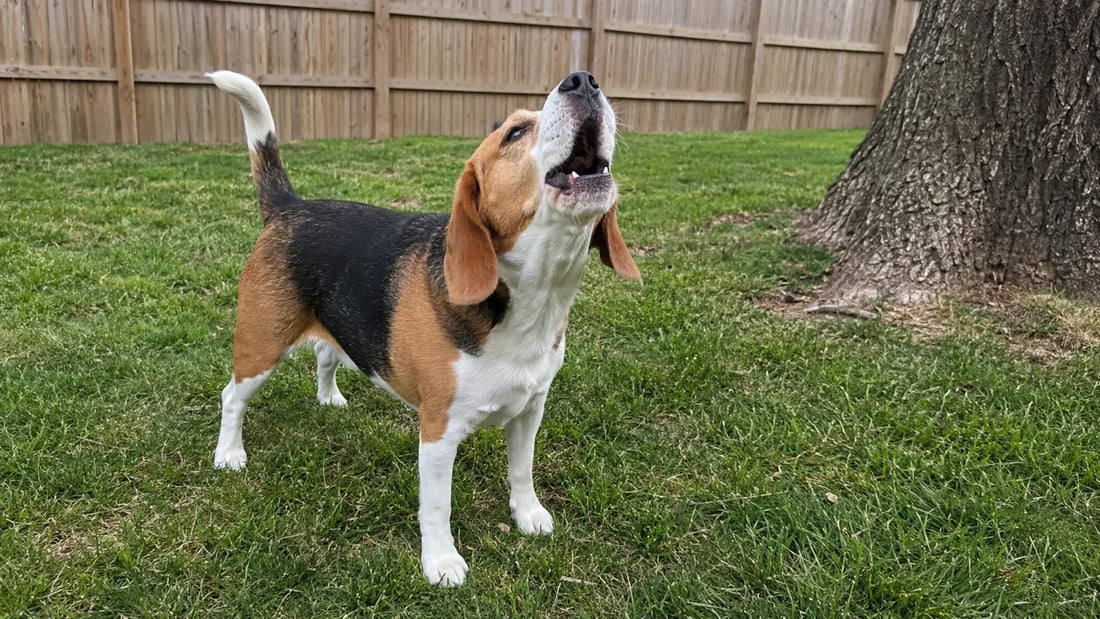
Yes, many Beagles are naturally vocal. The breed was developed as a scent hound, and using the voice helped people follow a working dog that was tracking game at a distance. Beagles commonly bark, howl, and make the drawn-out hound sound known as a bay. The American Kennel Club describes the Beagle as one of the more vocal breeds and identifies all three sounds as characteristic forms of communication.[1], [2]
That does not mean every Beagle will be noisy all day. Vocal behavior varies with age, temperament, health, training history, daily activity, and the home environment. The practical goal is not complete silence. It is a dog that can notice a trigger, respond briefly, and settle again.
Key points:
- Some barking, howling, and baying is normal for the breed.
- The sound alone does not reveal the cause. Timing, body language, location, and the events before and after the noise matter.
- Frequent barking is often linked to repeated triggers, boredom, frustration, attention seeking, fear, or difficulty being left alone.
- Management and reward-based training are more appropriate than shouting, intimidation, or electronic bark devices.[3]
- A sudden change in vocal behavior should be discussed with a veterinarian, especially when it appears with pain, confusion, restlessness, or other new symptoms.[4]
Do Beagles Bark More Than Many Other Dogs?
Many Beagles are more vocal than owners expect from a small companion dog. Their hunting background favored dogs with a useful, carrying voice. In the field, a hound's vocalization could help indicate that it had found and was following a scent.[1], [2]
Breed tendencies are only part of the picture. One Beagle may give a few alert barks and then relax, while another may continue barking at every person, dog, vehicle, or animal outside. A quiet individual is still a normal Beagle, and a highly vocal individual is not automatically untrainable.
| Usually within the normal range | Worth addressing |
|---|---|
| Brief alert barking at a visitor, unfamiliar sound, or movement outside | Barking that continues long after the trigger has passed |
| Occasional baying when an exciting scent is found | Repeated window, fence, or hallway barking throughout the day |
| A short howl in response to another dog, music, or a siren | Persistent howling during every absence or period of isolation |
| Excited vocalizing during play or before a walk | Noise accompanied by pacing, drooling, destruction, escape attempts, or inability to settle |
Frequency is not the only measure. Duration, intensity, the dog's emotional state, and the effect on daily life are more useful. Barking becomes a behavior problem when it is difficult to interrupt, appears to reflect distress, creates safety concerns, or regularly disrupts the household or neighbors.
Why Beagles Bark, Howl, and Bay
Scent hound heritage
Beagles were bred to locate and follow rabbit or hare scent. Their noses, stamina, and voices all supported that work. Baying is especially associated with hounds following or confirming a track, which explains why a powerful scent outdoors can produce a much bigger reaction than an owner expects.[1], [2]
Alerting to activity around the home
Doors, windows, balconies, fences, and shared hallways give a Beagle a steady supply of sights, sounds, and smells. Footsteps, delivery drivers, wildlife, another dog, or a vehicle stopping nearby can all prompt alarm barking. Blue Cross identifies visitors, doorbells, passing people, cats, and birds as common barking triggers.[5]
Boredom and unmet behavioral needs
A walk that focuses only on distance may not satisfy a scent-driven dog. Many Beagles benefit from time to sniff, investigate, search for food, learn short tasks, and chew appropriate items. Insufficient physical activity or mental stimulation can contribute to barking, while scent games, food toys, and training provide more constructive outlets.[4], [5]
Frustration and overexcitement
A Beagle may vocalize when prevented from reaching something interesting. Common examples include seeing a dog through a window, smelling wildlife beyond a fence, waiting for food, or being held back at the start of a walk. This is not always fear or aggression. It can be the sound of a dog whose arousal has risen faster than its ability to settle.
Attention and learned results
Barking can become effective from the dog's point of view. A person talks, looks over, opens a door, throws a toy, or serves food. Even scolding can provide attention. In other cases, the person outside eventually walks away, so the dog may conclude that barking made the intruder leave. Blue Cross notes that noisy owner responses can unintentionally reward attention-seeking barking.[5]
Difficulty being alone
Some Beagles bark or howl because they have not learned to remain comfortable alone. Others develop clinically significant separation distress. Persistent vocalization soon after departure, especially when paired with pacing, salivation, house soiling, destruction near exits, refusal of food, or escape attempts, deserves careful assessment. Merck Veterinary Manual recommends video because it can reveal whether the dog is distressed, reacting to outside triggers, or struggling with confinement.[4]
Health, pain, and age-related change
New or sharply increased barking should not be assumed to be a training issue. Pain, sensory decline, medical disease, anxiety, and cognitive changes can alter behavior. This is particularly important when an older dog begins vocalizing at night, seems disoriented, sleeps at unusual times, or becomes less able to settle.[4]
Beagle Barking, Howling, and Baying
Beagles can produce several types of vocalization, and the same sound can have different meanings in different situations. Use the sound as one clue, then consider what the dog was looking at, smelling, hearing, or trying to obtain.
| Sound | Common context | Useful first response |
|---|---|---|
| Bark | Visitors, movement outside, play, demand for attention, fear, frustration, or excitement | Identify the trigger, create distance if needed, and ask for a familiar calm behavior |
| Howl | Response to another sound, social contact, isolation, frustration, or separation-related distress | Check the context and look for additional signs of anxiety before deciding how to respond |
| Bay | Strong scent interest or the characteristic hound response associated with tracking | Interrupt before arousal peaks, move away from the scent when possible, and redirect to a controlled search task |
The volume or musical quality of a bay does not automatically mean the dog is suffering. Likewise, a simple bark can occur during genuine fear. Read the entire situation, including posture, facial expression, movement, recovery time, and whether the dog can still respond to food or familiar cues.
Start by Identifying What Triggers the Noise
Training is more effective when it targets the reason for the barking instead of treating every sound as the same problem. Keep a simple record for several days and note:
- The time and location
- What happened immediately before the barking
- Whether the trigger was visible, audible, or scent-based
- How long the vocalizing continued
- The dog's body language and ability to take food
- What people did in response
- What finally caused the barking to stop
For barking during absences, record the first 30 to 60 minutes after leaving. Do not rely only on what you hear from the hallway or what a neighbor reports. Video can show whether the dog settles, watches the window, reacts to building noise, paces continuously, or shows other signs of distress.[4]
This information helps separate several problems that can sound similar. A dog barking at passersby needs a different plan from a dog howling in panic after every departure.
How to Reduce Excessive Beagle Barking
The most reliable plan combines four elements: appropriate daily outlets, fewer opportunities to practice unwanted barking, reinforcement of calm behavior, and gradual training around the actual trigger. Veterinary behavior authorities recommend reward-based methods and environmental management rather than aversive techniques.[3], [4]
1. Meet physical and scent-related needs
Provide activity that suits the individual dog's age, health, and energy level. For many Beagles, a slower walk with generous sniffing time is more satisfying than a hurried route with constant leash pressure. Other useful options include scattering part of a meal in grass, hiding food around one room, using a food puzzle, practicing scent searches, offering safe chews, and holding several short training sessions during the day.
These activities do not guarantee silence, but they can reduce boredom and give normal searching behavior an appropriate outlet. Merck and Blue Cross both emphasize meeting behavioral needs, exercise, mental stimulation, food toys, and scent games as parts of behavior management.[4], [5]
2. Prevent repeated practice at windows, doors, and fences
Every full barking episode gives the dog another chance to rehearse the pattern. Management reduces those repetitions while training is still developing. Close curtains during busy periods, apply removable privacy film to lower windows, move furniture away from a favorite lookout, supervise yard time, and create a resting area farther from the front door. A fan or neutral background sound may also help mask hallway noise.
Blocking access to a trigger is not a failure. It is a standard behavior strategy that makes it easier for the dog to perform a calmer response.[3], [5]
3. Teach a specific alternative behavior
Instead of repeating "stop barking," ask for an action the dog already understands. Useful alternatives include going to a mat, touching a hand, finding scattered food, retrieving a toy, or moving with you to another room. Blue Cross specifically recommends familiar tasks such as going to bed or retrieving an item when door activity triggers barking.[5]
Practice the replacement behavior when the house is quiet. It should be easy and well rewarded before you expect it to work around a visitor, dog, or wildlife scent.
4. Reinforce the first calm choice
Watch for small moments of success. Your Beagle may notice a sound, turn toward the window, pause, and look back at you. Mark and reward that check-in before barking begins. If the dog has already barked, wait for a brief pause, then reward moving away, looking at you, or settling on a mat.
The timing matters. The goal is to reinforce quiet recovery and engagement with you, not to create a pattern in which a long barking performance is always followed by a treat.
5. Add a quiet cue gradually
A quiet cue is most useful after the dog understands that silence and disengagement can earn reinforcement. Begin in a low-distraction setting:
- Wait for a natural pause in vocalizing.
- Say the cue once in a calm voice.
- Mark and reward one or two seconds of silence.
- Gradually increase the required quiet time.
- Practice around mild triggers before using the cue in difficult situations.
Do not shout the cue repeatedly. A loud human voice can add more arousal, and punishment does not address fear, frustration, or separation distress. AVSAB recommends teaching desirable responses through reward-based methods instead of using pain, fear, or intimidation.[3]
6. Desensitize predictable sounds
Doorbells, knocks, elevators, and hallway footsteps can be practiced at a level that does not trigger barking. Play a recording very quietly, reward calm behavior, and increase the volume only while the dog remains relaxed. Blue Cross recommends this gradual process for sound-triggered barking.[5]
Real-life exposure should be controlled while you train. Ask visitors to text instead of knocking, or place a temporary note at the door. Progress is slower when the full-volume trigger keeps occurring between practice sessions.
7. Use a simple reset for window or door barking
- Call the dog away as soon as the trigger is noticed, before the barking becomes intense.
- Guide the dog to a mat or another area that blocks the view.
- Use a short food search, hand target, or toy retrieve, then reward calm behavior until the trigger passes.
If the dog cannot turn away, cannot eat, or immediately rushes back, increase distance and improve the visual barrier. Training cannot work well while the dog is too aroused to respond.
8. Build comfortable alone time in very small steps
For departure-related barking, do not use a "cry it out" approach. Begin with absences short enough that the dog remains calm, then lengthen them gradually. A camera helps confirm that the dog is resting rather than becoming distressed out of earshot. Food puzzles or special chews may help dogs with mild concerns, but a dog that is too anxious to eat needs an easier step and possibly professional treatment.[4], [6]
RSPCA guidance recommends gradual alone-time training, rewarding relaxed behavior, and returning to a shorter interval when the dog becomes anxious. Merck similarly recommends departures that remain below the dog's anxiety threshold.[4], [6]
9. Keep sessions short and consistent
Two or three minutes of successful practice is usually more useful than a long session that ends in frustration. Use the same cue words, household rules, and response plan. Improvement often appears first as a shorter episode, a faster return to calm, or an easier response to redirection. Those are meaningful signs of progress.
Common Mistakes That Can Make Barking Harder to Change
- Yelling over the dog: This adds noise and arousal. For attention-seeking behavior, it can also supply the attention the dog wanted.
- Punishing after the event: Scolding a dog when you return home does not teach what to do during the earlier absence and may increase anxiety around future returns.[6]
- Using electronic or intimidation-based bark control: AVSAB advises against aversive training methods because of welfare risks and recommends reward-based approaches for behavior problems.[3]
- Waiting until the dog is fully aroused: It is easier to redirect the first stare, ear lift, or rush toward the window than a prolonged barking episode.
- Relying only on more exercise: Physical activity matters, but a Beagle also needs opportunities to sniff, search, learn, chew, and rest.
- Expecting complete silence: Some vocalizing is normal for the breed. A realistic plan focuses on appropriate alerts, lower frequency, shorter duration, and faster recovery.
Can a Beagle Live Successfully in an Apartment?
Yes, but the address alone does not determine success. An apartment Beagle may do well when the dog receives regular outdoor activity, scent-based enrichment, gradual alone-time training, and protection from constant hallway or window triggers. A house with a yard can still be difficult if the dog spends hours rehearsing fence barking without supervision.
Before bringing a Beagle into a shared building, consider:
- How much outside activity and sniffing time you can provide each day
- How long the dog will be left alone
- Whether doors, windows, and hallways can be managed
- The building's noise rules and the sensitivity of nearby residents
- Whether you can arrange help while alone-time skills are developing
Blue Cross recommends limiting access to barking triggers and providing alternative activities. RSPCA guidance also stresses gradual alone-time training and avoiding periods of isolation that exceed the dog's current ability to cope.[5], [6]
When to Contact a Veterinarian or Behavior Professional
Arrange a veterinary assessment when barking or howling begins suddenly, increases sharply, occurs with signs of pain or illness, or is accompanied by nighttime confusion and changes in sleep. Medical causes and pain should be considered before treating a new behavior as disobedience.[4]
Professional help is also appropriate when:
- Vocalizing starts before departure or within minutes of being left
- The dog paces, drools, destroys doors or windows, soils the home, or tries to escape
- The dog cannot eat or settle when alone
- Barking is associated with intense fear, aggression, or risk of injury
- Consistent management and training have not produced improvement
- The household cannot keep the dog below its distress threshold during treatment
Start with a veterinarian. Depending on the findings, the next step may be a veterinary behaviorist or another qualified professional who uses reward-based methods. Serious anxiety can require a structured treatment plan that includes management, behavior modification, and, in some cases, medication prescribed by a veterinarian.[3], [4]
Frequently Asked Questions About Beagle Barking
Can Beagles be trained not to bark?
A Beagle can usually learn to bark less often, stop sooner, and respond to a replacement cue. It is not realistic to guarantee a completely silent dog. Barking and baying are normal parts of the breed's behavioral history.[1], [2]
Why does my Beagle howl when I leave?
The cause may be frustration, lack of practice being alone, a reaction to outside sounds, confinement distress, or separation-related anxiety. Record the dog after departure and look for pacing, drooling, destruction, house soiling, refusal of food, and inability to settle. Persistent distress should be discussed with a veterinarian.[4], [6]
What is the difference between barking and baying?
A bark is generally shorter and may occur in many contexts. A bay is a prolonged, resonant hound vocalization that is strongly associated with scent work and tracking. Beagles may also howl, which is usually more sustained than a typical bark.[1], [2]
Should I ignore my Beagle when it barks?
It depends on the cause. With attention-seeking barking, removing attention while reinforcing calm behavior may help. Ignoring a dog that is frightened, in pain, or panicking during an absence does not address the underlying problem. Identify the trigger first.[4], [5]
Why does my Beagle bark at night?
Possible reasons include outside sounds, wildlife scent, a need to eliminate, discomfort, anxiety, changes in routine, or age-related cognitive change. New nighttime barking, especially in a senior dog, warrants a veterinary discussion.[4]
Will a Beagle become quieter with age?
Some dogs become less active and easier to settle as they mature, but age does not remove scent drive or the breed's tendency to vocalize. Training, routine, health, and environmental management still matter.
What to Remember
Beagles often bark, howl, and bay because vocal communication is part of their scent hound background. The most useful response is not to suppress every sound. It is to determine why the dog is vocalizing, reduce unnecessary exposure to triggers, provide appropriate sniffing and enrichment, and teach a clear behavior that can replace prolonged barking.
For ordinary alert or excitement barking, management and consistent reward-based training can produce substantial improvement. For sudden behavior changes or vocalizing linked to panic, pain, or confusion, veterinary and professional behavior support should be part of the plan.
Sources
- American Kennel Club. Beagle Facts You May Not Know. Updated April 2, 2025. Accessed July 12, 2026.
- American Kennel Club. Why Do Dogs Howl?. Updated June 1, 2026. Accessed July 12, 2026.
- American Veterinary Society of Animal Behavior. Position Statement on Humane Dog Training. 2021. Accessed July 12, 2026.
- Merck Veterinary Manual. Behavior Problems of Dogs. Accessed July 12, 2026.
- Blue Cross. How to Stop Your Dog Barking. Accessed July 12, 2026.
- RSPCA. How to Train Your Dog to Stay Home Alone. Accessed July 12, 2026.
Share
Continue reading


