
How to Find the Right Size Urn (Cubic Inch Rule + Quick Size Chart)
Urn Size Guide
What Size Urn Do I Need? A Simple Urn Size Guide for People, Pets, and Keepsakes
To choose the right urn size, start with one practical rule of thumb: allow about 1 cubic inch of urn capacity for every 1 pound of body weight before cremation. A 60 lb dog usually needs about 60 cubic inches. A 150 lb person usually needs about 150 cubic inches. If you are between sizes, choose the larger capacity.
That formula answers most urn-sizing questions. The rest of this guide explains how urn capacity works, how to compare urn sizes online, what size urn to buy for a dog or cat, when a full-size adult urn is needed, and how keepsake, companion, scattering, and biodegradable urns fit into the decision.
Quick answer
Urn size needed ≈ body weight in pounds = cubic inches of capacity
- 40 lb pet: start around 40 cubic inches
- 80 lb dog: start around 80 cubic inches
- 150 lb adult: start around 150 cubic inches
- 200 lb adult: start around 200 cubic inches
Shop by capacity, not just exterior height or width. Outside dimensions matter only if the urn must fit a specific shelf, niche, or display space.
Urn size basics: capacity matters more than outside dimensions
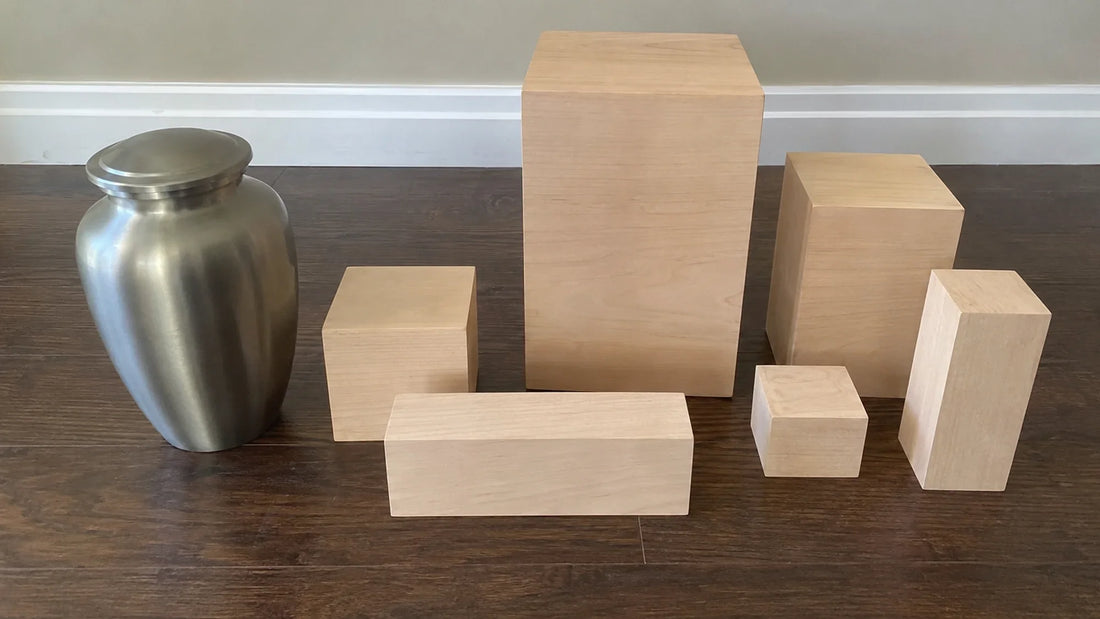
When most people ask, “What size urn do I need?” they picture height and width. But the number that matters most is the urn’s internal capacity—usually listed in cubic inches. That capacity tells you whether the urn can comfortably hold all of the ashes.
Two urns can look nearly identical on the outside and still hold very different amounts on the inside. Materials, wall thickness, internal shape, and decorative design can all change the usable space. That is why the safest way to shop is to find the product’s listed capacity, volume, or holds up to number before you buy.
Use both measurements when placement matters:
- Capacity tells you whether the urn will hold the ashes.
- Exterior dimensions tell you whether the urn will fit a shelf, mantel, cabinet, or cemetery niche.
If the urn is going into a columbarium or memorial niche, confirm the maximum outside dimensions with the cemetery before ordering.
The simple rule of thumb for urn sizing
For most situations, the easiest starting point is this: choose an urn with about 1 cubic inch of capacity for every 1 pound of body weight before cremation.
That rule is not exact in every case. Ash volume can vary slightly based on bone structure, body composition, and the cremation process. But it is accurate enough to guide most families toward the right urn size. When the math puts you right on the edge, sizing up is usually the lowest-stress option.
Quick urn size chart using the 1 cubic inch rule
If you want a fast answer, use the chart below. These examples follow the same rule of thumb: 1 pound before cremation = about 1 cubic inch of urn capacity.

| Weight before cremation | Suggested minimum capacity | Typical use case |
|---|---|---|
| 10 lb | 10 cubic inches | Cat or very small dog |
| 25 lb | 25 cubic inches | Small dog |
| 40 lb | 40 cubic inches | Medium dog |
| 60 lb | 60 cubic inches | Large dog |
| 80 lb | 80 cubic inches | Large dog |
| 100 lb | 100 cubic inches | Smaller adult or large pet |
| 150 lb | 150 cubic inches | Adult urn |
| 200 lb | 200 cubic inches | Full-size adult urn range |
These numbers describe capacity, not outside measurements. Always verify the listed cubic-inch capacity before purchasing.
How to choose the right size urn for a pet
Pet urn sizing is usually straightforward. Use your pet’s weight before cremation, match that number to the urn’s cubic-inch capacity, and size up when the listing is close.
Step 1: Find your pet’s weight
Use the most recent weight you have. A vet record is ideal, but an estimate is usually enough if you are close.
Step 2: Match weight to capacity
A pet that weighed 25 pounds will usually need an urn with about 25 cubic inches of capacity. A dog that weighed 80 pounds will usually need an urn with about 80 cubic inches.
Step 3: Buy for the real product listing, not the category label
Words like “small,” “medium,” and “large” vary from one store to another. The reliable number is always the listed capacity in cubic inches.
10 lb cat or toy dog
Start around 10 cubic inches. A slightly larger urn is still fine if you prefer the design.
25 lb dog
Look for about 25 cubic inches of internal capacity.
50 lb dog
Start around 50 cubic inches, and move up if the product is close to the limit.
80 lb dog
Look for about 80 cubic inches or a bit more for extra margin.
If you are deciding between two pet urn sizes, the larger option is usually safer. A little extra room rarely causes a problem. Too little capacity does.
How to choose the right size urn for a person
The same rule works for adult urns: about 1 cubic inch for every 1 pound of body weight before cremation. If the person weighed 180 pounds, begin with an urn that holds at least 180 cubic inches. If the person weighed 200 pounds, look for roughly 200 cubic inches or more.
Many full-size adult urns are listed around 200 cubic inches, which is why that number shows up so often in urn shopping. But the better approach is still to use the actual weight when you know it.
If you do not know the person’s weight: ask the funeral home or crematory what size urn they recommend. They can often tell you whether the temporary container already suggests a full-size adult urn, a smaller urn, or a larger capacity.
Do not forget the display or burial space
If the urn will be kept at home, the exterior size may matter for a shelf, mantel, or cabinet. If the urn will go into a columbarium niche, ask for the niche’s maximum outer dimensions before buying. Capacity tells you whether the ashes will fit; outside dimensions tell you whether the urn itself will fit.
Keepsake, companion, scattering, and biodegradable urn sizes
Not every urn is meant to hold all of the ashes. Some urns hold the full amount, while others are made for a portion only. The right choice depends on whether you plan to keep all of the ashes together, share them among family members, or scatter some and keep the rest.
Keepsake urns
Keepsake urns hold a portion of ashes, not the full amount. They work well when ashes will be shared among family members or when only a small amount will be kept.
Full-size urns
A full-size urn is designed to hold all ashes for one person or one pet. Verify the actual cubic-inch listing instead of relying on the words “full-size” alone.
Companion urns
Companion urns are made to hold two sets of ashes. Add the two weights together and use that total as your minimum capacity.
Scattering urns
If you plan to scatter all ashes, buy a full-capacity scattering urn. If you are scattering only part, match the urn to the portion you plan to scatter.
Biodegradable urns
Biodegradable urns can have thicker walls or a different shape, but the same shopping rule applies: buy based on listed capacity, not appearance.
Memorial boxes and keepsakes
If you want to store a tag, note, photo, or small collar with the ashes, a memorial box or an urn with a separate compartment is usually safer than forcing extra items into the main chamber.
Example: how to size a companion urn
If two pets weighed 30 pounds and 45 pounds, start with a companion urn that holds at least 75 cubic inches. If you want extra room, go slightly larger.
How to compare urn sizes online so the urn arrives as expected
Online shopping makes it easy to compare materials and designs, but size can feel abstract on a product page. These checks help you choose the right urn with less guesswork.
Look for these words in the product listing
- Capacity or volume
- Holds up to followed by a cubic-inch number
- Full-size, keepsake, companion, or scattering
- Exterior dimensions if placement space matters
Use capacity first, style second
It is natural to fall in love with a material or finish first. But the order that causes the least stress is the opposite: confirm the cubic-inch capacity first, then choose the color, engraving, shape, or design you like most.
When the listing does not show capacity, pause
If a product page only lists height and width, ask the seller for the internal capacity before ordering. Exterior dimensions alone do not tell you whether the urn will hold the ashes.
When you are between two sizes, choose the larger one
For example, if you need about 50 cubic inches and you are comparing a 45 cubic-inch urn and a 55 cubic-inch urn, the 55 cubic-inch option is usually the safer pick.
Common urn sizing mistakes to avoid
Buying by height alone
A taller urn is not always larger inside. Capacity is the number that matters most.
Trusting “small” or “large” labels
Those words are not standardized. Compare cubic inches, not category names.
Ignoring plans to divide ashes
Decide early whether you want a full-size urn, several keepsakes, or a combination of both.
Choosing the exact minimum
If the weight and capacity are close, a slightly larger urn reduces the chance of problems later.
Forgetting the display space
Capacity and outside dimensions are different. If the urn must fit a niche or shelf, verify both.
Not asking the crematory
If you are unsure, the funeral home or crematory can usually confirm the right size quickly.
Frequently asked questions about urn size
What size urn do I need for a 60 lb dog?
Start with about 60 cubic inches of capacity. If the listing is close or you want extra room, choose the next size up.
What size urn do I need for a 15 lb cat?
Start with about 15 cubic inches. Many families choose a slightly larger urn if they prefer the design or want a little extra room.
What size urn do I need for a 200 lb person?
A practical starting point is about 200 cubic inches of capacity. If you are comparing several adult urns, prioritize the ones listed at 200 cubic inches or above.
Is 1 cubic inch per pound always exact?
No. It is a dependable rule of thumb, not an exact guarantee. Ash volume can vary slightly, which is why sizing up is usually smart when you are between two capacities.
What size keepsake urn do I need?
Keepsake urns are made for a portion of the ashes, not all of them. Choose the keepsake size based on how much you want to keep and how many keepsakes you plan to fill.
Can I put a collar, tag, note, or photo inside the urn?
Sometimes, but not always. Many urns are sized closely to the ashes container. If you want everything together, a memorial box or an urn with a separate keepsake compartment is usually the better choice.
What if I do not know the weight?
Estimate as closely as you can, or ask the crematory or funeral home for guidance. They can often recommend the right capacity based on the temporary container or the cremation details.
What if I want to scatter some ashes and keep the rest?
Split the plan into portions first. Then choose a scattering urn for the amount you plan to scatter and a keepsake or display urn for the amount you plan to keep.
Bottom line: choose capacity first, then the tribute that feels right
Urn sizing does not have to be complicated. Start with the weight, match it to the urn’s cubic-inch capacity, and size up a little if you are unsure. Once you know the urn will hold the ashes comfortably, it becomes much easier to focus on the part that matters most: choosing something that feels like the right memorial.
The simplest approach is still the best one: 1 pound of body weight = about 1 cubic inch of urn capacity, then go slightly larger when in doubt.


