
How to Introduce Two Dogs Safely: A 7-Day First Week Plan + Common Mistakes
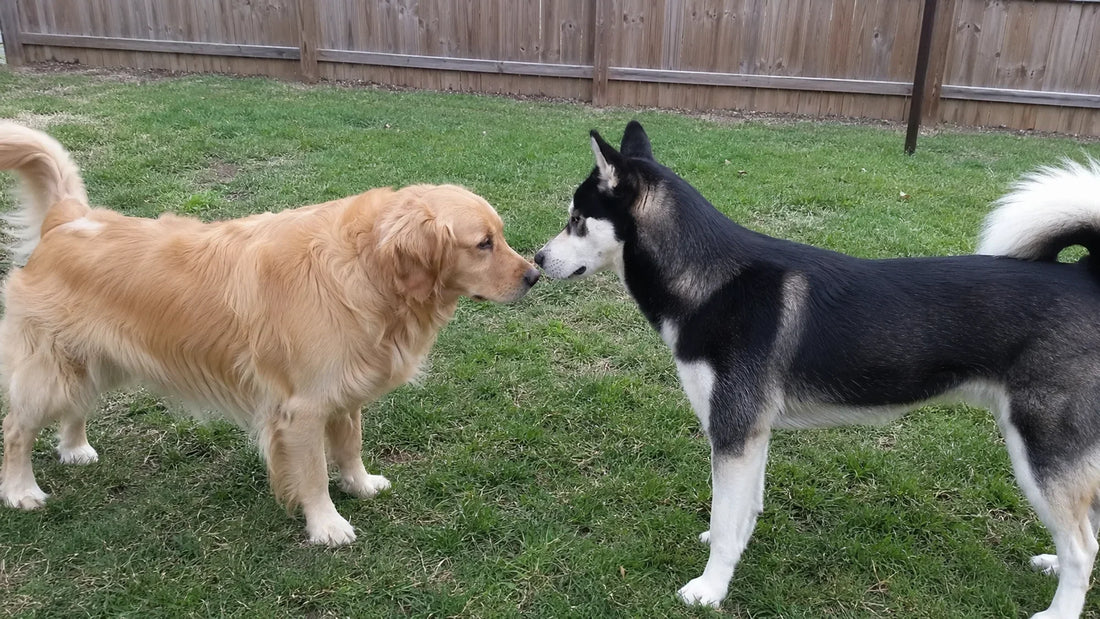
Introducing two dogs safely is not about creating an instant friendship. The first goal is much simpler: help both dogs feel secure enough to notice each other, move away when they need space, and share an environment without pressure.
The seven-day plan below is a set of checkpoints, not a deadline. Some dogs move through the steps in a week. Others need several weeks, especially if one dog is shy, highly excitable, older, recovering from stress, or inexperienced with other dogs. Stay at the current stage, or return to an earlier one, whenever either dog is unable to relax. Some dogs are happiest with structured coexistence rather than close play, and some dogs are not suitable housemates at all.[1][2]
Safety note: This article is for educational purposes only. This plan is intended for dogs with no known history of serious dog-directed aggression, damaging bites, or severe leash or barrier reactivity. If either dog has seriously injured another animal, repeatedly lunges or snaps at dogs, guards resources intensely, or cannot be handled safely around another dog, arrange an individual plan with your veterinarian and a qualified, reward-based behavior professional before allowing direct contact.[2][6]
Before the First Meeting: Check Health, History, and Risk
A careful introduction starts before the dogs see each other. Learn as much as possible about each dog's health and behavior. Ask the shelter, rescue, breeder, foster home, or previous caregiver about past fights, bite history, leash reactions, resource guarding, play style, comfort around dogs of different sizes, and any situations that caused fear or frustration.
Pain and illness can reduce a dog's tolerance. A dog with arthritis, an ear infection, dental pain, an injury, or another medical problem may react when crowded or bumped, even if that dog has previously been social. Sudden irritability or aggression should be discussed with a veterinarian before introductions continue.[6]
- Confirm preventive care. Review vaccination records, parasite prevention, and any recent illness with your veterinarian. Canine vaccine recommendations depend on age, health, lifestyle, location, and exposure risk.[5]
- Postpone the meeting if either dog is unwell. Do not introduce dogs while one has signs of a potentially contagious illness or is recovering from a painful condition.
- Use extra care with puppies. A puppy with an incomplete vaccine series should not be taken to a dog park or another high-traffic dog area. Ask your veterinarian to recommend a lower-risk meeting location, such as a clean private yard with a known healthy dog.[1][5]
- Consider physical compatibility. A calm large dog and a small dog may live together successfully, but a large size difference raises the consequences of rough play or conflict. Senior dogs, dogs with mobility limits, and small dogs may need shorter sessions and more protected rest.
- Do not introduce a whole group at once. If several dogs already live in the home, introduce the newcomer to one resident dog at a time. Each relationship needs its own assessment.
Prepare the Home Before the New Dog Arrives
Management prevents mistakes while the relationship is still new. Set up the home so the dogs can be together in controlled situations and completely separated when no adult is actively supervising.
- Create two secure zones. Each dog should have a separate room, gated area, pen, or comfortable crate if that dog is already crate-trained. A closed door provides the most reliable separation.
- Provide separate essentials. Give each dog a bed, water access, and a quiet place to rest. Space the resources apart and keep access routes open so neither dog can trap the other in a corner.
- Remove likely conflict items. Put away food bowls, bones, chews, food toys, favorite toys, and other high-value objects before shared sessions. Dogs may also guard beds, furniture, doorways, people, or stolen household items.[2][6]
- Feed behind closed doors. Separate feeding is the safest default during the first week. Pick up bowls before reopening the doors. Give chews and food-filled enrichment only while the dogs are securely apart.
- Control narrow spaces. Use gates and closed doors to prevent crowding in hallways, entryways, stair landings, and around exterior doors. Move one dog through a tight area at a time.
- Keep the first days quiet. Delay visitors, parties, grooming appointments, and other avoidable excitement. Keep children and other pets away from the introduction area so the handlers can focus fully on the dogs.
Equipment to Have Ready
- One capable adult handler for each dog
- A secure, well-fitted harness or collar that each dog already wears comfortably
- A regular fixed-length leash for each dog
- Small treats carried separately by each handler
- Baby gates, pens, or doors for separation
- Separate beds, bowls, and resting areas
- Current identification tags and up-to-date microchip contact information
Skip retractable leashes for the first meeting because they make slack and distance harder to control. Do not introduce unfamiliar equipment, such as a head collar or muzzle, on the day of the meeting. A basket muzzle can be valuable in some professional behavior plans, but it must be fitted correctly and conditioned positively in advance. It is not a substitute for distance, barriers, or supervision.
Read the Dogs' Whole Bodies, Not Just Their Tails
Dog body language must be read as a complete picture and in context. A wagging tail does not automatically mean a dog wants contact. Raised hair along the back shows arousal, but does not by itself prove aggression. Look at posture, movement, facial tension, the dog's ability to disengage, and what happened immediately before the behavior.[3]
Signs That Usually Support Continuing
- Loose muscles and soft, curved movement
- Soft eyes, a relaxed face, and a comfortably open mouth
- Ears and tail carried in a natural position for that dog
- Sniffing the ground, exploring, or looking away instead of staring
- Approaching in an arc rather than charging straight ahead
- Moving away voluntarily and returning only when comfortable
- Responding to the handler and recovering quickly after excitement
- Reciprocal play with pauses, role changes, and room for both dogs to leave
Signs to Pause and Create More Distance
- Freezing, sudden stillness, or a stiff upright posture
- A hard stare, tightly closed mouth, wrinkled muzzle, or forward weight
- A tail held very high and rigid, or a tail tightly tucked under the body
- Crouching, hiding, repeatedly turning the head away, or trying to leave
- Repeated lip licking or yawning when food or tiredness does not explain it
- Persistent following when the other dog is trying to escape
- Body blocking, repeated mounting, one-sided chasing, or pinning without release
- Growling, showing teeth, snapping, barking, or lunging in a tense interaction
Growling is information. Do not punish it. Scolding, leash corrections, forced pinning, shock collars, prong collars, and other aversive methods can increase fear and suppress warning signals without making the dog feel safer. The American Veterinary Society of Animal Behavior recommends reward-based methods for dog training and behavior modification.[4] Play growling can occur during loose, balanced play, but when there is any doubt, pause the interaction and assess both dogs before continuing.
The 7-Day First Week Plan
Advance only when both dogs meet the day's comfort criteria. A dog does not need to play to succeed. Calmly walking, resting, or ignoring the other dog can be a very good result.
Day 1: Meet on Neutral Ground
Goal: Calm awareness without forced contact.
- Choose a quiet outdoor location that neither dog strongly claims, with enough room to increase distance. Avoid dog parks, busy sidewalks, narrow trails, fenced entry pens, and areas crowded with unfamiliar dogs.
- Use one handler per dog. Begin walking in the same direction with the dogs roughly 20 feet apart, or farther apart if either dog is tense. Best Friends Animal Society recommends parallel walking and increasing distance when a dog pulls, stares, or becomes overly excited.[2]
- Keep the leashes loose whenever safety allows. Reward each dog separately for checking in with the handler, sniffing, and moving calmly.
- Gradually narrow the gap only while both dogs remain loose and able to disengage. If either dog freezes, stares, pulls hard, barks, hides, or tries to escape, widen the gap immediately.
- If both dogs remain relaxed, allow a brief sniff with slack leashes, then cheerfully call them apart and continue walking. Do not hold them nose-to-nose or force a greeting.
- End while both dogs are still calm. One successful short meeting is better than a long session that ends in overarousal.
If the outdoor meeting went well, move to a securely fenced yard or the largest uncluttered area available at home. Avoid crowding at the gate or front door by moving the dogs through narrow entrances one at a time. Keep the first shared home session brief, then separate the dogs so they can sleep, eat, and decompress. Dogs Trust advises close supervision during the first days and weeks, regular breaks from one another, and complete separation when supervision is not possible.[1]
Do not transport unfamiliar dogs loose together in a vehicle. Use separate vehicles when practical, or secure them in separate areas of the same vehicle.[2]
Ready for Day 2 when: Both dogs can walk within sight of each other without sustained fixation, can respond to their handlers, and settle after the meeting.
Day 2: Build Familiarity Without Pressure
Goal: Teach both dogs that the other's presence is predictable and does not remove access to safety, rest, or people.
- Repeat several short parallel walks at the distance that worked on Day 1.
- Let the dogs take turns exploring common areas while the other dog rests behind a closed door. This allows scent investigation without social pressure.
- If neither dog is barrier-reactive, allow brief visual access through a gate from several feet away. Reward calm behavior and move them apart before staring or barking begins. Do not encourage nose-to-nose gate greetings.
- Keep meals, chews, toys, and sleeping areas separate.
- Maintain each dog's normal walking, toilet, feeding, and rest schedule as closely as possible.
- Give each dog individual attention away from the other. The new dog needs time to bond with people, and the resident dog still needs predictable access to familiar routines.
Ready for Day 3 when: Both dogs can notice each other and then return to sniffing, walking, resting, or interacting with their handlers. They should not spend the session pacing, staring, barking at a barrier, or trying to hide.
Day 3: Share a Large Space for Short Sessions
Goal: Practice calm coexistence in the same area.
- Begin with a parallel walk, then move to a spacious yard or large room with two adults present.
- Remove food, toys, chews, favorite beds, and clutter before bringing the dogs together.
- Use loose leashes or lightweight house lines only under direct supervision. Do not allow lines to wrap around legs, furniture, or the other dog, and never leave a dog unattended while dragging a line.
- Let the dogs explore instead of asking them to sit close together for a photograph or greeting.
- Each handler may reward their own dog for relaxed behavior. Deliver treats directly and far enough apart to prevent competition. If either dog guards food, skip treats in the shared space and use distance, calm praise, or movement instead.
- End the session before either dog becomes tired or highly excited. Provide a full rest break in separate zones, then repeat only if both dogs recovered well.
Ignoring each other is not a problem. It often means the dogs feel less pressure. The first week is about building safety, not proving that the dogs will play.
Ready for Day 4 when: Both dogs can move around the same space with loose bodies, take breaks, and respond when called away.
Day 4: Add Brief, Carefully Managed Social Interaction
Goal: Allow short contact while preventing excitement from escalating.
- Start with the familiar parallel walk.
- If both dogs have repeatedly shown relaxed, polite behavior, allow a short interaction in a securely fenced, uncluttered area.
- If the dogs will play without leashes, remove the leashes only after the area is fully secured and both handlers are confident they can call the dogs apart. Loose or dragging leashes can tangle during fast play. If these conditions are not met, continue with the earlier on-leash plan.
- Pause play frequently, before the dogs become overexcited. Call them apart, reward them separately, and allow a brief reset.
- When both dogs voluntarily return with loose bodies, another short round may be appropriate. If one dog stays away, hides, seeks the handler, or does not re-engage, end the play.
- Interrupt repeated mounting, body slamming, cornering, relentless chasing, or any interaction that remains one-sided.
Dogs Trust and Best Friends both recommend moving at the dogs' pace, creating space when either dog appears uncomfortable, and using breaks to keep arousal from building.[1][2]
Ready for Day 5 when: Social contact remains loose and balanced, both dogs can disengage, and neither dog repeatedly pressures the other.
Day 5: Practice Calm Shared Routines
Goal: Help the dogs learn that living together includes resting, not only walking or playing.
- Continue at least one calm parallel or side-by-side walk, with enough space to keep the leashes loose.
- Set up separate resting spots in one large room. Begin far apart, with one handler near each dog.
- Reward quiet settling directly to each dog if food is safe in that context. Do not scatter treats between them.
- Practice moving through doors and hallways one dog at a time. Prevent rushing, crowding, and blocking.
- Continue feeding behind closed doors and giving all high-value chews separately.
- Keep furniture unavailable if either dog may guard a couch, bed, person, or favorite location.
- Schedule separate walks, training, play, and rest so neither dog must compete for every activity.
Ready for Day 6 when: Both dogs can settle in the same area for a meaningful period without staring, hovering, guarding, or repeatedly initiating unwanted contact.
Day 6: Extend Supervised Time Gradually
Goal: Add normal household activity while preserving safety and escape routes.
- Lengthen shared sessions in small increments rather than attempting one long session.
- Include ordinary low-key activities, such as an adult reading while the dogs rest in separate spots.
- Keep multiple beds and water stations available, with clear space around them.
- Give the dogs separate breaks before they become tired, irritable, or overstimulated.
- Practice each dog's recall, name response, and settle cue separately, then use those skills during calm shared time.
- Watch for new pressure around people, doorways, resting places, or dropped household items. Do not deliberately place a valued item between the dogs to test them.
- Continue separating the dogs whenever no adult is actively supervising.
Ready for Day 7 when: The dogs show a consistent pattern of loose movement, voluntary disengagement, quick recovery from excitement, and respect for each other's resting space.
Day 7: Review the Relationship and Plan the Next Week
Goal: Decide what is safe to expand and what still needs management.
Review the week using the following questions:
- Can both dogs move away without being followed or blocked?
- Can they share a room without constant monitoring of each other?
- Can they rest, not just play?
- If they play, are there pauses, role changes, and voluntary re-engagement?
- Can each dog respond when called away?
- Is there any freezing, hard staring, hovering, guarding, or one-sided pursuit?
- Do both dogs recover normally after a session?
- Are eating, sleeping, toilet habits, and normal behavior stable?
If the answers are consistently reassuring, continue lengthening supervised time during the second week. Keep meals and high-value items separate. Do not leave the dogs alone together simply because seven days have passed. There is no universal date when unsupervised access becomes safe. Some pairs need a long record of calm behavior, while others should always be separated when eating, chewing, or home alone.
If the answers are mixed, repeat the most recent successful stage. If either dog is becoming more fearful, more controlling, or more reactive, stop direct sessions and obtain professional guidance.
Manage the Resources Most Likely to Cause Conflict
Food and Treats
Feed the dogs in separate rooms behind closed doors. Pick up bowls before they reunite. During training, each handler should deliver rewards directly to their own dog. Avoid dropping a pile of food where both dogs can reach it. If either dog has a history of food guarding, use a professional plan rather than experimenting with shared feeding.
Toys and Chews
Keep toys, bones, chews, and food-filled enrichment out of shared spaces during the first week. Later introductions should be gradual and supervised, with more items than dogs and enough distance to prevent competition. High-value chews are usually safest when given separately, even after the dogs become friendly.[2]
Beds, Crates, and Furniture
Each dog needs a resting place that the other dog cannot invade. Do not expect dogs to share a bed or crate. Avoid allowing both onto a couch or human bed during the early period, especially if either dog guards resting spaces or people.
Human Attention
People can become resources. Keep greetings and affection calm, and avoid creating a crowd around one person. Give each dog regular one-on-one time in a separate area. Do not force the dogs to sit shoulder-to-shoulder while being petted.
Doorways and Hallways
Tight spaces reduce the ability to move away. Use gates, leashes, or trained stationing cues to move one dog at a time through narrow areas. Keep access to beds and water clear so one dog cannot block the other.
Common Mistakes When Introducing Two Dogs
- Treating the seven-day plan as a countdown. Progress should depend on behavior, not the calendar. Repeating a stage is safer than pushing forward.
- Bringing the new dog straight through the front door. A resident dog may feel more pressure when an unfamiliar dog suddenly appears in a valued home space. Begin outdoors in a quiet area and move inside only after both dogs are calmer.[1][2]
- Forcing a face-to-face greeting. Tight leashes, direct approaches, and prolonged nose-to-nose contact can increase tension. Parallel movement gives dogs more room to gather information.
- Using a dog park for the first meeting. Unfamiliar dogs, crowded gates, toys, and uncontrolled play add variables that handlers cannot manage.
- Assuming avoidance means failure. Looking away, sniffing, or choosing distance can be healthy communication. Do not push a dog back toward contact.
- Letting the dogs "work it out." Waiting for a conflict to settle the relationship can result in injury and lasting fear. Intervene at early signs of discomfort by creating space.
- Mistaking high arousal for friendliness. Pulling, frantic whining, nonstop chasing, and intense fixation are not the same as relaxed social interest.
- Leaving valuable items available. Food, chews, toys, resting places, dropped trash, and human attention can all trigger guarding.[6]
- Punishing growls or using force. Warning signals help prevent bites by communicating discomfort. Aversive tools and physical corrections can increase fear and worsen the association between the dogs.[4]
- Running sessions too long. Fatigue and overexcitement reduce self-control. Use brief sessions with substantial rest between them.
- Allowing one-sided play. Good play gives both dogs chances to pause, leave, chase, and be chased. End the interaction when one dog repeatedly tries to escape or is continually pinned or pursued.
- Leaving the dogs alone too soon. A quiet first day does not prove that the pair is safe around food, doorways, visitors, or accumulated stress.
- Ignoring pain, age, and size differences. A dog that is sore, frail, visually impaired, hard of hearing, or much smaller may need a more conservative plan.
- Using the same procedure for a reactive dog. A dog that barks or lunges on leash or behind barriers needs an individualized setup. Standard close greetings can make the reaction worse.[2]
What to Do If Tension Escalates
Respond early. At the first signs of stiffness, avoidance, staring, or unwanted pressure, calmly call the dogs apart and increase distance. Move them behind separate doors or secure barriers and allow enough quiet time for both to return to normal. Do not immediately repeat the same setup.
If either dog barks, lunges, snaps, or makes contact, end the session. Keep the dogs fully separated until a veterinarian or qualified behavior professional advises on the next step. Dogs Trust recommends immediate separation after significant signs of distress and professional guidance before another attempt when serious tension has occurred.[1]
If a fight starts, do not reach between the dogs, grab their collars, push them apart with your hands, or place your face near them. A highly aroused dog can redirect a bite toward the person who intervenes. The ASPCA specifically identifies attempted fight intervention as a common setting for redirected aggression.[6] Use distance and a solid physical barrier only if it can be placed without bringing a person within biting range. Once the dogs are apart, secure each one behind a closed door and prevent visual access.
Contact a veterinarian promptly after any bite or suspected injury, even when fur hides the skin. Seek medical care for any human bite. Do not attempt another direct introduction after a serious incident without professional help.
When to Get Professional Help
Stop do-it-yourself introductions and seek qualified support when:
- Either dog has caused punctures or more serious injuries
- There is repeated lunging, snapping, cornering, or sustained fighting
- One dog stalks, chases, or fixates on a much smaller dog
- Either dog guards food, toys, resting places, doorways, or people
- A dog panics on leash, at a gate, or when confined
- One dog cannot eat, sleep, toilet, or relax normally after sessions
- There are children, vulnerable adults, or other pets whose safety cannot be reliably managed
- The handlers are not confident they can maintain distance and separation
Begin with a veterinarian to rule out pain or illness. For complex aggression or severe fear, a board-certified veterinary behaviorist is the most appropriate specialist. A qualified behavior consultant or trainer may also help, but ask specifically about education and experience with dog-to-dog aggression, methods used, safety planning, and coordination with your veterinarian. Choose a professional who uses reward-based methods and does not rely on intimidation, flooding, alpha rolls, leash jerks, electronic collars, prong collars, or forced confrontation.[4][6]
Frequently Asked Questions
How long does it take for two dogs to get used to each other?
There is no reliable universal timeline. Social, well-matched dogs may relax quickly, while shy, stressed, adolescent, senior, or reactive dogs may need weeks or longer. Progress is measured by relaxed behavior, voluntary disengagement, and recovery, not by the number of days.
Should two dogs meet on leash?
For many social dogs, the safest first step is a parallel walk with one handler per dog and loose leashes. A tight leash can add frustration and change body language. Dogs with significant leash reactivity need a different plan developed with a qualified professional.[2]
Is growling always a bad sign?
No. Growling can occur in play, but it can also warn that a dog needs space. Look at the full interaction. Loose bodies, pauses, and balanced role changes are more reassuring than stiff posture, hard staring, avoidance, or one-sided pressure. Never punish a growl. Pause, create distance, and reassess.
Should the dogs sleep together on the first night?
No. Use separate rooms or secure zones. Nighttime supervision is limited, and a startled dog may react around beds, doorways, movement, or a person. Separate sleep also gives both dogs uninterrupted recovery time.
When can the dogs be left home alone together?
There is no standard day. Wait until there has been a sustained pattern of calm, conflict-free behavior across different situations, with no guarding or unwanted pursuit. Even then, begin conservatively. Some dogs should always be separated when no one is home or when food and chews are present.
What if the new puppy keeps bothering the adult dog?
Do not expect the adult dog to raise or discipline the puppy. Give the adult protected rest and provide the puppy with frequent naps, training, play, and enrichment away from the adult. Interrupt pestering before the adult must escalate. Puppies often need more breaks because they are still learning social cues.[1][2]
Is it a problem if the dogs ignore each other?
No. Peaceful indifference is often an excellent first-week outcome. Friendship may develop later, but safe coexistence is the priority.
A Safe First Week Is a Slow First Week
The best dog introductions are structured, calm, and easy to pause. Start with distance, use parallel movement, protect food and resting spaces, provide frequent breaks, and separate the dogs whenever active supervision is not possible. Reward relaxed behavior and respond to early discomfort instead of waiting for a growl, snap, or fight.
The goal is not to make two dogs interact. The goal is to create enough safety and choice that a workable relationship can develop at their pace.
This article provides general educational information and is not a substitute for veterinary care or an individualized behavior assessment.
Sources
- Dogs Trust: Introducing Your New Dog or Puppy to Your Current Dog
- Best Friends Animal Society: How to Introduce Dogs to Each Other
- RSPCA: Understanding a Dog's Body Language
- American Veterinary Society of Animal Behavior: Humane Dog Training Position Statement
- American Animal Hospital Association: 2022 AAHA Canine Vaccination Guidelines, Updated 2024
- ASPCA: Aggression in Dogs
Share
Continue reading


