
Puppy Potty + Crate Training Schedule by Age (8–16 Weeks): Week-by-Week Plan
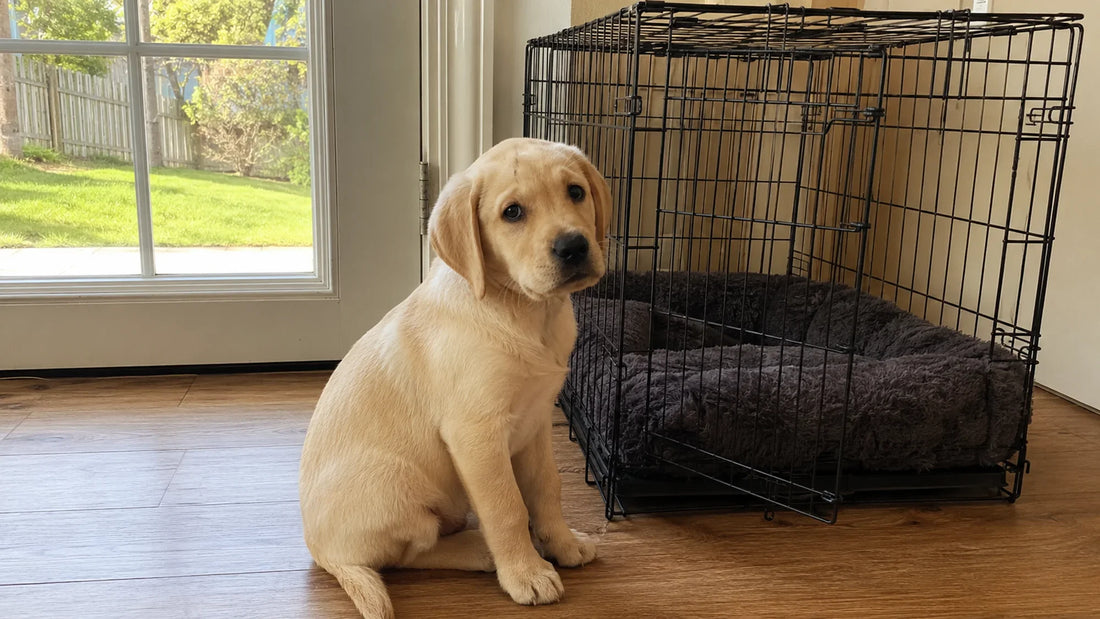
Puppy Potty Training Schedule and Crate Training Schedule by Age (8–16 Weeks)
Bringing home a new puppy is exciting, but house training can feel like a full-time job in the first few weeks. The good news is that most puppies learn much faster when you follow a simple routine: frequent potty breaks, immediate rewards, close supervision, and crate time that matches your puppy’s age and bladder limits.
Quick answer: Most 8-week-old puppies need a potty break every 30–45 minutes when awake, plus after every nap, meal, drink, play session, and crate session. By 12 weeks, many puppies can go 75–90 minutes between daytime breaks. By 16 weeks, many can handle 2–3 hours during the day and 6–8 hours overnight, although small breeds and very active puppies often need more frequent trips.
This guide gives you a realistic puppy potty training schedule, a crate training schedule for naps and nights, a sample daily routine, and practical fixes for accidents, crate crying, setbacks, and overnight wake-ups.

Puppy Potty Training Schedule by Age
Use the chart below as your default daytime potty schedule when your puppy is awake. Then add extra trips after the moments that almost always trigger a bathroom break: waking up, eating, drinking, play, training, excitement, and time in the crate.
Important: If your puppy has two accidents in one day, tighten the schedule the next day. Go out more often for a few days, then gradually stretch the time again once your puppy is successful.
| Age | Potty Breaks When Awake | Crate Nap Length | Overnight Expectation |
|---|---|---|---|
| 8 weeks | Every 30–45 minutes, plus after every event | 30–60 minutes | Usually 1–2 potty trips; many need to go every 2–3 hours |
| 9 weeks | Every 45–60 minutes | 45–75 minutes | Many still need a break every 2.5–3.5 hours |
| 10 weeks | About every 60 minutes | 60–90 minutes | Often 3–4 hours between breaks |
| 11 weeks | Every 60–75 minutes | 60–120 minutes | Often 3–4 hours between breaks |
| 12 weeks | Every 75–90 minutes | 90–120 minutes | Some can stretch to 4–5 hours; others still need one break |
| 13 weeks | About every 90 minutes | About 2 hours | Often 4–6 hours; one quick break may still be normal |
| 14 weeks | Every 90–120 minutes | 2–3 hours | Often 5–6 hours, depending on size and routine |
| 15 weeks | About every 2 hours, plus after events | 2–3 hours | Often 5–7 hours; some puppies begin sleeping through the night |
| 16 weeks | Every 2–3 hours, plus after excitement and play | Up to 3 hours if your puppy is doing well | Many can handle 6–8 hours, but some still need a break |
Smaller puppies, toy breeds, and highly active puppies often need more frequent potty breaks than the chart suggests. Use this schedule as a starting point, then adjust based on your puppy’s success.
The Potty Training Rules That Matter Most
1. Follow event-based potty trips, not just the clock
Even a good schedule will fail if you skip the moments puppies almost always need to go. Take your puppy outside:
- Right after waking up in the morning
- Right after every nap
- Right after eating or drinking
- After playtime or training
- After time in the crate
- Right before going back into the crate
- Right before bedtime
2. Keep potty trips calm, short, and boring until the job is done
Go to the same potty spot each time, stand quietly, and give your puppy 5–10 minutes. If nothing happens, go back inside and supervise closely. Try again in 10–15 minutes. This helps your puppy learn that outside first means potty, not a bonus play session.
3. Reward immediately
The reward should happen within a few seconds of your puppy finishing. Calm praise and a small treat work well. Fast timing matters more than a big reward.
4. Add a simple potty cue
Once your puppy starts to understand the routine, say the same cue every time they begin to go, such as “go potty.” Over time, the cue can help your puppy settle and go faster before bed, before car rides, or in bad weather.
5. Learn your puppy’s early warning signs
Most puppies give clues before they have an accident. Watch for:
- Sniffing the floor suddenly
- Circling or pacing
- Wandering away from you
- Heading toward a familiar accident spot or the door
- Stopping play and looking distracted
Before You Start: Set Up Your Home for Faster Progress
Pick one potty spot and use it every time
Choose a small outdoor area where you want your puppy to go. Take them to the same spot for every potty trip. Consistency speeds up learning because your puppy begins to connect that location with the job.
Note: If your puppy is not fully vaccinated, ask your veterinarian which outdoor areas are safe. Many owners use a private yard or a low-traffic area while vaccinations are still in progress.
Create a puppy zone
In the first month, most accidents happen because puppies have too much freedom too soon. Use a crate plus a small puppy-safe area, such as a playpen or gated room. For the fastest results, your puppy is usually doing one of three things:
- Outside going potty
- With you and directly supervised
- Resting in the crate or puppy zone
Choose the right crate size
A crate should feel like a safe bedroom, not a place to be stuck for too long. It should be large enough for your puppy to stand up, turn around, and lie down comfortably, but not so large that they can sleep in one end and pee in the other.
Use the crate as a training tool, not a punishment
Feed meals near the crate, toss treats inside, and give your puppy safe chews or food puzzles during short crate sessions. A positive crate routine supports both potty training and rest.
Sample Daily Puppy Potty and Crate Training Routine
This example works well for many 10–12 week old puppies. Shift the times to fit your household, but keep the order and rhythm the same. The pattern matters more than the exact clock time.
| Time | What to Do |
|---|---|
| 6:30 AM | Wake up and go straight outside for a potty break |
| 6:45 AM | Breakfast and water |
| 7:00 AM | Potty break again 5–15 minutes after eating |
| 7:15 AM | Short play session or 5-minute training session |
| 8:00 AM | Potty break, then crate nap |
| 9:15 AM | Potty immediately after the nap |
| 9:30 AM | Supervised play in the puppy zone |
| 10:15 AM | Potty break, then quiet chew time or another short nap |
| 12:00 PM | Lunch for puppies still eating three meals a day |
| 12:15 PM | Potty break after lunch |
| 12:30 PM | Calm play, handling practice, or leash practice |
| 1:15 PM | Potty break, then crate nap |
| 3:00 PM | Potty after the nap, then supervised play |
| 5:30 PM | Dinner |
| 5:45 PM | Potty break after dinner |
| 6:00–8:30 PM | Family time, training, calm chew time, and potty breaks after play and excitement |
| 9:30 PM | Wind down, final potty break, then bedtime in the crate |
Bedtime tip: Keep the last stretch of the evening predictable. Potty, calm time, potty again, then bed. Predictable evenings reduce overtired zoomies, biting, and last-minute accidents.
Crate Training Schedule for Puppy Naps and Nights

Make the crate feel good from day one
Start with the door open. Toss a treat inside, let your puppy walk in and out, and repeat. Feed meals near the crate, then inside the crate when your puppy is comfortable. Short, positive sessions build trust much faster than forcing long confinement.
Use the crate for naps, not just nighttime
Puppies need a lot of sleep. Planned crate naps help prevent overtired behavior, mouthing, zoomies, and accidents. Many young puppies do best with a nap after 45–90 minutes awake.
Match crate time to bladder time
A crate supports house training because most puppies prefer not to soil their sleeping area. But it only works if you take your puppy out before they are desperate. Daytime crate sessions should stay within the limits in your age-based schedule.
Set up the crate near your bed at night
For the first few weeks, keep the crate close enough that your puppy can hear and smell you. This often helps them settle faster and lets you respond quickly if they wake up and truly need to go out.
Keep nighttime potty trips boring
If your puppy wakes and cries, take them straight out on a quiet leash, give them a chance to potty, reward if they go, and head right back to bed. No playtime, no bright lights, and no exciting interaction.
Safety note: Remove your puppy’s collar before crating, and make sure the crate has good airflow if you choose to partially cover it.
What to Do If Your Puppy Has an Accident
If you catch your puppy in the act
Stay calm. Interrupt gently, pick your puppy up if needed, and head straight to the potty spot. If they finish outside, reward immediately. If they do not go, supervise closely and try again in 10–15 minutes.
If you find the accident later
Do not punish your puppy. They will not connect punishment to something that happened earlier. Instead, clean the area thoroughly, tighten supervision, and increase potty trips for the next day or two.
Clean the right way
Use an enzymatic or pet odor cleaner that removes the scent fully. If the smell remains, many puppies will return to the same spot.
Troubleshooting Common Puppy Potty and Crate Training Problems
My puppy cries in the crate
Start with the basics: potty, hunger, thirst, temperature, and comfort. If those needs are covered, keep crate training short, positive, and consistent. Daytime practice with a chew or food toy often helps puppies learn that the crate predicts rest, not stress.
My puppy pees in the crate
This usually points to one of three issues: the crate is too large, your puppy stayed in too long, or your puppy went into the crate with a full bladder. Shrink the usable crate space, add a potty trip right before crating, and shorten the session for a week.
We were doing well, then progress fell apart
Setbacks are common during growth spurts, household schedule changes, travel, visitors, and exciting new environments. Go back to the last easy version of the schedule for 3–5 days, then build up again.
I work away from home
Young puppies should not stay crated for an entire workday. Use a safe puppy zone with a crate and exercise pen, and arrange for a midday potty break if possible. Preventing repeated accidents is much easier than undoing a bad habit later.
When to call your veterinarian
Talk to your vet if your puppy suddenly starts having frequent accidents after doing well, strains to urinate, seems uncomfortable, has diarrhea, drinks unusually large amounts of water, or cannot hold it for normal age-appropriate stretches. Medical issues can look like training problems.
When to Give Your Puppy More Freedom
The best rule is simple: freedom is earned. Expand your puppy’s world slowly after they are staying clean with their current routine.
- Add one small room at a time
- Supervise closely in every new space
- Use the crate or puppy zone whenever you cannot watch
- Go back a step if accidents start happening again
Signs your schedule is working
- Your puppy goes quickly once you reach the potty spot
- Accidents are rare and usually happen only when the schedule was missed
- Your puppy settles more easily for crate naps and bedtime
- You are starting to notice a more predictable potty rhythm each day
Frequently Asked Questions About Puppy Potty Training and Crate Training
How often should I take my 8-week-old puppy out to pee?
Most 8-week-old puppies need to go out every 30–45 minutes when awake, plus immediately after naps, meals, drinks, playtime, and crate time.
How long after eating will my puppy need to poop?
Many puppies need a potty break about 5–15 minutes after eating or drinking, which is why post-meal potty trips are so important.
Should I wake my puppy up at night to pee?
In the early weeks, many owners either set a quiet alarm or respond when the puppy wakes naturally. The goal is to prevent desperate nighttime accidents while keeping the trip boring and brief.
How long can a puppy stay in a crate at night?
At 8–10 weeks, many puppies still need a potty break every 2–4 hours overnight. By 12–16 weeks, many can stretch longer, but it varies by size, routine, and individual maturity.
What is the fastest way to potty train a puppy?
The fastest approach is to prevent accidents as much as possible: go out often, reward outside immediately, supervise closely indoors, and use the crate for short, well-timed naps and overnight sleep.
Why does my puppy keep having accidents after doing well?
Regression can happen after routine changes, excitement, growth spurts, extra freedom, travel, or illness. Go back to a tighter schedule for a few days and contact your vet if the change seems sudden or unusual.
The Bottom Line
A good puppy potty training schedule is really about rhythm and repetition. Take your puppy out before they are desperate, reward the right behavior right away, use crate naps to support rest, and keep freedom limited until success is consistent.
Most puppies make major progress between 8 and 16 weeks when their routine stays predictable. Focus on preventing accidents, not reacting to them. A few steady weeks of consistency now will make the rest of puppyhood much easier.


