
10 Reasons Your Dog Is Following You Everywhere
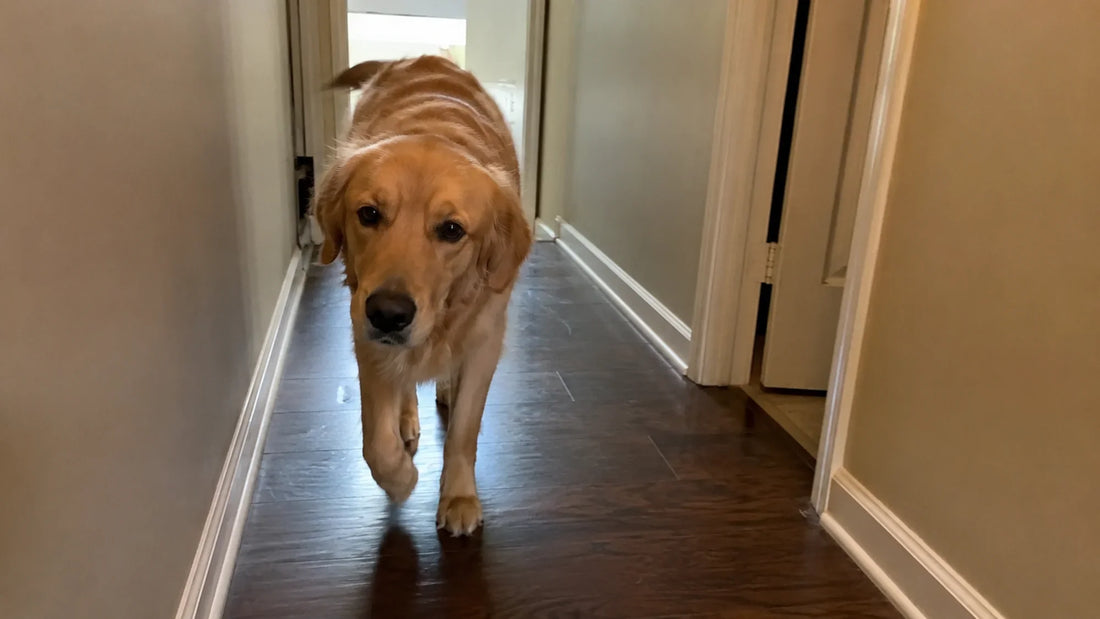
If you find yourself asking, “Why does my dog follow me everywhere?” the most likely explanation is simple: being near you feels safe, rewarding, and interesting. Dogs form attachment bonds with their caregivers, learn household routines, and repeat behaviors that lead to attention, food, play, or access to something they enjoy.
In most cases, a dog following you everywhere is normal. It becomes more concerning when your dog cannot relax without you, shows distress when you leave, or suddenly becomes much clingier than usual.
At a glance: A relaxed dog who chooses to stay close is usually showing attachment, habit, or anticipation. A dog who panics when separated may be dealing with fear, separation anxiety, pain, sensory loss, or another medical issue.
Is It Normal for a Dog to Follow You Everywhere?
Yes, often it is. Dogs can form strong, individual attachment bonds with their caregivers. Research has found an owner-specific “secure base effect,” meaning a familiar caregiver can help a dog feel secure enough to engage with the world.[1] Staying nearby can be a normal part of that relationship.
The key question is not simply, “Does my dog follow me?” It is, “Can my dog also relax when we are apart?” A dog can be affectionate and closely bonded without becoming distressed every time you step behind a closed door.
Following by itself does not diagnose separation anxiety. Look at the full pattern, including your dog’s body language, ability to settle, reaction to departure cues, and behavior when left alone.
Why Does My Dog Follow Me Everywhere? 10 Common Reasons
1. You Are Their Favorite Source of Comfort and Connection
Your dog may follow you because they genuinely enjoy being with you. You provide affection, communication, care, and a familiar presence. For many dogs, staying in the same room is an easy way to maintain social contact.
This does not necessarily mean your dog is needy. Some dogs express attachment through physical contact, while others simply lie nearby and keep track of where their person is. Both can be normal. Following is also not evidence that your dog is trying to control the household or that you need to become an “alpha.”
2. Being Close to You Helps Them Feel Safe
Dogs often seek a trusted person when something feels uncertain. A thunderstorm, construction noise, unfamiliar guest, move, new pet, schedule change, or recent trip can make a normally independent dog stay closer than usual.
Watch the rest of the body. Pacing, panting when the room is cool, trembling, drooling, hiding, refusing food, or an inability to settle suggest that your dog may be looking for reassurance rather than casual company.[3]
3. Following You Has Been Rewarded
Dogs repeat behaviors that work. When your dog follows you into the kitchen, perhaps a crumb appears. When they trail you to the sofa, they receive petting. When they follow you to the door, a walk begins.
You may have reinforced the behavior without realizing it. The Merck Veterinary Manual notes that normal but unwanted behaviors can develop through inadvertent reinforcement.[2] Even eye contact, conversation, or a gentle touch can be rewarding to a social dog.
This is not manipulation. Your dog has simply learned that staying close often predicts something pleasant.
4. They Know Your Routine
Dogs become skilled observers of household patterns. They notice when you reach for a certain pair of shoes, pick up your keys, walk toward the food bin, or finish a familiar part of your morning routine.
Your dog may follow because they expect breakfast, a walk, playtime, a car ride, or your usual evening spot on the couch. Sometimes the behavior becomes more obvious near a scheduled activity because your movement is full of clues.
5. They Are Trying to Tell You Something
A dog who suddenly appears at your heels may have a practical request. They might need to go outside, want fresh water, be ready for a meal, have a toy stuck under furniture, or be alerting you to a sound near the door.
Pause and check the basics before assuming the behavior is emotional. Has your dog had a bathroom break? Is the water bowl clean and full? Is it close to the usual meal or walk time? Are they leading you toward a particular place?
If the following is new and your dog also seems restless, withdrawn, sore, unusually tired, or uninterested in food, the message may be that they do not feel well.
6. They Are Curious, and It Has Become a Habit
From your dog’s perspective, people are often the most interesting part of the house. You open doors, move objects, prepare food, go outside, greet visitors, and create new smells and sounds. Getting up to follow you may be more appealing than staying in the same spot.
Repetition can turn curiosity into a strong habit. If your dog has followed you every time you stand up for several years, they may do it automatically, even when they were sleeping comfortably a moment earlier.
7. They Need More Physical or Mental Activity
Sometimes a dog follows because nothing else is happening. Following you gives them movement, novelty, and the possibility of interaction.
Exercise needs vary with age, health, breed, and personality, but dogs generally benefit from a mix of physical activity, sniffing, play, training, and problem-solving. PDSA notes that walks, play, mental exercise, and reward-based training can help prevent boredom and frustration.[6]
Useful enrichment can be simple: a slow sniffing walk, a short training session, scattered kibble in the yard, a food puzzle, a safe chew, a hide-and-seek game, or rotating toys. More activity is not always better, especially for puppies, senior dogs, injured dogs, and dogs who become overstimulated. Match the activity to the individual dog.
8. Their Personality and Life History Favor Close Contact
Some dogs are naturally more people-oriented than others. Genetics, early social experience, previous homes, daily routine, age, and individual temperament can all influence how closely a dog tracks a person.
Dogs bred for close cooperation with handlers may pay particular attention to human movement, but breed is only one part of the picture. Two dogs of the same breed can behave very differently.
Puppies often follow because they are still learning the household and depend on supervision. A recently adopted dog may stay close while adjusting to unfamiliar surroundings. A dog accustomed to having someone home all day may also need time to adapt when the household schedule changes.
9. They Are Stressed, Frightened, or Struggling With Separation
General stress can make a dog seek proximity. Separation anxiety is more specific. It involves distress related to being apart from an attached person, not merely a preference for company.
Veterinary behavior specialists at VCA note that dogs with separation anxiety often follow family members from room to room and may become anxious as soon as departure preparations begin. Other signs can include persistent barking or howling, destruction near exits, indoor accidents, pacing, trembling, drooling, escape attempts, refusal to eat, or extreme agitation after the person leaves.[3]
A dog who follows you all day but naps calmly when you leave may not have separation anxiety. A home camera can help you see what happens after departure. Because similar behaviors can have different causes, avoid making a diagnosis from one sign alone.
10. They Are Aging, in Pain, or Unwell
A sudden change in following behavior deserves attention. Pain, illness, reduced vision or hearing, neurological changes, and age-related cognitive decline can make a dog seek more support from a familiar person. Merck emphasizes that medical causes, especially pain, should be considered when behavior changes.[2]
In senior dogs, increased clinginess can occur alongside cognitive dysfunction. Cornell University lists sudden clinginess or avoidance, disorientation, nighttime wandering, house-soiling, pacing, sleep changes, and new anxiety among possible signs.[4]
Do not assume that a new behavior is “just old age.” A veterinary examination can look for pain, arthritis, sensory loss, metabolic disease, urinary problems, neurological conditions, and other issues that may change how secure your dog feels.
Why Does My Dog Follow Me to the Bathroom?
The bathroom is usually not a special case. Your dog may follow you there for the same reasons they follow you anywhere else: company, curiosity, habit, anticipation, or discomfort with a closed door.
Bathrooms also contain strong and changing scents, running water, bins, towels, and other details that can interest a dog. If your dog walks in, lies down, and waits calmly, there is rarely a reason for concern.
Pay closer attention if your dog scratches frantically at the door, vocalizes, pants, drools, or cannot settle when separated by a bathroom door. That response may point to barrier frustration, fear, or separation-related distress rather than ordinary curiosity.
Normal Following Versus a Possible Problem
| Usually normal | Worth investigating |
|---|---|
| Your dog follows but can also rest in another room. | Your dog cannot settle unless they can see or touch you. |
| The behavior is relaxed and has been consistent over time. | The behavior began suddenly or has become much more intense. |
| Your dog eats, sleeps, plays, and explores normally. | You notice appetite, sleep, mobility, toileting, or personality changes. |
| Your dog stays calm when you leave for an appropriate period. | Departure cues trigger pacing, panting, trembling, whining, or hiding. |
| Your dog can engage with a chew, toy, bed, or another person. | When alone, your dog vocalizes persistently, destroys exits, soils indoors, or tries to escape. |
How to Encourage Healthy Independence
The goal is not to stop your dog from enjoying your company. It is to help them feel comfortable when they are not directly beside you.
-
Meet their needs first. Make sure your dog has appropriate bathroom breaks, water, food, exercise, rest, social contact, and mental stimulation. Independence training is difficult when a dog is bored, uncomfortable, or waiting for something essential.
-
Create appealing resting places. Put comfortable beds or mats in calm areas where your dog can still observe the household without lying underfoot. A safe chew or food toy can make the location more rewarding, provided the item is appropriate for your dog and safe to use without direct supervision.
-
Teach a settle-on-a-mat behavior. Reward your dog for stepping onto the mat, lying down, and remaining relaxed. Then take one small step away, return, and reward calm behavior. Gradually build distance and duration rather than asking for a long separation immediately.
-
Notice independent choices. When your dog lies on a bed, plays alone, or remains settled as you move around, calmly place a treat near them or offer quiet praise. This teaches that staying put can also pay.
-
Practice very brief separations. Start at a level your dog can handle, perhaps by stepping behind a gate while remaining visible. Progress to a second or two out of sight, then return before anxiety begins. Increase difficulty in small steps.
-
Do not punish following or signs of fear. Scolding may suppress communication without addressing the reason for the behavior. The American Veterinary Society of Animal Behavior recommends reward-based methods for training and behavior modification.[5]
-
Use a camera when your dog is alone. Video can show whether your dog settles after a few minutes or remains distressed. It also gives a veterinarian or behavior professional more useful information than a description based only on what happens before you leave and after you return.[3]
If your dog shows panic, do not use a “cry it out” approach or force long absences as practice. A veterinarian or qualified behavior professional can build a gradual plan that stays below your dog’s distress threshold.
When to Contact a Veterinarian or Behavior Professional
Schedule a veterinary visit when following is new, rapidly increasing, or accompanied by other changes. Seek help promptly if you notice any of the following:
- Pain, stiffness, limping, weakness, reluctance to jump, or difficulty getting comfortable
- Changes in appetite, thirst, weight, urination, bowel movements, or sleep
- Disorientation, staring, getting stuck, nighttime wandering, or loss of previously learned habits
- New vision or hearing problems
- Panting, trembling, drooling, pacing, or vocalizing when you prepare to leave
- Destruction near doors or windows, escape attempts, self-injury, or indoor accidents during absences
- An inability to eat, rest, or engage in normal activities unless you are present
Your veterinarian can first rule out medical contributors. For persistent fear or separation-related distress, they may recommend a board-certified veterinary behaviorist or another qualified professional who uses evidence-based, reward-based methods.
Frequently Asked Questions
Why does my dog follow me everywhere but not anyone else?
You may be the person most strongly associated with food, walks, play, training, comfort, or a predictable routine. Your dog may also feel most secure with you. This does not always mean they love other household members less. Their behavior may simply reflect learning and individual attachment.
Why does my dog follow me everywhere and stare at me?
Staring often adds another layer of communication. Your dog may be waiting for a cue, asking for something, watching your body language, or anticipating a familiar activity. Check the context. A soft face and relaxed body differ from a tense stare paired with pacing, whining, or other signs of stress.
Why has my dog suddenly started following me everywhere?
A sudden increase can follow a schedule change, frightening event, move, new household member, illness, pain, sensory decline, or another source of uncertainty. Check basic needs and recent changes, then contact your veterinarian if the behavior persists or appears with physical or cognitive symptoms.
Does following me everywhere mean my dog has separation anxiety?
No. Following is one possible sign, but separation anxiety is defined by distress related to separation. A dog who chooses your company yet remains calm when alone is different from a dog who panics during departure or absence.
Should I ignore my dog when they follow me?
Do not ignore a genuine need, illness, or fear. For ordinary attention-seeking, avoid rewarding every instance automatically. Instead, give your dog planned attention and reward calm, independent behavior on a bed or mat. That approach is clearer than repeatedly pushing them away or telling them off.
Are “velcro dogs” unhappy?
Not necessarily. “Velcro dog” is an informal label for a dog who likes to stay close. A dog can be very attached and still be emotionally healthy. The important signs are whether they can relax, cope with reasonable separation, and function normally without constant contact.
The Bottom Line
Most dogs follow their people because closeness is comfortable, rewarding, and woven into the daily routine. Affection, safety, learned rewards, curiosity, anticipation, and a desire for activity can all play a part.
What matters is how your dog feels, not how many rooms they follow you into. Relaxed companionship is usually harmless. Panic, sudden clinginess, or behavior changes paired with physical symptoms deserve a closer look.
This article provides general educational information and cannot diagnose an individual dog. Contact your veterinarian about sudden or concerning changes in behavior.
Sources and Further Reading
- Horn et al., “The Importance of the Secure Base Effect for Domestic Dogs,” PLOS ONE
- Merck Veterinary Manual, “Behavior Problems of Dogs”
- VCA Animal Hospitals, “Separation Anxiety in Dogs”
- Cornell University College of Veterinary Medicine, “Cognitive Dysfunction Syndrome”
- American Veterinary Society of Animal Behavior, “Position Statements”
- PDSA, “Exercise for Dogs”
Share
Continue reading


