
Is Your Dog Staring At You? Find Out Why
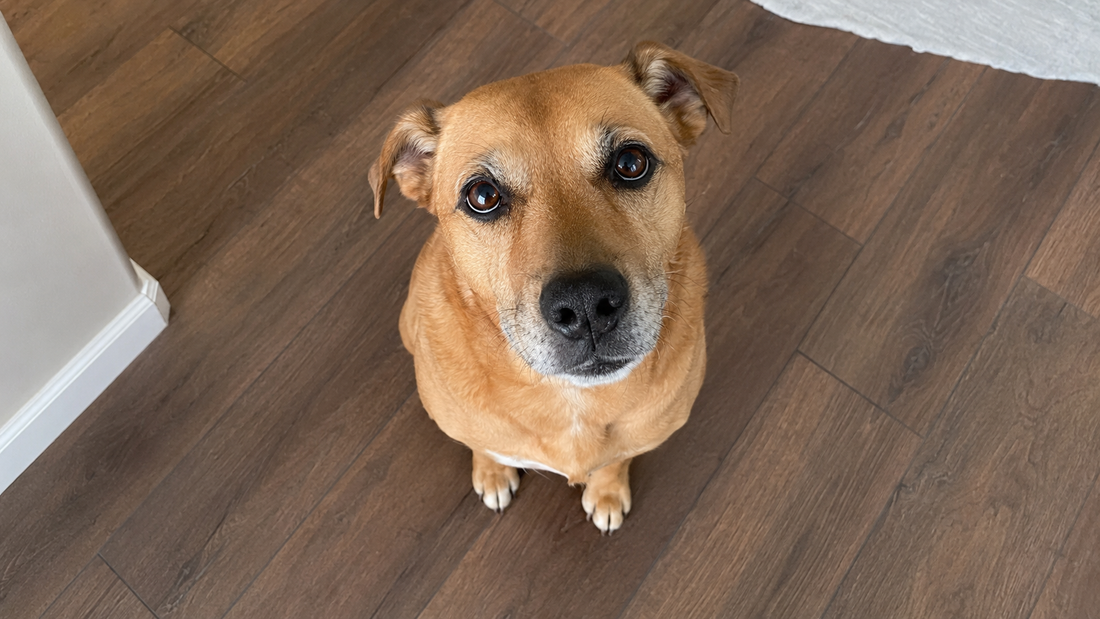
Your dog is across the room, looking directly at you. You check the food bowl, the back door, and the clock. Nothing seems obvious, yet the staring continues.
So, why does your dog stare at you? Most of the time, your dog is gathering information, asking for something, waiting for a familiar routine, or simply enjoying contact with you. The important part is not the stare by itself. You need to read the eyes together with the mouth, ears, tail, posture, and situation.
Quick answer: A soft gaze from a loose, relaxed dog usually means connection, calm attention, or a request. A hard, unblinking stare from a stiff dog can be a warning. Repeated blank staring, staring into space, or staring at walls alongside disorientation or other behavior changes should be discussed with a veterinarian.
What Does It Mean When a Dog Stares at You?
There is no single translation for dog staring. Eye contact can be affectionate in one moment, practical in another, and uncomfortable in a third. The fastest way to understand it is to ask three questions:
- What happened immediately before the stare? Did you walk toward the treat cabinet, stop petting, pick up your keys, or approach a toy?
- What is the rest of your dog doing? Look for a loose or stiff body, relaxed or closed mouth, neutral or pinned ears, and whether your dog is moving toward you or trying to create distance.
- What happens immediately after? Does your dog glance at the door, lead you to the bowl, bring a toy, settle down, move away, or growl?
Those details usually tell you more than eye contact alone.
Dog Staring Meanings at a Glance
| What the look is like | What it usually means | How to respond |
|---|---|---|
| Soft eyes, blinking, loose face, relaxed body | Comfort, social connection, calm attention, or a polite request | Respond normally and check whether your dog needs anything |
| Focused gaze, alert ears, body ready to move | Anticipation of a cue, walk, meal, game, or familiar routine | Give a clear cue or calmly continue what you are doing |
| Looking from you to the door, bowl, toy, or another object | A request for access, help, food, play, or attention | Decide whether to meet the need, then reward calm communication |
| Wide eyes, ears back, lip licking, yawning, lowered posture | Worry, uncertainty, or conflict | Reduce pressure and give your dog room to move away |
| Side-eye with the whites visible, especially near food or a resting place | Discomfort, guarding, or a request to stop approaching | Pause, create distance, and do not reach for the guarded item |
| Fixed, hard stare with a closed mouth and stiff body | A serious warning or distance-increasing signal | Do not stare back or challenge the dog. Stop and create space |
| Blank staring into space or at walls, especially with confusion | Possible age-related or medical change | Record the episode and arrange a veterinary assessment |
8 Common Reasons Your Dog Stares at You
1. Your Dog Wants Something
This is one of the most common explanations. Your dog may want dinner, a bathroom break, a walk, a toy, help reaching something, or a spot on the couch.
Watch where your dog looks next. A dog who looks at you, then at the back door, then back at you is giving you a much clearer message than a dog who simply holds eye contact. In a peer-reviewed study of dog-owner communication, dogs frequently alternated their gaze between their owners and inaccessible food. The researchers found evidence that this gaze switching can function as a purposeful request.
You do not have to fulfill every request. The useful lesson is that your dog may be using eye contact as part of a communication sequence. Check the context before assuming the stare is random.
2. Your Dog Has Learned That Staring Works
Dogs repeat behaviors that produce results. If staring has caused you to hand over a snack, open a door, throw a ball, or start petting, your dog has a good reason to try it again.
This can happen without deliberate training. Perhaps your dog stared while you ate, you gave one small bite, and the behavior paid off. After a few repetitions, the stare may become the first step in a well-practiced routine.
For persistent begging, avoid rewarding the stare with food from your plate. Instead, teach an alternative behavior such as lying on a mat during meals. Reward the mat behavior consistently, ideally before your dog begins staring or whining.
3. Your Dog Is Watching for a Cue
Dogs pay close attention to patterns. Picking up a certain pair of shoes may predict a walk. Closing a laptop may predict playtime. Opening one cabinet may predict dinner.
A focused stare can mean, “What happens next?” This is especially common in dogs that enjoy training or live in a predictable household. They may watch your face and hands because small movements help them anticipate the next cue.
This kind of stare usually comes with an alert but comfortable body. The mouth may be relaxed, the ears may turn toward you, and the dog may be ready to move without appearing tense.
4. Your Dog Feels Close to You
Sometimes the simple answer is affection. A familiar dog may rest nearby and hold gentle eye contact because the interaction feels safe and rewarding.
Research published in Science found an association between longer mutual gazing and changes in oxytocin in dogs and their owners. Oxytocin is involved in social bonding. The study supports the idea that mutual gaze can be part of the dog-human bond.
That does not mean every stare is a declaration of love. The affectionate version is usually soft and voluntary. Your dog can look away freely, blink, shift position, or settle to sleep. There is no freezing, guarding, growling, or visible tension.
5. Your Dog Is Checking Your Reaction
Dogs often use people as a source of information. A strange sound, an unfamiliar visitor, a new object, or a change in routine may prompt your dog to look at you before deciding what to do.
In that moment, your expression and movement matter. A calm voice and relaxed posture may help a mildly uncertain dog. Sudden reaching, looming, or forcing interaction can increase pressure.
A dog seeking reassurance may look at you briefly, scan the environment, and look back. You may also notice ears pulled slightly back, slower movement, a lowered body, or hesitation. Give the dog time to investigate at a comfortable distance rather than pulling them toward the thing they are unsure about.
6. Your Dog Is Confused or Unsure
Staring can appear when a dog does not understand what is expected. This often happens during training if cues are inconsistent or several family members use different words for the same behavior.
For example, one person says “down” to mean lie down, while another says “down” to mean get off the couch. The dog may stare because both possibilities have been reinforced.
Make the task easier. Use one cue, reduce distractions, pause for a moment, and reward a small correct response. Repeating the cue louder usually adds pressure without adding useful information.
7. Your Dog Is Uncomfortable and Wants Space
Not every stare is friendly. A fixed stare can be a warning, particularly when it appears with a stiff body, closed mouth, forward weight, raised lips, growling, or a freeze.
Veterinary behavior guidance from VCA Animal Hospitals describes direct staring as a distance-increasing signal in canine communication. The RSPCA dog body language guide likewise emphasizes reading staring eyes together with stiffness, weight distribution, ear position, and facial tension.
This is not the time for a staring contest. Stop approaching, turn your body slightly rather than facing the dog head-on, and create distance without grabbing the collar or reaching for the item. Keep children away from the situation. If hard staring, freezing, guarding, growling, or snapping happens repeatedly, start with a veterinary exam and seek help from a qualified behavior professional who uses reward-based methods.
8. Something May Be Medically Wrong
Normal social staring is directed at a person and changes as the situation changes. Blank staring is different. A dog may look into space, face a wall, seem lost in a familiar room, or fail to respond as expected.
In senior dogs, these changes can be associated with cognitive dysfunction, although other medical conditions can look similar. Cornell University College of Veterinary Medicine lists staring into space, getting stuck in corners, sleep changes, house-soiling, altered interaction, anxiety, and loss of learned responses among signs that deserve veterinary assessment.
Contact your veterinarian when the staring is new, frequent, difficult to interrupt, or paired with confusion, pacing, changes in sleep, indoor accidents, altered personality, or loss of familiar skills. A short video and notes about the time, duration, and surrounding events can be useful at the appointment.
How to Tell a Soft Stare From a Hard Stare
The difference is usually visible in the whole body, not just the eyes.
A Soft, Social Gaze
- The eyelids and facial muscles look relaxed
- The dog blinks or looks away naturally
- The mouth is loose, open, or neutral
- The body is curved, wiggly, resting, or otherwise loose
- The dog approaches comfortably or settles nearby
- There is no guarding, freezing, growling, or attempt to block you
This look often accompanies affection, curiosity, anticipation, or a request.
A Hard, Concerning Stare
- The eyes remain fixed and unblinking
- The mouth closes suddenly
- The body becomes still or rigid
- The dog leans forward, hovers over an object, or blocks access
- The lips tighten, lift, or expose teeth
- Growling, raised hair, snapping, or a low tail may also appear
A wagging tail does not automatically make a hard stare friendly. Tail movement can reflect arousal as well as happiness. Read the entire dog and respect any request for space.
What About “Whale Eye”?
“Whale eye” is the common term for a dog turning the head while keeping the eyes on something, which exposes a crescent of white around the eye. It often appears when a dog feels worried, trapped, or protective of a valued item.
Whale eye is especially important when you are leaning over the dog, hugging them, moving them off furniture, approaching their food, or reaching for a toy. Pause and remove pressure. Do not keep touching the dog to see whether the signal gets stronger.
One isolated glimpse of eye white is not enough to label a dog aggressive. Movement, head shape, and viewing angle can affect what you see. The signal matters most when it appears with tension, avoidance, freezing, guarding, or other signs of discomfort.
Why Does My Dog Stare at Me While I Eat?
Your food is interesting, and staring may have worked before. Even occasional table scraps can keep the behavior strong because the reward is unpredictable. From the dog’s perspective, continued staring is worth the effort because this might be the meal when it pays off.
To reduce mealtime staring:
- Feed or exercise your dog before your meal when practical
- Give your dog a safe chew, food puzzle, or stuffed toy in a separate spot
- Teach a “place” or mat behavior away from the table
- Reward calm settling instead of feeding from your plate
- Ask everyone in the household to follow the same rule
Consistency matters more than scolding. If one person continues sharing food, the stare will remain a sensible strategy.
Why Does My Dog Stare at Me While Pooping?
Many dogs look toward their person during a bathroom break. There is no way to know one universal motive, but common explanations include monitoring you while they are in a vulnerable posture, checking the environment through your reaction, and anticipating praise or a reward learned during house training.
A VCA overview of this behavior discusses protection, approval, and remembered rewards as likely explanations. Other dogs prefer privacy and avoid eye contact, which can also be completely normal.
You do not need to hold eye contact. Stay nearby, keep the lead loose, and give your dog enough time and space to finish.
Why Does My Dog Stare at Me When I Pet Them?
The stare may mean your dog enjoys the interaction, but it can also mean they are monitoring what you will do next. Check the rest of the body.
A dog who leans in, has loose muscles, and nudges your hand when you stop is probably asking for more. A dog who becomes still, turns the head away, licks the lips, shows eye white, lowers the ears, or moves away may want the petting to stop.
Try a simple consent check: pet for two or three seconds, then pause. If your dog moves closer or clearly asks for more, continue. If they turn away or leave, respect the choice.
Should You Stare Back at Your Dog?
Brief, relaxed eye contact with your own comfortable dog is usually fine. Forced or prolonged staring is different.
Do not stare down an unfamiliar dog or a dog showing stiffness, guarding, fear, or aggression. Direct eye contact can add social pressure. Look slightly away, angle your body, stay calm, and allow distance.
For training, eye contact should be invited and rewarded, not forced. You can teach a “look” cue by marking and rewarding a brief glance toward your face. Keep repetitions short, and let the dog look away between them.
How to Respond When Your Dog Keeps Staring
- Check basic needs. Consider the bathroom, water, food schedule, exercise, comfort, and access to a desired object.
- Look for the second signal. Your dog may glance toward the door, bowl, toy, bed, or source of concern.
- Read the whole body. Loose usually points toward social attention. Stiffness, freezing, avoidance, or guarding calls for space.
- Choose what you want to reinforce. Reward calm sitting, settling, or another polite behavior rather than intense begging.
- Track unusual episodes. Note when they happen, how long they last, whether your dog responds to their name, and what other changes you see.
- Get help when needed. Sudden behavioral changes, repeated blank staring, or threatening body language deserve professional attention.
When Should You Be Concerned?
Arrange a veterinary visit if the staring is a new behavior or is accompanied by any of the following:
- Staring into space or at walls repeatedly
- Getting stuck in corners or seeming lost at home
- Not responding to familiar cues as usual
- New sleep disruption, pacing, anxiety, or house-soiling
- A marked change in social behavior or personality
- Hard staring, guarding, growling, or snapping that has appeared suddenly
Behavior changes can have medical as well as behavioral causes. A veterinary exam helps rule out pain, sensory loss, neurologic problems, and other health issues before a training plan is chosen.
Frequently Asked Questions
Does my dog stare at me because they love me?
Sometimes. Soft, relaxed mutual gaze can be part of social bonding. Look for loose muscles, natural blinking, a relaxed mouth, and the ability to look away. A stiff, fixed stare has a different meaning.
Why does my dog follow me and stare at me?
Your dog may be monitoring your routine, waiting for access to something, seeking company, or anticipating the next activity. Notice whether the behavior is strongest around meals, walks, departures, or times when your dog is under-stimulated.
Why does my dog stare at me and whine?
Staring plus whining often indicates a request, frustration, uncertainty, or discomfort. Check basic needs first, then look for a pattern. Persistent or sudden whining with behavior changes should be discussed with a veterinarian.
Why does my dog stare at the wall?
A brief look at a wall may be a response to a sound, scent, reflection, or movement you cannot detect. Repeated blank staring, especially with confusion or other changes in a senior dog, warrants a veterinary check.
Is staring a sign of dominance?
Staring is not usefully explained by a simple dominance label. It may be social attention, learned begging, anticipation, uncertainty, guarding, or a request for distance. Context and body language give you a more accurate answer.
Is it bad if my dog stares at me all the time?
Not necessarily. Some dogs are highly attentive to people, particularly when staring has been rewarded. It becomes concerning when the behavior is compulsive, difficult to interrupt, paired with distress or aggression, or noticeably different from your dog’s normal behavior.
The Bottom Line
When your dog stares at you, start with the simplest explanation: they are paying attention. They may want something, expect a familiar event, be checking your reaction, or enjoy being connected with you.
Then look beyond the eyes. A loose body and soft expression point toward comfort. A fixed gaze with stiffness, freezing, guarding, or growling is a warning that deserves space. Blank or unusual staring paired with confusion or other changes deserves a veterinary assessment.
The better you become at noticing what happens before, during, and after the stare, the easier it becomes to understand what your dog is actually asking.
Sources and Further Reading
- Nagasawa et al., “Oxytocin-gaze positive loop and the coevolution of human-dog bonds,” Science
- Savalli, Ades, and Gaunet, “Are Dogs Able to Communicate with Their Owners about a Desirable Food in a Referential and Intentional Way?” PLOS ONE
- VCA Animal Hospitals, “Canine Communication: Interpreting Dog Language”
- RSPCA, “Understanding Your Dog’s Body Language”
- Cornell University College of Veterinary Medicine, “Cognitive Dysfunction Syndrome”
- VCA Animal Hospitals, “Why Do Dogs Stare at You While They Poop?”
This article is for general education and is not a substitute for advice from your veterinarian or a qualified canine behavior professional.
Share
Continue reading


