
How Do Crematories Make Sure You Get the Right Ashes Back?
When a family chooses cremation, one of the most common questions is also one of the most personal: how do crematories make sure you get the right ashes back? It is a fair question, and for many people it sits at the center of whether cremation feels comfortable at all.
The reassuring answer is that reputable crematories do not rely on one single step. They use a chain of custody. In simple terms, that means your loved one is identified, documented, tracked, checked, and rechecked from the moment they are received until the cremated remains are placed in an urn or temporary container and released to the authorized person. The exact forms and workflow can vary by state and provider, but the purpose is always the same: careful identification, respectful handling, and documented accountability at every stage.
Families often use the word ashes, while funeral professionals usually say cremated remains. Whatever language you prefer, the concern behind the question is the same. You want to know that your loved one was cared for properly and that the remains returned to you are truly theirs.
The Short Answer
Crematories make sure you get the right ashes back by using a documented chain of custody. That usually includes identity checks at intake, written authorization, a unique tracking number or metal identification disc, individual cremation procedures, repeated verification before and after cremation, careful collection and processing of the remains, and final labeling and release records.
No single step carries the whole burden. The protection comes from the system as a whole. When a crematory follows that system consistently and carefully, it creates the accountability families need and the peace of mind they deserve.
Why Families Ask This Question
Choosing cremation involves trust. Unlike a burial, where a family may see the casket lowered into the ground, much of the cremation process happens behind the scenes. That can leave people wondering what safeguards are in place and whether mistakes can happen.
A good crematory understands that concern and should never treat it as unusual. In fact, trustworthy providers expect families to ask about identification, tracking, paperwork, and handling procedures. Clear answers are a sign of professionalism. Vague answers are not.
What matters most is not a promise that “everything is fine,” but a system designed to prevent errors. The strongest cremation providers use layered procedures so that if one step is missed, another step still protects the identity of the deceased.
Identification Starts Before Cremation Ever Takes Place
The process of making sure you receive the correct cremated remains begins well before the cremation chamber is used. It starts when your loved one is taken into care. At that point, funeral home or crematory staff should confirm identity using the paperwork that accompanies the body and the identification already attached to the deceased or the container.
This first stage is important because chain of custody only works when the information is consistent from the beginning. The name on the body, the removal documents, the death certificate information, the cremation authorization, and the crematory log all need to match. If there is any discrepancy, a reputable provider stops and resolves it before moving forward.
Many funeral homes and crematories also use additional internal tracking methods such as case numbers, barcodes, or electronic logs. These tools are not a replacement for basic identification, but they add another layer of accountability.
Paperwork Creates the First Major Safeguard
Cremation is not supposed to happen based on assumption or verbal instruction. It requires written authorization. Before cremation takes place, the funeral home or crematory should have the required permission from the person legally authorized to make final arrangements, along with the permits and records required in that state.
That paperwork is more than a formality. It links the identity of the deceased to the decision to cremate, confirms who has legal authority, and establishes the record the crematory follows throughout the process. Good documentation also helps prevent mix-ups by making staff verify that every identifying detail matches before anything proceeds.
In other words, the paperwork is not “extra.” It is part of how crematories make sure the correct person is cremated and the correct remains are returned.
A Unique Identification Tag Stays With the Body Throughout the Process
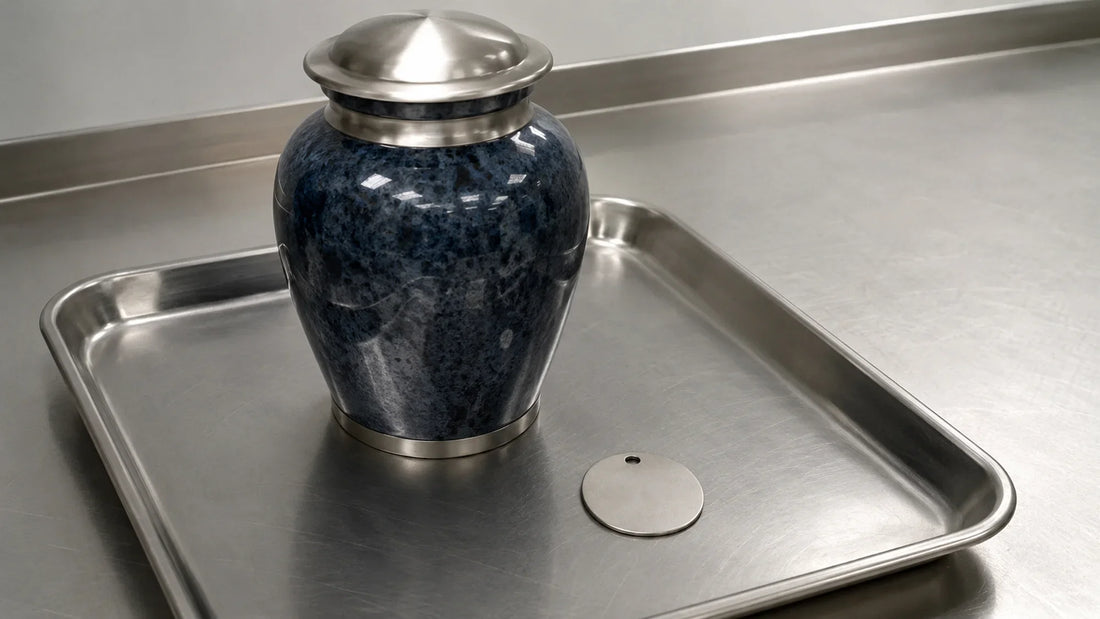
One of the most important safeguards is the use of a unique identification number. In many crematories, that number is assigned when the body is received and is placed on a durable metal disc or tag. Some facilities may use a barcode or another approved tracking system in addition to the metal identifier.
The purpose of that identifier is simple: it follows your loved one through each stage of the process. It is checked against the paperwork before cremation, associated with the cremation log, and matched again when the remains are collected, processed, packaged, and released.
This is one of the reasons families are often told that the crematory has a “chain of identification.” The identifier is not just a label on the outside of a container. It is part of the internal tracking system that ties the body, the cremation, and the returned remains together.
Some crematories place the metal disc with the remains during cremation. Others keep it attached to the chamber or use another state-approved method while the cremation is taking place, then secure it with the remains afterward. The exact method can vary, but the point is the same: the identification number remains linked to that individual case from beginning to end.
Cremation Is Normally Performed One Person at a Time
Another key reason families receive the right cremated remains is that cremation is ordinarily performed individually. In standard practice, one person is cremated in one chamber at a time. This is one of the clearest protections against commingling.
There are limited situations in some states where simultaneous cremation may be allowed, but that generally requires specific written authorization and is not ordinary practice. For the typical cremation, the process is individual, documented, and tracked as a single case.
That individual handling continues outside the chamber as well. The remains are cooled, processed, packaged, and labeled one case at a time, with the identification staying with that case throughout.
Checks Happen Before, During, and After the Cremation
Families sometimes imagine that identification is checked only once, but reputable crematories use repeated verification points. Before the cremation begins, staff confirm the identity of the deceased and match it to the authorization and internal tracking number. During the process, the case remains associated with that identifier. After the cremation is complete, staff check the remains and the identifier again before moving to the next step.
That repetition matters. Good systems are built on verification, not memory. Staff should not rely on “knowing the case.” They should rely on the written record, the assigned identification, and the case log.
This is also why professional crematories keep detailed records. Those records may include intake information, authorizations, the date and time of cremation, the operator, the assigned case number, container information, and release documentation showing when and to whom the cremated remains were returned.
How the Remains Are Collected and Processed
After cremation, what remains are primarily bone fragments. Those fragments are carefully removed from the chamber, allowed to cool, and then placed into a processor that reduces them to the uniform consistency families are accustomed to receiving in an urn or temporary container.
This stage is also controlled. Staff do not simply move from one case to another without cleaning and clearing equipment. Reputable crematories remove the recoverable remains from the chamber after each cremation and clean the equipment used in the process before the next case. The goal is to keep each case separate and to return as much of that individual’s cremated remains as can be recovered.
Non-combustible items such as certain metal fragments may be separated from the cremated remains during processing. This does not interfere with identification. The identifying tag or tracking number remains tied to the case while these routine processing steps are completed.
Because cremation is a heat-based process, professional standards focus on recovering all recoverable remains and keeping each case separate, rather than making unrealistic promises about every microscopic particle. For families, the important point is that reputable providers follow procedures to remove the recoverable remains, clean the chamber and processing equipment, and protect the identity of each case throughout the process.
Packaging and Labeling Are Part of the Chain of Custody Too
Once processing is complete, the cremated remains are placed in a bag and then into an urn or temporary container. At that point, identification is checked again. The container should be labeled so it corresponds to the correct individual, and the internal case identifier should remain associated with the remains.
This final stage matters because the release of the cremated remains is part of the overall tracking system. A careful provider documents who picked up the remains or where they were delivered, and when. That final signature or release record closes the loop from intake to return.
If a funeral home is arranging the cremation through a separate crematory, the same principle still applies. There should be documented transfer and receipt procedures between the funeral home and the crematory so the identity of the deceased remains clear at every handoff.
What Families Can Ask a Crematory for Peace of Mind
If you are considering cremation and want reassurance, it is completely appropriate to ask direct questions. A professional provider should be able to answer them clearly and respectfully.
- How do you identify my loved one when they come into your care?
- Do you assign a unique tracking number or metal ID disc?
- Does that identification stay with them throughout the entire process?
- Is cremation performed individually?
- How do you clean the chamber and processing equipment between cases?
- Who completes the cremation, and how is it documented?
- How are the remains labeled, stored, and released?
- Do you offer a witness cremation or another option for families who want added reassurance?
You are not being difficult by asking these questions. You are making an informed decision during a difficult time. A quality cremation provider will understand that.
Signs of a Careful and Trustworthy Cremation Provider
When you speak with a funeral home or crematory, listen for specifics. A trustworthy provider should be able to explain their process in a calm, straightforward way. They should talk about identification, authorization, tracking, documentation, and release procedures without sounding evasive.
It can also be helpful to ask whether the cremation is performed on-site or by a partner crematory. Either arrangement can be handled professionally, but you should know who has custody of your loved one and what procedures are followed at each step.
Some families also feel more comfortable choosing a provider that welcomes questions, explains the timeline, and walks them through exactly how identification is maintained. In situations where a family wants the highest level of visibility, asking about a witness cremation may provide additional peace of mind if that option is available.
Final Thoughts
If this question is on your mind, you are not alone. Many families ask it, especially if they have never arranged a cremation before. The good news is that reputable crematories have specific procedures designed to protect identity and prevent mix-ups from start to finish.
If you are making arrangements now, do not hesitate to ask the funeral home or crematory to explain their identification process in detail. The right provider will welcome that conversation. In a moment that asks so much of a family, you should not have to wonder whether careful procedures are in place. You should be told exactly how your loved one will be tracked, cared for, and returned to you with dignity.
Share
Continue reading


