
Can Ashes Be Divided Into More Than One Urn? What Families Should Know
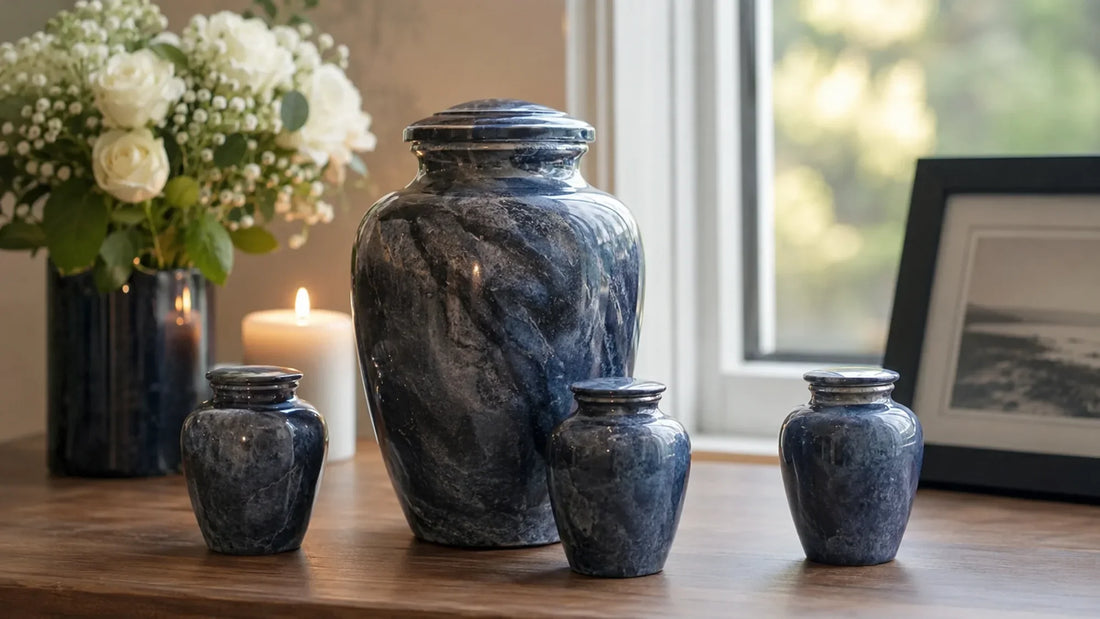
When a family chooses cremation, one of the most common questions comes a little later: Can ashes be divided into more than one urn? In most cases, yes. Many families choose to separate cremated remains into a main urn plus one or more smaller keepsake urns, memorial jewelry pieces, or other containers. For some, this makes it easier to share a loved one’s memory among close relatives. For others, it allows part of the remains to be kept at home while another portion is buried, placed in a columbarium, or scattered in a meaningful place.
This is a practical question, but it is also an emotional one. Families are not usually asking only about containers. They are asking what is allowed, what is respectful, and whether dividing cremated remains is a normal choice. The answer is that it is a very common option, and for many families it is a thoughtful one.
The key is understanding how the process works, what type of urns are meant to hold only a portion of the remains, and what to think through before making a final decision. This guide explains the basics in plain language so families can decide what feels right for them.
Yes, Ashes Can Usually Be Divided Into More Than One Urn
In most situations, cremated remains can be divided into multiple containers. That might mean one full-size urn for the majority of the remains and several smaller keepsake urns for children, siblings, or other close family members. It might also mean placing a small amount into memorial jewelry while keeping the rest together in a single urn.
For many families, this is not unusual at all. In fact, it is often one of the reasons keepsake urns exist. They are designed specifically for families who do not want all of the cremated remains in one final container.
That said, it helps to think of this as a family choice rather than an automatic step. Some people prefer to keep all of the remains together in one urn because that feels simpler or more traditional. Others feel more comfort when each child or close relative has a small portion. Neither approach is inherently more respectful than the other. The right choice is the one that best fits the family’s values, relationships, and memorial plans.
Why Families Choose More Than One Urn
There are many reasons a family might divide cremated remains, and most of them are deeply personal.
One of the most common reasons is that several close relatives want a physical memorial. If adult children live in different homes, for example, they may each want a small keepsake urn rather than deciding which one person keeps the only urn. Dividing the remains can ease tension and help everyone feel included.
Another reason is that the family may want to use the remains in more than one way. A portion may go into a keepsake urn at home, while another portion is buried in a cemetery or placed in a niche. Some families plan to scatter part of the remains and keep part of them. Others want one larger urn for long-term placement and a small amount set aside for jewelry or another personal memorial item.
There are also practical reasons. A surviving spouse may want to keep the main urn at home for now, while setting aside small keepsakes for children or grandchildren. Families with relatives in different states sometimes choose multiple containers because it allows each household to have its own memorial space.
In all of these cases, dividing the remains is less about “splitting” a loved one and more about creating a form of remembrance that fits the family’s reality.
How the Process Usually Works
Dividing cremated remains is usually straightforward. In many cases, the funeral home or crematory can help if the family requests it as part of the arrangements. This is often the easiest option because the remains have not yet been transferred into a final urn, and staff can portion them into the containers the family has selected.
Families can also choose to do this later. If the cremated remains are returned in a temporary container or in one urn, they can usually be transferred into more than one container afterward. Some people handle that themselves at home, while others ask the funeral home for assistance. Many families prefer professional help simply because it feels less stressful and more organized during an emotional time.
In practical terms, the process usually involves opening the temporary container or bag, placing portions into the selected urns or keepsakes, and then sealing or closing each one according to its design. Memorial jewelry often holds only a very small amount, while keepsake urns can hold more. A full-size urn is typically used for all or most of the remains, depending on the family’s plan.
It is often easiest to decide on this before the remains are permanently placed, but it is not always necessary to know right away. Some families take time before deciding how they want to divide or place the remains, and that is entirely reasonable.
Choosing the Right Types of Urns
The most important practical issue is not whether the remains can be divided. It is whether the chosen containers are the right kind and size for the family’s plan.
Generally, there are three broad categories families consider:
- Full-size urns, intended to hold all or nearly all of the cremated remains.
- Keepsake urns, intended to hold a smaller portion.
- Memorial jewelry or miniature keepsakes, intended to hold only a very small amount.
A very common arrangement is one full-size urn plus several keepsake urns. That gives the family one central memorial while still allowing close relatives to have something personal. Another common choice is one decorative urn with a small amount placed into jewelry for one or two family members.
It also helps to think ahead about where each container will go. A keepsake urn that will sit on a shelf at home may be chosen differently from one that will be placed in a cemetery niche. If a columbarium or cemetery is involved, it is smart to verify any size requirements before buying the urn. A beautiful urn is not helpful if it does not fit the planned final placement.
Do You Have to Buy All the Urns From the Funeral Home?
No. Some families choose urns through the funeral home because it is convenient and simple. Others shop elsewhere for part or all of their memorial items. For example, a family might select a main urn through the funeral home and buy keepsake urns online or from a specialty retailer.
This can be especially helpful when several relatives want different styles. One person may prefer a classic urn for display at home, while another may want a small piece of memorial jewelry or a less traditional keepsake. Dividing the remains makes that flexibility possible.
The important thing is to make sure the containers are appropriate for cremated remains and that the family understands how much each one is meant to hold. If you are unsure, ask the provider before finalizing your purchase. A brief conversation can prevent sizing problems and help the family avoid buying containers that are too small or not designed for this purpose.
Common Ways Families Divide Cremated Remains
There is no single standard way to do this, but a few arrangements come up again and again.
One main urn and several keepsakes. This is probably the most common setup. The majority of the remains stay together in one urn, while children, siblings, or other close loved ones each receive a small keepsake urn.
One urn plus memorial jewelry. Some families want the remains to stay mostly together while allowing one or two people to keep a tiny amount in a pendant, charm, ring, or other memorial item.
Partial scattering and partial keeping. A family may scatter part of the remains in a meaningful location while keeping the rest in an urn at home or placing it in a cemetery.
More than one meaningful location. If a loved one had strong ties to two places, the family may decide to keep a portion in each place. For example, one part may remain with a spouse at home while another is buried near other relatives.
Separate memorial households. In blended families or families spread across the country, multiple urns can allow each household to maintain a personal memorial space.
These choices are not about doing things the “right” way in some universal sense. They are about shaping remembrance in a way that feels manageable, comforting, and fair.
Should the Funeral Home or Crematory Divide the Ashes?
Many families prefer that the funeral home or crematory handle the transfer, especially when multiple keepsake urns or jewelry pieces are involved. There are several reasons for this.
First, it can reduce stress. Families do not have to worry about opening containers, measuring portions, or managing the transfer on their own at home. Second, it can feel more emotionally comfortable. Some people simply do not want to perform that step themselves, especially soon after the loss. Third, it can be cleaner and more orderly when someone experienced handles the process.
That does not mean families cannot do it themselves. Some do, especially if they decide to add keepsakes later. But if you know from the beginning that you want more than one urn, it is usually worth asking the funeral home whether they can portion the remains before final packaging.
If you do plan to divide the remains later at home, it helps to do so carefully and deliberately. Use a stable surface, make sure each container is ready beforehand, and avoid rushing. For many people, this is not just a practical task. It is also part of the grieving process.
Things to Consider Before Dividing Cremated Remains
Because this decision often involves several family members, it helps to slow down and think through a few questions before moving ahead.
- What is the long-term plan? Will the main urn stay at home, be buried, or be placed in a niche?
- Who wants a keepsake, and why? It helps to understand whether family members want a lasting memorial, a small portion for jewelry, or something temporary until a future ceremony.
- How many containers are needed? Ordering too few urns can create a second round of decisions later.
- Are all the containers suitable? Decorative items vary widely, and not all memorial products hold the same amount.
- Are there religious or cultural beliefs to consider? Some families are fully comfortable dividing the remains, while others prefer to keep them together.
- Could this decision create family conflict later? Clear communication early often prevents hurt feelings.
None of these questions are meant to complicate the process. They simply help the family make a choice they are less likely to regret later. During grief, even small decisions can feel heavier than expected.
Is It Disrespectful to Divide Ashes?
Many people worry about this, even if they are strongly considering it. The concern is understandable. When families ask whether dividing cremated remains is “okay,” they are often asking whether it honors the person properly.
For most families, the answer is yes. Dividing ashes is not generally seen as disrespectful when it is done thoughtfully and with care. In many cases, it reflects love and connection. It allows more than one person to keep a close memorial, and it can make remembrance more personal.
What feels respectful depends on the family, the person who died, and any beliefs that matter to them. Some people specifically express during life that they want their remains shared among loved ones. Others say they want all of their remains kept together. If the deceased left clear wishes, those wishes should guide the decision whenever possible.
When no specific instructions exist, families usually do best by asking a simpler question: What choice best reflects this person and the way we want to remember them? That is often more helpful than trying to find a one-size-fits-all rule.
When It May Make Sense to Wait
Not every family needs to decide this immediately. In fact, some families are better off waiting a little. Right after a death, people are often making many fast decisions at once, and emotions can be intense. If there is disagreement about how the remains should be divided or where they should eventually go, it may be wise to keep the remains in a temporary container or one main urn until everyone has had time to think clearly.
Waiting does not mean something is wrong. It simply means the family is giving the decision the care it deserves. Memorial plans often become clearer a few weeks or months later, especially if the family is still discussing a cemetery placement, a scattering ceremony, or how to include distant relatives.
There is usually no need to force a final decision before the family is ready.
Final Thoughts
So, can ashes be divided into more than one urn? In most cases, yes. Families often divide cremated remains into a main urn, smaller keepsake urns, memorial jewelry, or a combination of those options. It is a common and practical choice, especially when more than one loved one wants a personal memorial or when the family plans more than one form of remembrance.
The most important part of the decision is not whether it is allowed in a general sense. It is whether the arrangement fits the family’s wishes, the available urn sizes, and the long-term memorial plan. Some families feel strongly that all of the remains should stay together. Others find great comfort in sharing small keepsakes among several relatives. Both approaches can be meaningful.
If you are unsure, ask the funeral home or crematory to explain your options before the remains are placed in a final urn. A clear conversation can make the decision easier and help your family choose a memorial plan that feels respectful, personal, and right for the people involved.
Share
Continue reading


