
Can Cremated Remains Be Kept at Home? What Families Should Know
Please note: This article provides general educational information only and is not legal advice. For guidance specific to your situation, consult a lawyer.
In many parts of the United States, yes, cremated remains can be kept at home after cremation. Many families do this either temporarily, while they decide on burial, scattering, or placement in a columbarium, or permanently, because keeping the urn nearby feels comforting. The important point is that home storage is often a normal option, but families should still confirm any state or local requirements that may apply to their situation.
For some people, keeping ashes at home feels immediately right. For others, the idea raises practical and emotional questions. Where should the urn go? Does it need to be displayed? Do you need a special urn right away? What happens later if the person keeping the remains moves or dies? Those are reasonable questions, and they are part of why this topic deserves a clear answer.
The good news is that families usually have time. Choosing cremation does not always mean choosing a final resting place on the same day. Keeping cremated remains at home can give people space to grieve, talk through family preferences, and decide what kind of memorial feels most appropriate.
Yes, Many Families Choose to Keep Cremated Remains at Home
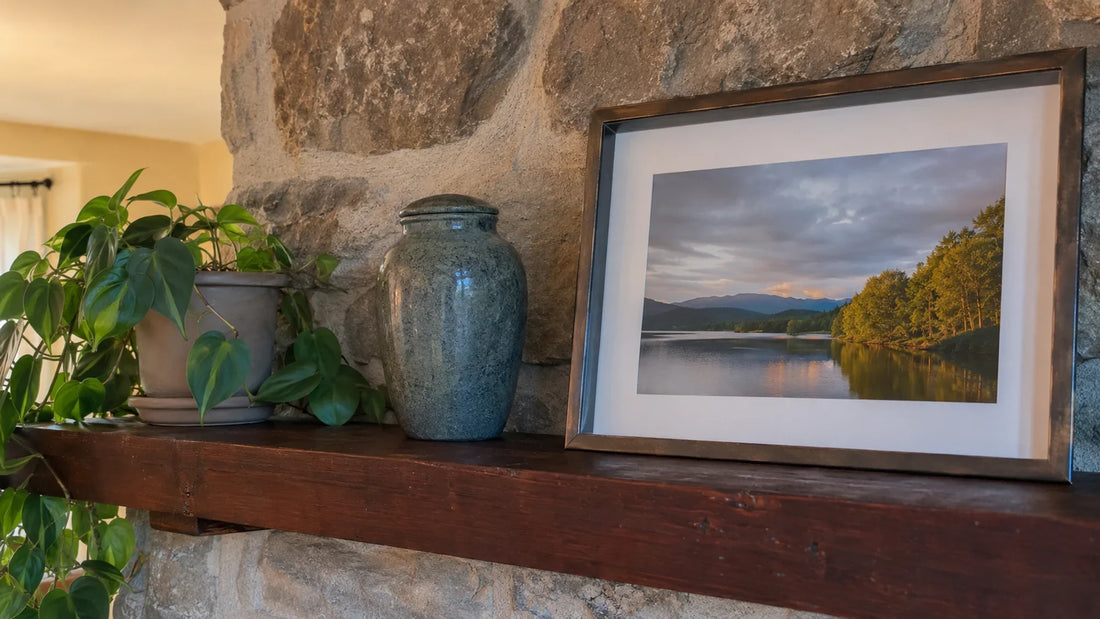
Keeping cremated remains at home is not unusual. Some families create a visible memorial with an urn, framed photograph, and flowers. Others keep the remains in a more private place, such as a cabinet, bedroom, or study. Some leave the remains in the container provided after cremation until they feel ready to choose a permanent urn. Others purchase an urn right away because they want something more decorative or more personal.
There is no single emotional script families are required to follow. For one household, keeping the urn close provides comfort and continuity. For another, it serves as a temporary step while relatives decide whether burial, scattering, or placement in a niche is the best long-term option. In both situations, keeping the remains at home can be a thoughtful and respectful choice.
What matters most is that the arrangement feels manageable and meaningful for the people who live with it day to day.
Is It Legal to Keep Ashes at Home?
In many U.S. situations, yes. Families are often allowed to keep cremated remains at home rather than burying or scattering them immediately. That said, the details can vary by state, country, and sometimes by the specific plans a family has for the remains later on. Laws and rules are more likely to become important when the family wants to divide the remains, scatter them in a public place, bury them on private land, or move them across certain jurisdictions.
For that reason, it is best to think of home storage as commonly allowed but not something to assume without question in every location. If there is any uncertainty, a funeral home, cremation provider, cemetery, or local authority can clarify what applies in your area. That is especially important if the family expects to move the remains later, split them among several relatives, or combine home keeping with another form of final placement.
In practical terms, families usually do not need to rush. The better approach is to confirm the rules, understand the options, and make a decision that fits both the law and the family’s needs.
Why Families Choose to Keep Cremated Remains at Home
Families choose home keeping for many reasons. One of the most common is comfort. After a death, having the urn nearby can feel grounding. It may create a sense of continued connection during the first weeks or months of grief, especially when the loss still feels raw.
Another reason is flexibility. Not every family agrees right away on what should happen next. One person may prefer burial in a cemetery, another may want a scattering ceremony, and another may want to keep the remains at home permanently. Keeping the cremated remains at home for a period of time can make it easier to slow down and make a thoughtful decision rather than a rushed one.
Sometimes the reason is practical. A family may be waiting for relatives to travel, for a niche to be ready, for a seasonal memorial gathering, or for enough emotional space to plan a ceremony. In those cases, home keeping is not a sign of indecision so much as a reasonable pause between the cremation and the final long-term plan.
Does the Urn Have to Be Displayed?
No. If cremated remains are kept at home, they do not have to be displayed publicly. Some families prefer a visible memorial area because it gives them a place to reflect, light a candle, or keep a photograph and flowers nearby. Others feel more comfortable keeping the urn in a private room or cabinet. Both choices are common.
This decision is usually less about rules and more about household comfort. Some people find comfort in seeing the urn each day. Others feel better knowing it is nearby without making it a focal point in shared living space. There can also be practical considerations, such as small children, pets, frequent guests, or limited shelf space.
The most appropriate choice is usually the one that feels respectful and sustainable for the home. An arrangement that feels peaceful in the first week should also feel workable months later.
Do You Need a Special Urn Right Away?
Not always. Some families receive cremated remains in a temporary container and decide on a permanent urn later. Others select an urn before the remains are returned. Either approach can work. If the family is not ready to choose an urn immediately, taking time can be perfectly reasonable.
When a family does choose an urn for home use, the most important features are usually stability, durability, and personal meaning. Some prefer a simple design that blends into the home. Others want something more decorative or symbolic. Material, size, and style all matter, but so does how the urn fits into the daily life of the household.
It is also worth remembering that families are not always limited to what a funeral home displays in its showroom. Some people decide on a permanent urn later, after they have had time to think about size, design, budget, and whether the remains will stay at home permanently or eventually be buried, scattered, or placed in a niche.
Where Should Cremated Remains Be Kept in the Home?
If cremated remains will be kept at home, the best location is usually one that is secure, dry, and unlikely to be disturbed. A sturdy shelf, cabinet, bookcase, or memorial table can work well. The main goal is to choose a place where the container will not be accidentally knocked over, exposed to excessive moisture, or handled carelessly.
Some families prefer a central place in the home, such as a living room or study, because it makes remembrance feel natural and integrated into daily life. Others prefer a more private setting, such as a bedroom, office, or protected cabinet, because it feels more intimate. There is no universal rule about visibility. The better question is whether the location feels calm, appropriate, and easy to maintain.
If the remains are being kept in a home with children or pets, extra stability matters. A secure location can prevent accidents and reduce worry. In many cases, peace of mind comes from choosing a place that feels both respectful and practical.
What If Family Members Disagree About Keeping the Remains at Home?
Disagreement is common, especially in the first weeks after a loss. One person may want to keep the ashes at home permanently, while another may feel more comfortable with burial or placement in a columbarium. Sometimes siblings live in different states. Sometimes a spouse and adult children have different views. These situations can be emotionally complicated even when everyone is acting out of love.
When this happens, keeping the cremated remains at home temporarily can provide time for conversation. The family does not always have to solve every question immediately. In some cases, relatives later agree on burial or scattering. In other cases, they decide to keep the main urn in one place and explore other memorial options later, where that is permitted and feels appropriate.
The most helpful approach is usually to talk openly about what each person needs from the decision. For some, proximity is the main issue. For others, permanence or ritual matters more. Slowing the process down can make conflict easier to navigate.
Keeping Cremated Remains at Home Can Be Temporary or Permanent
Some families keep cremated remains at home for years. Others do so only for a few weeks or months. Both choices are valid. Keeping the remains at home does not lock a family into one path forever. A later burial, columbarium placement, or scattering ceremony may still happen when the timing feels right.
This flexibility is one reason home keeping appeals to many families. It allows them to make a respectful decision now without feeling forced to settle every long-term question immediately. For some people, the home becomes the permanent resting place. For others, it becomes an important part of the grieving process before another form of memorialization takes place.
Because circumstances change, it is wise to think ahead. If the person keeping the remains moves, downsizes, or dies, what should happen next? A simple written plan can prevent confusion later. Even a clear conversation with close family members can make a significant difference.
What Should Families Think About for the Long Term?
Long-term planning matters more than many people expect. When families first decide to keep cremated remains at home, they are often focused on the present moment. That is understandable. Still, it helps to think beyond the first stage of grief. Who will be responsible for the remains if the current keeper can no longer care for them? Should the family write down the preferred next step? Is there a backup plan if the home is sold or the household changes?
These questions are not meant to make the choice feel burdensome. They are simply part of treating the arrangement thoughtfully. A clear plan can be very simple. It might state that the remains should stay in the family, go to a specific relative, be buried in a particular cemetery, or be scattered in a place the deceased loved if and when that becomes possible.
Planning ahead can also prevent conflict. When expectations are spoken aloud, families are less likely to face confusion or disagreement later.
Emotional Considerations Matter Too
Keeping cremated remains at home is not only a practical decision. It is an emotional one. Some people find deep comfort in having the urn nearby. It can make the home feel connected to the person who died. It can also make memorial rituals feel more personal, especially on birthdays, holidays, or anniversaries.
For others, the experience changes over time. What feels comforting in the early weeks may later start to feel emotionally heavy. That does not mean the original decision was wrong. It simply means grief evolves. A family may later decide that burial, a niche, or a scattering ceremony feels more peaceful.
It is helpful to give this decision room to change. There is no universal timeline for when keeping remains at home feels right or when it stops feeling right. Families should not judge themselves harshly for wanting closeness now or for wanting a different arrangement later.
Questions to Ask Before Deciding
Before settling on home keeping, families often benefit from asking a few practical questions:
- Is keeping cremated remains at home allowed where we live?
- Who is legally authorized to receive and decide about the remains?
- Will we keep the remains in the temporary container for now, or choose a permanent urn?
- Where in the home will the remains be kept?
- What should happen later if the person keeping the remains moves or dies?
- Are there family members who need to be part of the decision?
These questions do not need to be answered all at once, but they can help families choose a plan that feels both calm and durable. In most cases, clarity reduces stress.
Final Thoughts on Keeping Cremated Remains at Home
So, can cremated remains be kept at home? In many U.S. situations, yes. For many families, it is a normal and meaningful option after cremation. The remains may stay at home temporarily while the family decides on next steps, or they may remain there permanently as part of a private memorial at home.
The key is to approach the decision with both care and foresight. Families should confirm any rules that apply where they live, choose a secure place for the remains, think through whether they want a temporary container or a permanent urn, and make a plan for what should happen later if circumstances change.
For some households, keeping the urn at home provides comfort, closeness, and time. For others, it is one step in a longer memorial process. Either way, the decision can be respectful, practical, and deeply personal when it is made thoughtfully.
Share
Continue reading


