
Can Pet Ashes Be Divided Into Keepsake Urns or Memorial Jewelry?
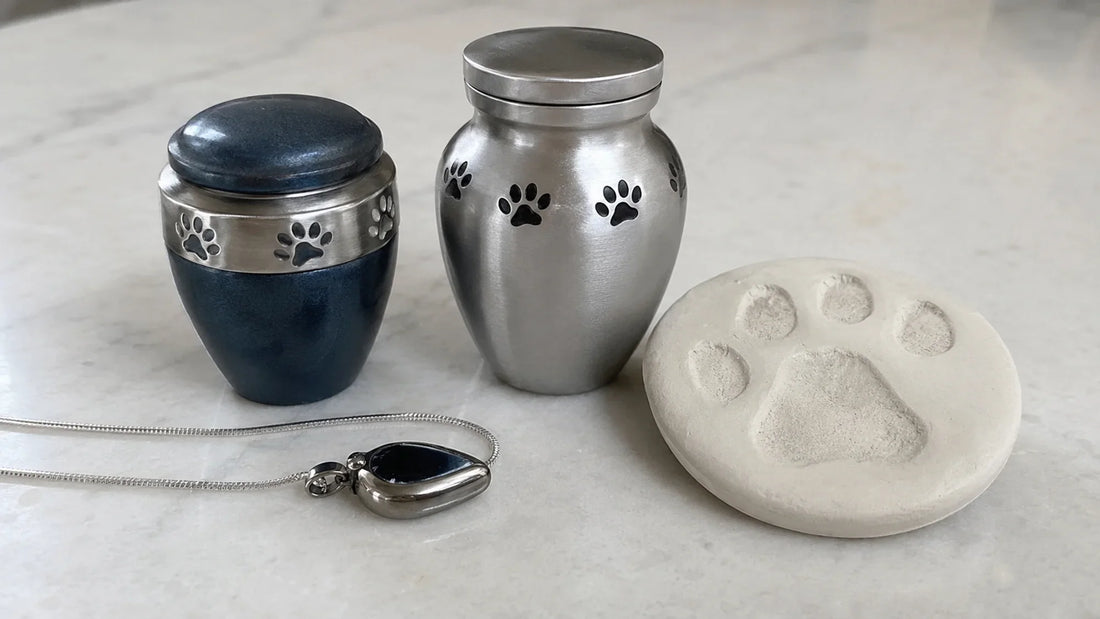
Yes, pet ashes can usually be divided into keepsake urns or memorial jewelry. For many families, this is one of the most meaningful parts of pet memorial planning because it allows more than one person to keep a close, personal reminder of a beloved dog, cat, or other companion animal.
It can also make it easier to balance different wishes within a family. One person may want a full-size urn at home, while others may want a smaller keepsake or a wearable memorial piece.
After a pet is cremated and the cremated remains are returned, those remains can often be placed into more than one container. That might mean a main urn plus a few keepsake urns, or a main urn plus memorial jewelry that holds a very small amount.
In some cases, families divide the remains more evenly. In others, they keep most of the ashes in one place and use smaller keepsakes for symbolic portions.
If you are asking whether pet ashes can be divided into keepsake urns or memorial jewelry, the short answer is yes, in most cases they can. The more useful question is how to do it in a way that is practical, respectful, and right for your family.
That depends on how much of the remains you want each item to hold, how many people will be sharing them, and whether you want the crematory or funeral provider to help with the transfer.
The short answer: yes, pet ashes can usually be divided
Families are often relieved to learn that dividing pet ashes is very common. It is not unusual or improper. In fact, many providers expect this request, especially when a pet belonged to the whole household or when children, adult siblings, or separated family members all want a way to remember the pet personally.
In practical terms, dividing pet ashes means taking the cremated remains returned after cremation and placing some or all of them into smaller memorial items. A keepsake urn is designed to hold a portion of the remains. Memorial jewelry is usually designed to hold a much smaller symbolic amount. Both options are widely used by families who want a memorial that feels personal and close at hand.
The main thing to remember is that this only applies when your pet’s cremated remains are being returned to you. If you chose a cremation option that does not include the return of ashes, there would be nothing available to divide later. But if you are receiving your pet’s remains back, dividing them is usually possible.
What keepsake urns and memorial jewelry actually are
A keepsake urn is a small urn made to hold only part of a pet’s cremated remains rather than all of them. Some families buy one keepsake urn for each household member. Others use just one or two smaller urns in addition to a larger main urn. Keepsake urns come in many styles, from simple and understated to decorative and personalized.
Memorial jewelry is usually even smaller. These pieces may include pendants, lockets, charms, beads, rings, or other wearable memorial items that are designed to hold a tiny amount of cremated remains. Some are sealed permanently once filled. Others have a threaded opening or small chamber. Not every memorial piece is meant to hold ashes, so it is important to confirm whether the jewelry is truly designed for cremated remains or is simply memorial-themed.
The difference between the two is mostly one of capacity and use. Keepsake urns are better when you want a visible home memorial that holds more than a trace amount. Memorial jewelry is better when you want a discreet, wearable reminder that carries only a very small portion.
How pet ashes are usually divided
There are two main ways this is usually handled. The first is for the crematory, funeral home, or pet aftercare provider to divide the remains for you. The second is for the remains to be returned in one container, and the family handles the transfer later.
Many families prefer provider assistance because it feels simpler and less stressful. If you already know you want multiple keepsake urns or memorial jewelry items, it often helps to mention that before the ashes are returned. Some providers can place portions into separate keepsake urns as part of the return process. Others may be willing to help fill certain memorial items as well, although this varies.
Other families choose to receive the ashes first and decide later how they want to divide them. This is common when the family needs more time to choose jewelry or keepsake styles. It is also common when people want to live with the main urn for a while before deciding whether to separate a portion into smaller pieces.
If the transfer is done later at home, families usually work slowly and carefully over a protected surface. Because memorial jewelry openings can be very small, many people find that keepsake urns are easier to fill on their own than jewelry is. Jewelry often requires a small funnel, careful handling, and sometimes adhesive or sealing after filling.
Will there be enough ashes to divide?
This is one of the most common and most understandable concerns. Families worry that if they divide the remains, each person may receive too little, or there may not be enough for both a main urn and jewelry. In most cases, there is enough for at least some kind of sharing, but the amount of flexibility depends on the size of the pet and the number of memorial items involved.
Larger pets usually provide more flexibility simply because there are more cremated remains to work with. Smaller pets may still provide enough for a main urn and one or more memorial pieces, but the portions may need to stay modest. Memorial jewelry helps with this because it generally holds only a tiny amount. Keepsake urns hold more than jewelry, so several keepsake urns may require more planning than several jewelry pieces.
If your family wants a main urn, two keepsake urns, and six jewelry items, it is worth discussing that with the provider or thinking carefully about how symbolic each portion needs to be. In many cases, families discover that they do not need large amounts in each item. A small amount can still feel deeply meaningful.
When families are unsure, a good rule is to start by deciding whether one urn will hold the majority of the remains. Once that is settled, it becomes easier to judge how many smaller keepsakes can be filled comfortably.
Should you keep one main urn and add smaller keepsakes?
For many families, the most practical approach is to keep most of the pet’s ashes in one main urn and use smaller keepsake urns or jewelry for symbolic portions. This gives the family a primary resting place while still allowing multiple people to keep a personal memorial.
There are several reasons this approach is so common. First, it reduces the pressure of trying to divide the remains evenly. Second, it leaves flexibility for future decisions. A family may want to scatter some ashes later, bury the main urn, place it in a memorial garden, or keep it on display at home. Keeping one central urn makes those options easier.
It can also feel emotionally grounding. Some families like knowing there is one principal memorial location while still allowing smaller individual keepsakes. That way, the pet is remembered both collectively and personally.
That said, there is nothing wrong with dividing the ashes more evenly if that feels right to your family. The best choice is the one that matches your relationships, your memorial plans, and your comfort level.
Memorial jewelry is usually for a very small symbolic amount
One of the most important things to understand is that memorial jewelry is not meant to hold all of a pet’s ashes or even a large portion. It is usually intended for a very small symbolic amount. That is part of what makes it practical for families who want to share the remains among several people.
This small capacity can actually be an advantage. A pendant or charm may allow one or more people to carry a part of the pet with them without requiring a large portion of the remains. It also means there is often enough left for a main urn or other keepsakes.
Before buying memorial jewelry, it helps to check a few details. Make sure the piece is truly made to hold cremated remains. Make sure you understand whether it comes empty, whether it includes filling tools, and whether it needs to be sealed after filling. Some jewelry is designed for permanent closure once the ashes are placed inside. Others are easier to reopen. If the piece will be worn regularly, durability and closure style matter.
Some families also choose to use memorial jewelry for only one or two close relatives and keepsake urns for others. That can be a good middle ground when different people want different types of memorials.
Keepsake urns are often easier to use for shared memorials
While memorial jewelry is popular, keepsake urns are often easier to manage when several family members want to share a pet’s ashes. They hold more than jewelry, are generally easier to fill, and can be displayed at home in a dedicated memorial space. They also come in matching sets, which some families appreciate when they want each person’s memorial to feel connected to the others.
Keepsake urns can be a good option for adult children living in different homes, for children who want a small memorial in their room, or for relatives who are not comfortable wearing jewelry but still want something personal. They also work well when the pet was shared across more than one household.
Another advantage is visibility. Memorial jewelry can be very discreet, while a keepsake urn creates a clear place for remembrance. For some people, that dedicated place matters. It gives them somewhere to pause, reflect, or include the pet in a broader memorial area with photos, a collar, or a paw-print keepsake.
If your family is deciding between jewelry and keepsake urns, think not just about style but about daily use. A keepsake urn stays in one place. Jewelry travels with the person. Each serves a slightly different purpose.
It often helps to ask the provider about division before the ashes are returned
Families can divide pet ashes later, but it is often simpler to discuss the plan early. If you know from the start that you want several keepsakes, ask the crematory or provider whether they can help. Some can place the remains into multiple containers before return. Others may return the remains in a standard temporary container and let you handle the transfer yourself.
Asking early also helps with timing. If you need the provider to fill keepsake urns, order matching pieces, or coordinate memorial jewelry, those steps may affect when the ashes are ready. It is better to know that upfront than to assume everything will be immediate.
This is also the right time to ask about any fees for filling multiple containers, whether the provider fills jewelry or urns only, and whether you need to supply the memorial items in advance. Some families buy their own keepsakes online or through a memorial retailer and bring them to the provider. Others purchase directly through the crematory or funeral home. Either way, clear communication helps.
Questions to ask before dividing pet ashes
If you are considering keepsake urns or memorial jewelry, a few simple questions can make the process much easier:
- Can you divide my pet’s ashes into more than one container?
- Do you fill keepsake urns, memorial jewelry, or both?
- Should I choose the keepsakes before the ashes are returned?
- Will there be enough remains for the number of items I want?
- Do you charge an extra fee for dividing or filling multiple memorial items?
- Will the jewelry need to be sealed after filling?
- Can I keep a main urn and still have smaller keepsakes filled?
- If I wait and decide later, can the ashes still be transferred safely at home?
These questions are practical, but they also reduce stress. Families usually feel better once they know exactly what the provider can do and what they may need to handle themselves.
Common concerns families have about dividing pet ashes
Is it disrespectful to divide pet ashes?
No. Many families do this, especially when more than one person had a close bond with the pet. Dividing the remains is simply one way of sharing remembrance.
Do we have to choose between a main urn and memorial jewelry?
Usually not. Many families keep most of the ashes in one main urn and place a very small amount into one or more jewelry pieces.
Can memorial jewelry hold all of my pet’s ashes?
In most cases, no. Memorial jewelry is generally meant for a tiny symbolic portion, not the full amount.
What if we are not ready to divide the ashes yet?
That is fine. Families often keep the remains in a temporary or permanent urn first and make keepsake decisions later.
What if several people want a keepsake but the pet was very small?
It may still be possible, but the portions will likely need to be small. Jewelry can help because it requires much less than a keepsake urn.
A shared memorial can be a very comforting choice
Pet loss affects the whole family, and memorial choices do not have to be all or nothing. Dividing pet ashes into keepsake urns or memorial jewelry can be a thoughtful way to honor the bond each person had with the pet. It allows remembrance to be shared without diminishing the pet’s importance or the family’s love.
For some families, the right choice is one main urn and a few smaller keepsakes. For others, memorial jewelry offers the comfort of keeping a beloved companion close every day. There is no single correct approach. What matters is choosing an option that feels respectful, manageable, and meaningful for the people who are grieving.
If you are uncertain, start simple. Ask your provider what is possible, how much each memorial item can hold, and whether they can help with the transfer. Once you understand the process, the decision usually becomes much easier. In most cases, yes, pet ashes can be divided into keepsake urns or memorial jewelry, and for many families, doing so becomes an important part of remembering a treasured companion.
Share
Continue reading


