
Can You Take Cremated Ashes on a Plane?
Please note: This article is for general educational purposes only and does not constitute legal advice. For guidance specific to your situation, contact TSA or consult a lawyer. To view official TSA information, visit the TSA website.
Yes, you can usually take cremated ashes on a plane. For many families, that is a relief to hear. Whether you are bringing a loved one home, traveling for a memorial service, moving to a new state, or carrying cremated remains to a final resting place, flying with ashes is often allowed and more common than people realize.
At the same time, this is one of those situations where “yes” does not mean “show up with any urn and everything will work out.” Air travel with cremated remains depends on a few practical details.
The container has to be able to pass security screening. The airline may have its own rules about whether cremated remains can be carried on, checked, or accompanied by certain documents. If you are traveling internationally, the destination country may also have requirements of its own.
That sounds complicated, but in practice it is usually manageable when you plan ahead. Most problems happen when families assume any decorative urn can go through security or when they wait until the day of travel to check the airline’s policy. A little preparation can make the process much smoother and far less stressful.
If you are arranging this now, the most helpful mindset is to think of it as a travel-planning issue rather than a legal mystery. The goal is simple: choose the right container, carry the right paperwork, and confirm the rules before you leave for the airport.
The Short Answer
Yes, you can usually take cremated ashes on a plane, especially on domestic flights within the United States. In most cases, the main issues are not whether ashes are allowed at all, but whether the urn or container can be screened properly and whether the airline has any extra requirements.
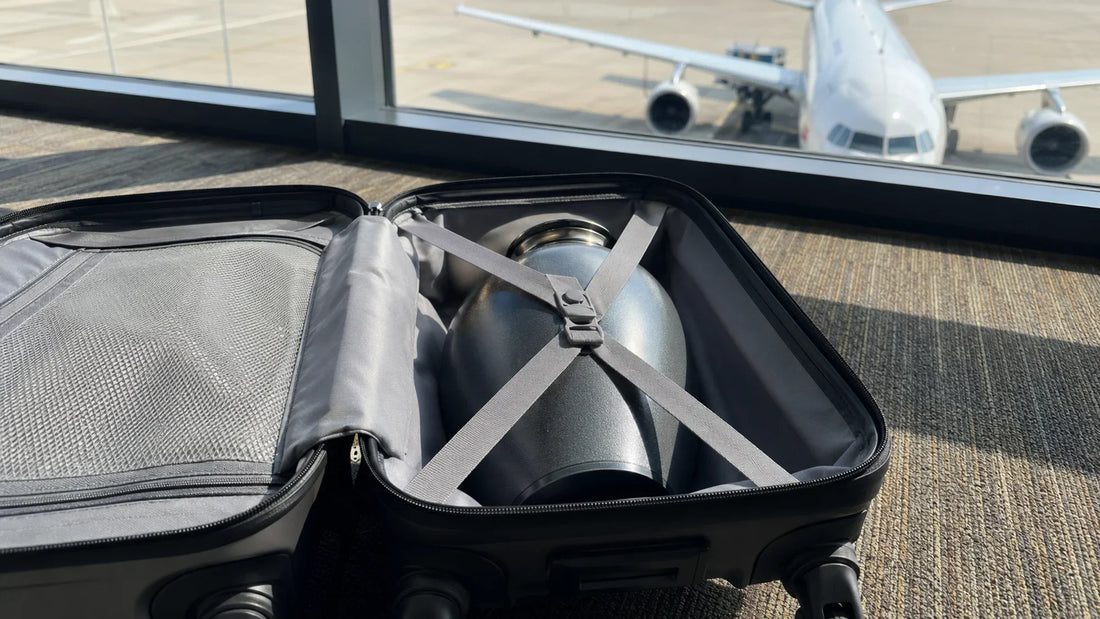
For many travelers, carrying cremated remains in a carry-on bag is the best option. It keeps the remains with you, reduces the chance of loss or delay, and usually gives you more control over the process. However, not every airline handles cremated remains the same way, so it is important to check the specific policy for every carrier on your itinerary.
If you are flying internationally, you should also expect one more layer of planning. The airline’s rules still matter, but so do the entry rules of the country you are traveling to, and sometimes the rules of countries where you are connecting.
What Determines Whether You Can Fly With Cremated Ashes
There are three main checkpoints that determine whether you can take cremated ashes on a plane.
The first is airport security. The container must be able to go through screening. If security cannot clear the container, that is where problems begin. This is why the type of urn matters so much.
The second is the airline. Some airlines are more flexible than others. One airline may allow cremated remains in either carry-on or checked baggage, while another may accept them only as a carry-on item. Some may also want supporting paperwork, such as a death certificate or cremation certificate.
The third is your destination. On a domestic trip, this step is usually straightforward. On an international trip, it can be more involved. Some countries are easy to enter with cremated remains, while others may ask for documentation, translations, permits, or advance notice.
When families run into difficulty, it is usually because they focused on only one of those three points. They checked the airline but not the container. Or they thought TSA approval was the only thing that mattered and did not review the destination-country rules. The smoothest trips happen when all three are considered together.
Carry-On Is Usually the Best Choice
Even when an airline allows checked transportation, many families feel more comfortable carrying cremated remains on board. That preference makes sense. Carry-on travel reduces the chance that the remains will be separated from you due to a missed connection, baggage delay, or lost suitcase.
There is also an emotional side to that decision. For many people, placing a loved one’s ashes in checked baggage simply does not feel right. Having the remains with you in the cabin can provide peace of mind during an already difficult trip.
That does not mean checked travel is never permitted. In some cases it is. But because airline rules differ, carry-on is often the safer default when it is allowed and when the container can pass through screening.
It is also worth remembering that some airlines count cremated remains as a carry-on item. That means you should think about your other baggage before you leave home. Do not assume the urn can ride in the cabin in addition to a full carry-on allowance unless the airline specifically says so.
If your trip includes more than one airline, check every carrier involved. The rules of the first airline do not necessarily apply to the second, especially on connecting or codeshare itineraries.
Why the Urn or Container Matters So Much
The container is often the single most important detail when flying with cremated remains. Many families understandably choose a beautiful permanent urn for home display, burial, or placement in a columbarium. But a permanent urn is not always the best option for air travel.
Security screening is the reason. If the container is made of a material that does not allow clear screening, it may not be permitted through the checkpoint. This can happen with certain dense or opaque decorative urns. Security officers are not supposed to open the container to solve that problem, which means the issue usually cannot be fixed on the spot.
That is why a temporary travel container is often the smartest choice. Many funeral homes and cremation providers can place the cremated remains in a lightweight, travel-friendly container intended specifically for transportation. After the trip, the remains can be transferred to a permanent urn in a quieter and more appropriate setting.
If you already have a permanent urn, do not assume it will be fine just because it is sealed or professionally made. Travel-friendly and display-worthy are not always the same thing. A funeral home can often tell you whether your current container is likely to be suitable for flying.
Planning this part in advance is especially important because it is not the kind of problem you want to discover at the airport. If the urn cannot be screened, the situation can become stressful very quickly.
What Documents Should You Bring?
Documentation is another area where it is better to be overprepared than underprepared. Even when a domestic trip does not require a long list of papers, bringing the right documents can prevent delays and help answer questions quickly.
A good basic travel packet may include:
- a cremation certificate
- a death certificate
- a receipt or letter from the funeral home or cremation provider
- your government-issued identification
- any airline correspondence confirming the policy you were told to follow
Not every airline asks for the same documents, and some domestic trips may move along without anyone asking to see them. Still, it is wise to carry them. Having them accessible can make check-in smoother and reduce uncertainty if a gate or counter agent has questions.
If you are traveling internationally, documentation becomes even more important. In that situation, the safest approach is to confirm exactly what the airline and destination country may ask for and carry those items in your personal bag rather than packing them away.
International Travel Requires More Planning
Traveling internationally with cremated ashes is possible, but it usually takes more preparation than a domestic flight. The reason is simple: you are no longer dealing only with airport screening and airline rules. You may also be dealing with customs, import requirements, translated documents, and local laws about possession, burial, or scattering.
Some countries are relatively straightforward. Others are more particular. One country may accept a cremation certificate and death certificate without issue, while another may expect additional paperwork or an official translation. If you are connecting through another country, it is also worth checking whether transit rules could affect your plans.
This is why international travelers should not rely on general advice alone. Instead, confirm the rules with:
- the airline you are flying
- any connecting airline on the same trip
- the destination country’s consulate or appropriate authority
- the funeral home or cremation provider assisting with the arrangements
Starting early helps. International questions are often easiest to solve a week or two before the trip, not at the airport counter. If there is any chance you will need translations, notarized copies, or additional letters, extra time makes a real difference.
Practical Tips for a Smoother Airport Experience
Once you have the right container and the right paperwork, the rest of the trip is mostly about making the airport process as easy as possible.
These steps can help:
- Call the airline ahead of time. Do not rely on assumptions or old forum posts. Ask how cremated remains should be packed and whether they count as a carry-on item.
- Use a travel-friendly container. This is often the step that prevents the biggest problem.
- Pack the remains where they are easy to remove or identify. You do not want to dig through a crowded bag at the checkpoint.
- Arrive earlier than usual. Even when everything goes smoothly, it helps to have extra time.
- Keep documents in your personal item. A folder in a backpack or tote is better than a checked suitcase.
- Choose direct flights when possible. Fewer connections usually mean fewer chances for confusion.
- Consider requesting assistance in advance if needed. Some travelers prefer added support before they reach the checkpoint.
It can also help emotionally to decide in advance how much you want to say at the airport. Some people prefer to quietly tell an agent what they are carrying. Others wait unless they are asked. Either approach can be fine. The most important thing is that you know the remains are packed properly and that you have the necessary paperwork with you.
What Happens If the Container Cannot Be Screened?
This is the scenario families worry about most, and it is exactly why container choice matters. If the urn cannot pass security screening, the problem is not easily solved at the checkpoint. Security personnel are not supposed to open the container, and that means a traveler may be unable to bring it through.
That does not mean you are out of options, but it does mean the solution usually needs to happen before travel day. In most cases, the best fix is to transfer the remains into a temporary travel container ahead of time. A funeral home or cremation provider can often help with that process so it is done respectfully and correctly.
Trying to figure this out at the airport is rarely ideal. It adds emotional pressure to a moment that is already sensitive, and it may leave you making quick decisions in a public place. A short conversation with the funeral home before the trip can often prevent that entirely.
If Flying Is Not the Best Option
Sometimes taking cremated ashes on a plane is possible but still not the best fit. You may have a permanent urn you do not want to risk damaging. You may be facing a complicated international itinerary. Or you may simply not want the stress of carrying cremated remains through the airport.
In those situations, shipping may be worth considering. In the United States, cremated remains can be mailed under specific postal rules and packaging requirements. That option is not right for everyone, but it can be useful when air travel feels uncertain or impractical.
Another possibility is to travel with only a portion of the cremated remains in a smaller, travel-friendly container while keeping the rest in a permanent urn at home. Families sometimes do this when a memorial, scattering ceremony, or interment will involve only part of the remains.
The right choice depends on the purpose of the trip, your timeline, and how important it is to keep the remains with you personally from start to finish.
Final Thoughts
So, can you take cremated ashes on a plane? In most cases, yes. The key is not simply knowing that it is allowed, but understanding what makes the trip go smoothly: a container that can pass security screening, an airline policy you have confirmed in advance, and the right documents in hand.
For domestic flights, the process is often simpler than people expect. For international flights, it usually takes more research, but it is still very possible when handled carefully. In either case, a funeral home or cremation provider can often help you choose the best container and prepare the paperwork before you travel.
If you are making plans now, the safest approach is also the simplest: check with the airline, use a travel-friendly container, carry your documents, and give yourself extra time. Doing those few things can turn an uncertain experience into a manageable one and help you travel with dignity, care, and much less stress.
Share
Continue reading


