
How Does the Pet Cremation Process Work? A Step-by-Step Guide for Families
Losing a pet is painful, and the decisions that follow often have to be made quickly. For many families, cremation feels like the most practical and comforting choice, but they may still be unsure what the process actually involves. They want to know what happens after their pet is taken into care, how cremation is carried out, whether ashes are returned, and how providers make sure everything is handled respectfully.
If you are wondering how the pet cremation process works, the simplest answer is this: your pet is taken into care, identified, prepared for cremation, cremated according to the type of service you choose, and then the cremated remains are either returned to you or handled according to the option you selected. The exact steps can vary by provider, but the overall process is designed to be respectful, organized, and clear for grieving families.
Understanding each stage can make a difficult decision feel more manageable. Whether your pet dies at home, at a veterinary clinic, or with a hospice provider, pet cremation usually follows a predictable sequence. Once you know what to expect, it becomes easier to choose the right type of service and ask the right questions.
The first step is taking your pet into care
The pet cremation process begins after your pet has died and arrangements are made for aftercare. If the death happens at a veterinary office, emergency clinic, or animal hospital, the staff may help coordinate directly with a pet crematory or aftercare provider. If the death happens at home, you may contact your veterinarian, a pet cremation provider, or a pet aftercare service that offers transportation.
At this stage, families are often given a little time to say goodbye before transfer takes place. Some people want immediate transportation, while others want a few private moments first. A compassionate provider will explain what happens next and let you know whether your pet will be picked up from your home, from the clinic, or brought in by you directly.
Once your pet is in professional care, the provider usually records identifying information and your chosen arrangements. This helps ensure the correct service is performed and that the remains are returned according to your instructions if that is part of the plan.
You will usually choose between private and communal cremation
One of the most important decisions in the process is the type of cremation you want. In general, pet cremation services are usually described as private, individual, or communal, but the exact terminology can vary from one provider to another. That is why it is always worth asking what each term means before making a decision.
A private pet cremation usually means your pet is cremated separately, and the cremated remains returned are intended to be your pet’s remains. This is the option many families choose when they want ashes returned in an urn or temporary container. Some providers use the term individual cremation in the same way, while others use it differently, so asking for a clear explanation is important.
Communal cremation usually means multiple pets are cremated as part of the same cycle, and the cremated remains are not returned to the family. This option is often chosen when families do not want the remains back or prefer a simpler, lower-cost arrangement. Some providers also offer a partitioned or semi-private option, where pets are separated within the chamber but not necessarily cremated fully alone. If ashes being returned is important to you, make sure you understand exactly how the provider handles that option.
This choice shapes the rest of the process, especially what happens after cremation and whether your family will receive the cremated remains back.
Identification and paperwork happen before cremation begins
Before the actual cremation takes place, reputable providers follow identification and authorization procedures. Families are usually asked to confirm the service they want, provide contact information, and choose whether they want the cremated remains returned. You may also be asked to select an urn, a temporary container, keepsake items, or memorial options at this point.
Identification matters because families want confidence that their pet is being handled correctly. Providers often use tags, paperwork, labels, or tracking systems to match the pet with the chosen service. The exact method varies, but the goal is the same: to maintain clear identification from intake through final return.
This is also the stage when you should ask practical questions. For example, how long will the process take? Can you be notified when cremation is complete? Will your pet’s ashes be returned in a standard container, or do you need to choose an urn separately? Clear answers at the start usually make the rest of the experience much easier.
Your pet is prepared for cremation with respectful handling
After identification and authorization are complete, your pet is prepared for cremation. This usually involves respectful placement in a cremation container, tray, or other approved combustible enclosure. The provider may also note whether any approved personal items are to remain with your pet during cremation.
Many families want to include a blanket, letter, flower, collar, or favorite toy. Some providers allow certain small items, while others restrict what can be cremated for safety or equipment reasons. Items containing metal, batteries, dense rubber, or synthetic materials may not be allowed. If you want something meaningful included, ask before assuming it can stay with your pet.
If there are personal belongings you want returned, such as a collar tag or special blanket, let the provider know clearly in advance. These details are easy to manage when they are discussed early, and they can prevent misunderstandings later.
The actual cremation reduces the body to bone fragments
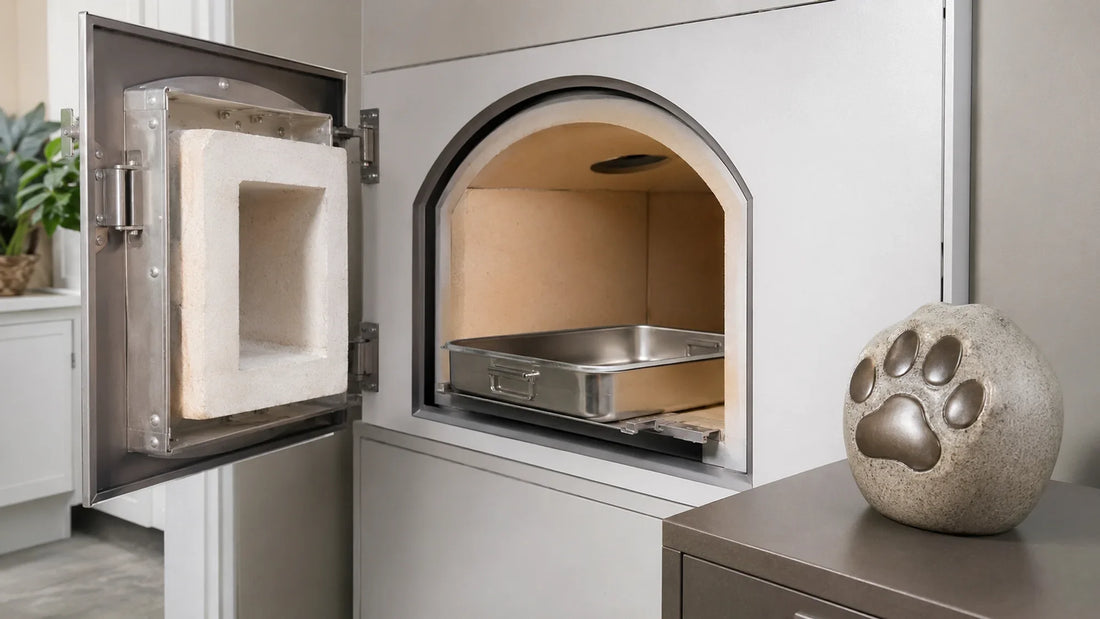
During the cremation itself, your pet is placed into the cremation chamber according to the type of service selected. The chamber uses intense heat over a period of time to reduce the body to bone fragments. The exact temperature, timing, and equipment vary by facility, and the length of the cremation depends in part on the size of the pet. Smaller pets generally take less time than larger dogs.
Although people often refer to the returned remains as ashes, what remains after cremation is not soft fireplace ash. The remaining material is primarily bone fragments that have gone through the cremation process. This is why there are additional steps after the cremation cycle is complete.
For families who choose a private cremation, the provider’s procedures are designed to carry that arrangement through the full process. Some facilities also offer witness cremation or a private goodbye before the cremation begins, though this varies by provider and usually must be arranged in advance.
After cremation, the remains are cooled and processed
Once the cremation cycle is complete, the remaining bone fragments are allowed to cool. After cooling, they are carefully collected and processed into the finer consistency most families expect when they receive cremated remains. This step is sometimes surprising to people who imagine ashes in the way wood burns down after a fire, but cremated remains are prepared after the cremation so they can be placed into an urn or container more neatly.
If any non-combustible material remains, it is separated during this stage as appropriate. The exact details depend on the pet, the facility, and what items, if any, were cremated with the pet. This is one reason providers may limit which personal belongings can be included in the chamber in the first place.
Once processing is complete, the cremated remains are placed into the selected urn, box, pouch, or temporary container if your arrangement includes return of the ashes.
The ashes are returned to you if you chose that option
If you selected a private cremation or another option that includes return of the remains, the provider will contact you when everything is ready. Some families pick up the cremated remains at the veterinary office where care was provided. Others pick them up directly from the crematory or have them delivered, depending on the provider’s policies.
Return times vary. In some cases, ashes may be ready within a few days. In others, it may take longer depending on scheduling, transportation, weekends, holidays, or the memorial items selected. A good provider should give you a general timeline upfront so you know what to expect.
When the remains are returned, they are often placed in a simple temporary container unless you selected a decorative urn or memorial product. Some families later transfer the remains into a different urn, divide them into keepsake urns, scatter them, or bury them in a pet cemetery or another permitted location.
Some families choose memorial options as part of the process
Pet cremation today often includes more than the cremation itself. Many providers offer memorial options that help families remember their pet in a personal way. These may include urns, engraved nameplates, clay or ink paw prints, lockets, fur clippings, keepsake jewelry, framed photos, or small memorial boxes.
These options are not required, but they can be meaningful. For some families, the most important part is simply receiving the ashes back. For others, having a paw print, a carved urn, or a memorial shelf at home helps make the loss feel more tangible and honored. Choosing these items early can also make the return of the remains feel more complete and intentional.
If you are uncertain, it is usually fine to keep things simple at first. You can often decide on a permanent urn or memorial display later, once the more immediate arrangements are complete.
Common questions families have about the pet cremation process
Will I get my pet’s ashes back?
You usually will if you choose a private cremation or another return option. With communal cremation, ashes are typically not returned.
How long does pet cremation take?
The cremation itself may take several hours depending on the size of the pet and the facility’s equipment, but the full process from transfer to return of the ashes often takes several days. Your provider can give you a more exact estimate.
Can I be present?
Some providers offer witness cremation or allow a private farewell before cremation. Others do not. This is something to ask about in advance if it matters to you.
Can my pet be cremated with a blanket or toy?
Sometimes, but not always. Safety and equipment limitations may restrict what can go into the chamber, so always ask first.
What if my pet dies at home?
You can usually contact your veterinarian or a pet cremation provider directly. Many providers can explain transportation options and next steps.
A respectful process designed to give families clarity
Understanding how the pet cremation process works does not remove the pain of losing a pet, but it can make the decisions that follow feel less overwhelming. In most cases, the process includes transfer into care, identification, choosing the type of cremation, respectful preparation, the cremation itself, processing of the remains, and return of the ashes if that is the option you selected.
The most important thing is to work with a provider who explains the process clearly and answers questions without rushing you. Families should feel comfortable asking how their pet will be identified, what type of cremation is being selected, how long the process usually takes, and when the ashes will be returned.
For many people, pet cremation provides both a practical aftercare choice and a meaningful way to honor a beloved companion. When the process is handled with care and clarity, it can offer reassurance at a time when families need both.
Share
Continue reading


