
How Many Cubic Inches Should a Pet Urn Be? A Simple Sizing Guide
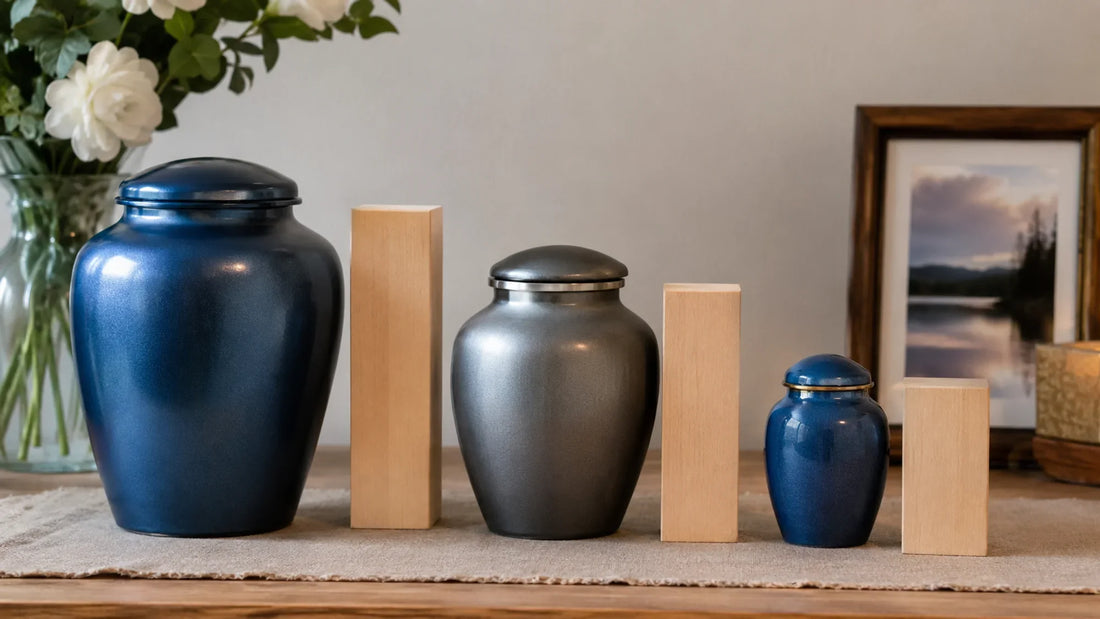
Choosing an urn after the loss of a pet can feel much harder than it sounds. Most families are not really shopping for a container. They are trying to do one last thing well for a companion they loved deeply. That is why one of the most common questions is also one of the simplest: How many cubic inches should a pet urn be?
In most cases, the easiest answer is this: start with about one cubic inch of urn capacity for every pound your pet weighed. If your dog weighed 40 pounds, look for an urn with at least 40 cubic inches of capacity.
If your cat weighed 12 pounds, start around 12 cubic inches. If you are between sizes, it is usually better to go a little larger rather than risk choosing an urn that is too small.
That basic rule answers most pet urn sizing questions, but families still get confused because product listings can be inconsistent. Some urns look large on the outside but hold less than expected inside.
Others are sold as keepsakes and are only meant to hold a portion of the ashes, not all of them. And if you are buying for a dog, cat, rabbit, bird, or another pet, it is natural to wonder whether the same sizing rule still applies.
This guide explains what cubic inches actually mean, how to estimate the right pet urn size, when to size up, and what to watch for before you buy. The goal is to make this decision simpler, calmer, and more confident during a difficult time.
The Short Answer: Start With One Cubic Inch Per Pound
If you want the simplest rule of thumb, use your pet’s body weight in pounds and match it to the urn’s capacity in cubic inches. A 10-pound pet usually needs an urn with at least 10 cubic inches of capacity. A 25-pound pet usually needs at least 25 cubic inches. A 75-pound pet usually needs at least 75 cubic inches.
This is why many pet urn listings describe size by capacity instead of only by height or width. Capacity is the real number that matters. It tells you how much space is inside the urn for the cremated remains.
For most families, this one-to-one rule is enough to narrow the search quickly. You do not need a complicated pet urn size chart in most cases. You just need your pet’s approximate weight and the urn’s listed capacity.
If you are between two capacities, choosing the larger one is usually the safer and easier decision. Slightly more space is rarely a problem. Too little space is the real issue.
What “Cubic Inches” Actually Mean on a Pet Urn
The phrase cubic inches can sound more technical than it really is. In plain terms, it means the amount of interior space inside the urn. It does not mean the outside size you see in a photo.
That distinction matters because two urns can look similar from the outside and still hold different amounts inside. One may have thicker walls. Another may have a decorative base or a shape that narrows inside. A third may simply be designed more for appearance than capacity.
So when you are comparing options, the most important number is not the exterior dimension. It is the listed interior capacity. If the listing says the urn holds 35 cubic inches, that is the number you should compare to your pet’s weight.
If a product page does not clearly state the capacity, it is worth asking before you buy. Families often assume that a taller urn automatically holds more, but that is not always true. Capacity is more important than appearance when you are trying to fit all of your pet’s ashes into one urn.
Why Weight Matters More Than Species or Breed
People often search for answers using terms like dog urn size or cat urn size, which makes sense. But in practice, the better question is not whether the pet was a dog or a cat. It is how much the pet weighed.
A large cat may need more capacity than a very small dog. A rabbit may need more capacity than a bird. A sturdy mixed-breed dog may need a larger urn than another dog of a more slender breed. That is why weight is the more reliable starting point.
This also means that breed labels alone are not enough. Saying “I had a Labrador” or “I had a Maine Coon” may suggest a rough range, but pets of the same breed can vary quite a bit in size. If you want a confident answer, use the actual or approximate weight whenever possible.
If you do not know the exact number, even a close estimate is often enough to choose well. For example, if your pet was somewhere around 28 to 32 pounds, you would usually be better off choosing an urn just above that range rather than trying to match the lower end too tightly.
Simple Pet Urn Size Examples
Sometimes it helps to see the one-cubic-inch rule in everyday terms. The examples below are not rigid rules, but they give families a practical starting point.
- Very small pet, around 3 to 5 pounds: usually start with about 3 to 5 cubic inches.
- Small cat, rabbit, or toy-breed dog, around 8 to 10 pounds: usually start with about 8 to 10 cubic inches.
- Average cat or small dog, around 12 to 15 pounds: usually start with about 12 to 15 cubic inches.
- Medium dog, around 25 pounds: usually start with about 25 cubic inches.
- Larger dog, around 50 pounds: usually start with about 50 cubic inches.
- Very large dog, around 80 to 100 pounds: usually start with about 80 to 100 cubic inches.
If those numbers feel smaller than expected, that is normal. Many people imagine that ashes will require a larger container than they actually do. That is one reason the cubic-inch system exists. It gives families a consistent way to choose without guessing.
At the same time, these examples are just a starting point. If you are deciding between a 25-cubic-inch urn and a 30-cubic-inch urn for a 26-pound dog, the 30-cubic-inch option is often the easier choice. A small cushion can make the transfer simpler and reduce stress.
Why Going Slightly Larger Is Often the Better Choice
Many families worry that choosing a larger urn will somehow be wrong. In most cases, it is not. The bigger problem is choosing an urn that is too small.
Pet cremated remains are often returned in an inner bag or temporary pouch before they are placed into a permanent urn. A little extra room can make the transfer easier and help everything fit more comfortably. If the urn is sized too tightly, the process can feel unexpectedly difficult at a time when families are already emotional.
Choosing a slightly larger urn can also help if your pet’s weight is only approximate. Maybe you remember that your dog was “about fifty pounds,” or your cat was “around twelve or thirteen pounds.” In situations like that, a bit of extra capacity adds peace of mind.
This does not mean families need to oversize dramatically. It simply means that if you are between options, there is usually little downside to rounding up. Most people regret too little space, not slightly more.
What If You Do Not Know Your Pet’s Exact Weight?
Not every family knows their pet’s exact weight at the time they begin shopping for an urn. That is very common, especially if the loss was sudden or if arrangements are moving quickly.
If you are unsure, start with the best estimate you have. A recent veterinary visit, adoption paperwork, medication label, or even a past receipt from the vet may help you narrow it down. If the pet was cremated through a veterinary office or pet cremation provider, they may also be able to tell you the recorded weight or suggest an appropriate urn size.
If you are still uncertain, choose the larger size when deciding between two close options. For example, if you believe your pet weighed somewhere around 18 to 22 pounds, choosing an urn with more than 22 cubic inches is usually safer than trying to make a smaller one work.
Another option is to wait until the cremated remains are returned in the temporary container and ask the provider for guidance before purchasing a permanent urn. Families do not always have to decide immediately, and there is nothing wrong with taking a little more time if that makes the choice easier.
Full-Size Pet Urns and Keepsake Urns Are Not the Same Thing
One reason families end up with the wrong size is that they confuse a full-size urn with a keepsake urn. These are not the same type of product.
A full-size pet urn is meant to hold all of your pet’s cremated remains. This is the kind of urn you want if the entire amount will stay together in one container. In that case, the one-cubic-inch-per-pound guideline is the correct place to start.
A keepsake urn, by contrast, is usually meant to hold only a small portion. Families choose keepsakes when they want to divide the ashes among several relatives, place a small amount into memorial jewelry, or keep only part of the remains in a second location. Keepsakes are not designed to replace a full-size urn unless the remains are intentionally being split.
This matters because a beautiful keepsake urn may look large enough in a product photo, but its listed capacity may only be a few cubic inches. If you are planning to keep all of your pet’s ashes in one place, make sure you are shopping for a full-size urn rather than a keepsake.
What to Do If You Plan to Split the Ashes
Some families do not want all of their pet’s ashes in one container. They may want one main urn plus a small keepsake for another family member, or several keepsakes so each person has a personal memorial.
In that case, the total capacity you need depends on how the remains will be divided. The main urn may be smaller than your pet’s full body weight if part of the ashes will go elsewhere. For example, a family may place most of the ashes into one larger urn and reserve a small amount for jewelry or one or two keepsake urns.
If you already know you want to divide the remains, it can help to plan all the containers at once. That way, you are not buying a full-size urn and then realizing later that you wanted part of the ashes in keepsakes too. Some families ask the cremation provider to portion the remains for them, which can make the process easier.
If you are not sure yet, it is often simplest to keep the remains in a temporary container or a single full-size urn first and make the decision later. There is no rule that says the family must settle everything immediately.
Common Mistakes Families Make When Choosing Pet Urn Size
Most urn sizing problems come from a few very common mistakes, and they are easy to avoid once you know what to look for.
Shopping by appearance only. Families understandably choose what feels beautiful or meaningful. But appearance should come after capacity, not before it.
Looking only at exterior dimensions. Height and width do not tell the whole story. Interior volume is what determines whether the ashes will fit.
Using breed instead of weight. A breed label can help you estimate, but it is not as reliable as the pet’s actual size.
Buying a keepsake urn by mistake. Keepsakes are for a portion of the ashes, not usually all of them.
Choosing too small because the listed weight feels “close enough.” When you are on the edge, it is usually wiser to go slightly larger.
Assuming you have to decide immediately. In many cases, you do not. Families can take a little time, ask questions, and choose carefully instead of rushing.
When Style, Material, and Use Matter Too
Although capacity is the first thing to get right, it is not the only factor worth considering. Once you know how many cubic inches you need, you can think about style, material, and where the urn will be kept.
Some families want a simple wooden pet urn for home display. Others prefer ceramic, metal, stone, or a box-style memorial urn that feels more discreet in the home. Some want an engraved plaque or photo slot. Others want something understated.
If the urn will be buried, placed in a niche, or carried during travel, the material and closure may matter just as much as the capacity. But even then, the cubic-inch capacity still comes first. An urn can be beautiful and meaningful, but if it is too small, it will not serve the family well.
The good news is that once you know the right capacity range, the emotional part of the decision often becomes easier. You can focus on choosing something that feels like your pet rather than worrying whether it will fit at all.
Final Thoughts
So, how many cubic inches should a pet urn be? In most cases, the answer is simple: about one cubic inch for every pound your pet weighed. A 20-pound pet usually needs about 20 cubic inches. A 60-pound pet usually needs about 60 cubic inches. If you are between sizes, choosing slightly larger is usually the safer option.
The most important thing is to look at the urn’s actual capacity, not just its appearance or exterior size. If you are buying a full-size urn, make sure it is designed to hold all of the remains. If you are buying a keepsake, understand that it usually holds only a portion.
And if this decision feels unexpectedly emotional, that is completely normal. Choosing an urn is part practical and part personal. Taking a little extra time to choose the right size is not overthinking it. It is simply one more way of caring for a pet who mattered deeply to you.
If you are ever unsure, ask the cremation provider or vet for guidance and choose the option with a little more room. In most cases, that will lead to the simplest and least stressful choice.
Share
Continue reading


