
What Are Cremation Urns Made Of? A Guide to Common Materials
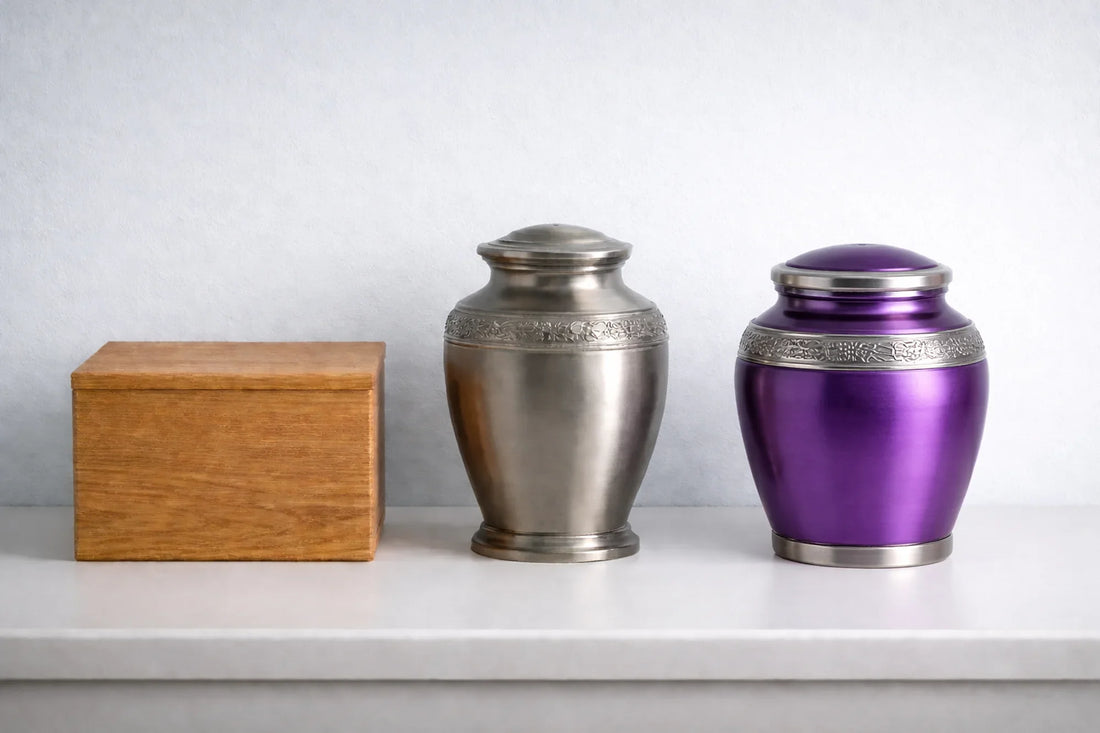
Cremation urns can be made from many different materials, including metal, wood, ceramic, porcelain, glass, stone, and biodegradable materials. Some families also receive cremated remains in a simple temporary container made from cardboard, fiberboard, or plastic before choosing a permanent urn.
There is no single material that is best for everyone. The right choice depends on how the urn will be used, where it will be kept, how durable it needs to be, and what feels most meaningful to the family.
For many people, choosing an urn is one of the more personal parts of cremation planning. The cremation itself may already be complete, but selecting an urn often feels like deciding how the person will be remembered in daily life. Will the urn stay at home? Will it be buried?
Will it go into a niche, be used for scattering, or be divided into smaller keepsake urns for family members? The answers to those questions often matter just as much as the appearance of the urn itself.
Understanding what cremation urns are made of can make that decision easier. Different materials offer different strengths. Some are durable and practical. Some are warm and traditional.
Some are artistic and decorative. Others are designed to break down naturally for burial or water placement. Once families understand how the materials differ, it becomes much easier to choose an urn that fits both practical needs and emotional preferences.
Cremation Urns Are Made From a Wide Range of Materials
There is no universal material for cremation urns. Urns are available in many forms because families use them in many different ways. A family keeping an urn on a mantel may choose something very different from a family planning burial, placement in a columbarium, or a water ceremony. The material affects not only how the urn looks, but also how heavy it is, how durable it feels, how easy it is to personalize, and whether it makes sense for long-term or temporary use.
Some urns are made to be displayed for years inside the home. Others are made to be strong and protective in a cemetery setting. Others are meant for a simpler purpose, such as holding the cremated remains temporarily until the family is ready to make a final decision. There are also urns designed specifically for environmentally conscious burial or scattering, and those are made from materials intended to break down naturally.
Because of that, the better question is often not just what urns are made of, but why one material might make more sense than another. Once that purpose is clear, the material choice usually becomes more straightforward.
Metal Urns Are One of the Most Common Choices
Metal urns are among the most common options families see when shopping for cremation urns. They are often made from materials such as brass, aluminum, stainless steel, or other metals suited for decorative and memorial use. Many people are drawn to metal urns because they are durable, widely available, and often have a classic appearance that feels formal and timeless.
Metal urns can range from very simple designs to highly decorative pieces with engraving, etched patterns, colored finishes, or memorial artwork. Some have a smooth polished appearance, while others have a brushed or matte finish. Because metal is relatively strong, these urns often feel secure and substantial without being as fragile as ceramic or glass.
For home display, metal urns are often a practical choice. They can also be appropriate for some niches or other memorial placements, depending on the setting. Families who want something durable, traditional, and relatively easy to personalize often find metal urns appealing. The main consideration is that metal can sometimes feel more formal or less warm than other materials, so the choice often comes down to style as much as function.
Wood Urns Offer a Warm and Natural Look
Wood urns are a popular choice for families who want something that feels warm, understated, and natural. These urns may be made from hardwoods such as oak, walnut, cherry, or maple, though the exact type of wood can vary. Some are plain and simple, while others are handcrafted and feature carved details, inlaid designs, or custom engraving.
Many families choose wood because it feels less formal than metal and often blends naturally into the home. A wood urn may look more like a keepsake box or piece of furniture than a ceremonial object, which some people find comforting. This can make wood especially appealing when the urn will be kept on a shelf, in a study, or in a private memorial space at home.
Wood urns can work well for long-term home use, but families should still think about the environment where the urn will be kept. Like many natural materials, wood is usually best in a stable indoor setting rather than in prolonged dampness or exposure to harsh conditions. For families who value warmth, craftsmanship, and a more natural appearance, wood is often one of the most meaningful material choices.
Ceramic and Porcelain Urns Are Often Chosen for Display
Ceramic and porcelain urns are often selected because of their beauty. These urns can have smooth glazed finishes, rich colors, painted designs, or elegant shapes that make them feel like decorative art as much as memorial containers. Some are simple and modern. Others are more ornate or traditional. Their appearance makes them especially popular for home display.
For families who want the urn to serve as a visible memorial, ceramic or porcelain can feel very appropriate. These materials can offer a sense of delicacy and intentional design that some people prefer over the look of metal or wood. A carefully chosen ceramic urn may blend naturally into a room while still feeling distinctly meaningful.
The main thing to remember is that ceramic and porcelain are generally more fragile than metal or wood. If the urn will be kept in a busy household, near children or pets, or in a place where it could be bumped or dropped, that fragility matters. Even so, for families prioritizing beauty, color, and display value, ceramic and porcelain remain some of the most attractive options.
Glass Urns Can Be Artistic and Highly Personal
Glass urns are often chosen for their visual uniqueness. Some are clear, some are colored, and some are made in artistic forms that resemble decorative vessels, sculptures, or vases. This makes glass a compelling choice for families who want the urn to feel highly personal or expressive rather than purely functional.
Because glass can be shaped in many ways, these urns often stand out as memorial pieces. They may suit a home where the family wants a more contemporary or artistic tribute. In some cases, the appeal of glass is not only its appearance but also the way light interacts with it, giving the urn a softer and more distinctive presence in the room.
As with ceramic, fragility is the main practical concern. Glass is generally best for a stable location where the urn will not need to be moved often. Families choosing glass often do so because the artistic value feels deeply fitting for the person they are remembering. If appearance and symbolism are especially important, glass may feel more personal than a more conventional material.
Stone and Marble Urns Provide Weight and Permanence
Some cremation urns are made from stone, marble, granite, or similar materials that give the urn a solid and substantial feel. These urns are often chosen when families want something that feels permanent, grounded, and durable. Their weight alone can give them a very different presence compared with lighter materials.
Stone and marble urns can have a formal, elegant appearance, but they can also feel calm and understated depending on the finish and shape. Some families are drawn to them because they feel enduring. Others appreciate that their weight makes them less likely to be tipped over accidentally when kept in a home setting.
At the same time, that same weight can be a drawback if the urn will need to be moved often or transported. Stone urns also tend to feel more substantial visually, which may or may not fit the kind of memorial the family wants. For those who value permanence, stability, and a classic appearance, stone and marble are often very appealing materials.
Biodegradable Urns Are Made for Natural Burial or Water Placement
Biodegradable urns are designed for families who want a more natural or environmentally focused option. These urns may be made from materials such as paper, recycled fiber, plant-based materials, sand, salt-based compounds, or other natural substances intended to break down over time. The exact material depends on how the urn is meant to be used.
Some biodegradable urns are intended for burial in the ground. Others are designed for water placement and may float briefly before breaking down naturally. Families often choose these urns when they want the final act of memorialization to feel simpler, gentler, or more closely tied to the natural environment.
This type of urn is usually not chosen for long-term display in the home, because its purpose is very different from that of a permanent decorative urn. Families considering a biodegradable urn should think carefully about when and how it will be used, and they should confirm any local requirements that may apply to burial or water placement. For the right family, though, biodegradable materials can feel especially meaningful.
Temporary Containers Are Often Used Before a Permanent Urn Is Chosen
Not every urn used after cremation is meant to be permanent. Many families first receive cremated remains in a temporary container provided by the crematory or funeral home. These containers are often made from simple materials such as cardboard, fiberboard, or plastic. They are practical rather than decorative, and they give the family time to decide what to do next.
This is important because families do not always need to choose a permanent urn immediately. Some want time to think about whether the remains will stay at home, be buried, be scattered, or be divided into smaller keepsakes. Others simply do not want to make another major decision in the first days of grief. A temporary container can provide useful flexibility.
In many cases, families later purchase a permanent urn once they have had time to consider material, size, design, and budget. Knowing that a temporary option exists can take some of the pressure out of the decision-making process.
Some Urns Are Made From Composite or Alternative Materials
In addition to the more familiar materials, some cremation urns are made from resin, composite materials, or other manufactured blends designed to create a certain look at a lower cost or lighter weight. These urns may imitate the appearance of stone, ceramic, or carved wood while offering different practical benefits.
For some families, these materials are appealing because they widen the range of styles available. A composite urn may provide the visual effect of a heavier or more expensive material without the same level of weight or fragility. That can be helpful when budget, portability, or ease of handling matters.
As with any urn, the important thing is not simply whether the material is natural or traditional, but whether it is suitable for the intended use. A well-made composite urn may be perfectly appropriate for home display or other memorial purposes if it fits the family’s needs and preferences.
How the Urn Will Be Used Should Guide the Material Choice
One of the best ways to choose between urn materials is to start with how the urn will be used. If the urn will be kept at home and displayed, appearance and fit with the surrounding space may matter most. In that case, metal, wood, ceramic, glass, or stone may all be reasonable choices depending on the family’s style and comfort level.
If the urn will be placed in a columbarium or memorial niche, the family may need to think about size, shape, and any requirements set by the cemetery or memorial location. If the urn will be buried, they may want something durable or, depending on the plan, something biodegradable. If the urn will be used for scattering or a water ceremony, then a purpose-built scattering or biodegradable urn often makes more sense than a decorative home urn.
Some families also divide cremated remains into smaller keepsake urns so more than one person can keep a memorial portion. Those keepsake urns can be made from many of the same materials as full-size urns. The key idea is that material should follow purpose. Once the intended use is clear, the list of suitable options becomes much easier to narrow down.
Other Factors to Consider Besides Material
Although material is important, it is not the only thing families should think about when choosing an urn. Size matters, especially if the urn is intended to hold all of the cremated remains. Shape matters too, particularly if the urn needs to fit into a niche or a specific display space. Weight can also matter if the urn may be moved or transported in the future.
Personalization is another consideration. Some materials are easier to engrave, carve, or customize than others. Families may want to include a name, dates, a short message, a symbol of faith, or artwork that reflects something about the person’s life. Budget also matters, and urn prices can vary widely depending on material, craftsmanship, and design.
Sometimes the best choice is not the most expensive or the most decorative. It is simply the one that feels right when the family considers where the urn will go, how it will be used, and what kind of memorial feels most fitting.
Questions Families Can Ask When Choosing an Urn
For families trying to narrow their options, a few practical questions can help:
- Will the urn stay at home, be buried, be placed in a niche, or be used for scattering?
- Do we want something decorative, simple, natural, or highly durable?
- Will the urn need to be moved or transported later?
- Do we want a permanent urn now, or would a temporary container make more sense for the moment?
- Are there any size or material requirements for the place where the urn will eventually go?
- Do we want engraving or other personalization?
These questions often make the decision feel less abstract. Instead of trying to choose from dozens of materials and designs at once, the family can focus on what the urn actually needs to do and how they want it to feel.
Final Thoughts on What Cremation Urns Are Made Of
So, what are cremation urns made of? They can be made from metal, wood, ceramic, porcelain, glass, stone, biodegradable materials, and simple temporary materials such as cardboard or plastic. Some are designed for display, some for permanence, some for simplicity, and some for natural burial or scattering. There is no single material that is always best.
The right urn material usually depends on a few practical questions: where the urn will be kept, whether it will be moved, how long it is meant to last, and what style feels most meaningful to the family. For some people, a metal urn feels classic and secure. For others, wood feels warmer, ceramic feels more beautiful, stone feels more permanent, or biodegradable material feels more aligned with their values.
Choosing an urn can be an emotional decision, but it does not have to be confusing. Once families understand the common materials and what each one is best suited for, they can choose an urn that feels respectful, practical, and fitting for the person they are honoring.
Share
Continue reading


