
What Is a Keepsake Urn? A Simple Guide for Families
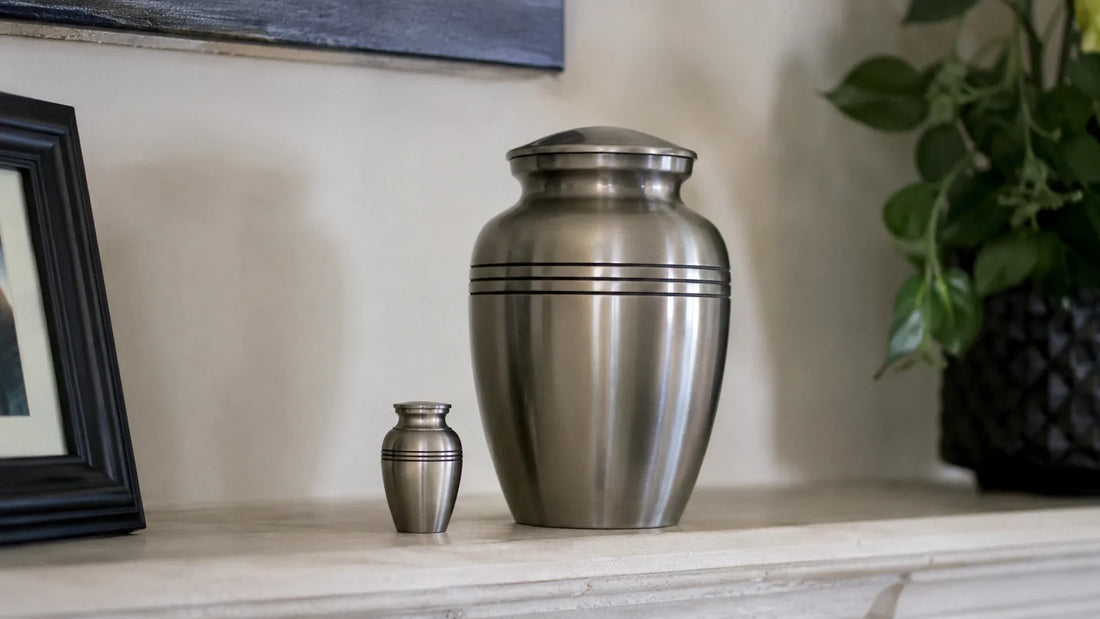
If you are exploring urn options after cremation, you may come across the term keepsake urn. For many families, it is not immediately obvious what that means. A keepsake urn is a small urn designed to hold only a small portion of cremated remains rather than all of them.
In most adult cremation cases, a standard full-size urn is needed to hold the entire amount of cremated remains. A keepsake urn serves a different purpose. It is usually chosen when a family wants to divide a small amount among relatives, keep a symbolic portion at home, or create a personal memorial while the rest of the remains are placed elsewhere.
For some families, that idea feels deeply comforting. For others, it raises practical and emotional questions. Is a keepsake urn the same as a mini urn? How much does it hold? Is it respectful to divide ashes this way? And how do you know whether a keepsake urn is the right choice?
Understanding what a keepsake urn is can make the decision much easier. It also helps families choose a memorial option that feels thoughtful, personal, and appropriate for the way they want to remember their loved one.
A Keepsake Urn Is a Small Urn for a Small Portion of Cremated Remains
A keepsake urn is exactly what the name suggests: a small memorial urn meant to keep a small amount of cremated remains. It is not intended to replace a standard urn in most adult cremation arrangements. Instead, it is meant to hold a symbolic portion.
You may also hear keepsake urns referred to as mini urns, sharing urns, or token urns. The wording can vary, but the idea is the same. These urns are smaller than traditional urns and are made for families who want something more personal and more portable than a full-size container.
In many cases, the keepsake urn exists alongside another arrangement. A family may keep most of the cremated remains in one main urn and place small portions in several keepsake urns for children, siblings, or other close relatives. In other situations, most of the remains may be buried, scattered, or placed in a niche while one keepsake urn is retained as a private memorial.
Why Families Choose Keepsake Urns
Families choose keepsake urns for different reasons, but the common thread is closeness. A keepsake urn allows one person or several people to hold onto a small physical connection to the person who died. For many, that has real emotional value.
One common reason is sharing. If several close relatives want to keep a small portion of the remains, keepsake urns make that possible without requiring everyone to agree on a single location for the full amount. This can be especially meaningful when family members live in different places or when more than one person wants a private memorial at home.
Another reason is flexibility. Some families plan to scatter most of the ashes or bury them in a cemetery but still want to keep a small portion in a keepsake urn. Others use a keepsake urn while deciding on a permanent memorial plan. In that sense, a keepsake urn can be part of a larger remembrance strategy rather than the only container involved.
For some people, a keepsake urn simply feels more personal. A smaller urn can be easier to display in a quiet space at home, on a memorial shelf, or in a bedroom or office where it feels private and comforting.
How a Keepsake Urn Differs From a Full-Size Urn
The most important difference is capacity. A full-size urn is intended to hold the full amount of cremated remains after an adult cremation. A keepsake urn is intentionally much smaller and is meant to hold only a portion.
The purpose is different as well. A full-size urn is often the primary container for the remains. It may be displayed, buried, placed in a columbarium, or kept at home. A keepsake urn is usually secondary. It is chosen when the family wants additional memorial options beyond the main urn.
There is also a difference in how people use them day to day. A full-size urn is often selected as a long-term final container. A keepsake urn is more often chosen for personal remembrance, family sharing, or symbolic preservation. That does not make it less meaningful. It simply reflects a different role.
This is why it helps to think of keepsake urns not as substitutes for full-size urns, but as companion pieces. They are part of the overall memorial plan, not usually the whole plan by themselves.
How Much Does a Keepsake Urn Hold?
A keepsake urn usually holds only a small amount of cremated remains. The exact amount depends on the style and dimensions of the urn, but the point of the design is not to hold everything. It is to hold a symbolic portion.
That distinction matters because some families initially assume a keepsake urn is simply a smaller version of a regular urn that might still work for all the ashes. In most adult cremation cases, it will not. A keepsake urn is generally too small to serve as the sole urn unless the amount of remains is unusually limited or the situation is very specific.
If several family members want one, the funeral home or cremation provider can usually explain how many keepsake urns would make sense for the amount of cremated remains involved. This can prevent misunderstandings and help the family decide whether they want one keepsake urn, several matching urns, or a full-size urn plus other memorial items.
When capacity matters, it is always better to ask directly before purchasing. The appearance of a keepsake urn can be misleading, and small differences in size can affect how much it can actually hold.
What Keepsake Urns Look Like
Keepsake urns come in many styles. Some resemble miniature versions of traditional urns. Others are shaped more like small decorative vessels, hearts, cylinders, boxes, or artistic memorial pieces. Some are very simple and understated, while others are more ornamental.
Many families like the fact that keepsake urns can feel less formal than a large urn. Their smaller size allows for more subtle placement in the home, and the style options can make them feel more personal. A keepsake urn may look like something chosen specifically for the person rather than just a smaller container.
Some keepsake urns are sold individually, while others come as part of a matching set with a full-size urn. This is especially helpful for families who want the main urn and the keepsake urns to share the same design, finish, or material.
The right appearance depends on what the family wants the urn to do. If it will sit in a visible place, the style may matter a great deal. If it is intended for private storage or quiet remembrance, a simpler design may feel more appropriate.
Common Materials Used for Keepsake Urns
Keepsake urns can be made from many of the same materials as larger urns. Common options include metal, wood, ceramic, glass, stone, and resin. Each material creates a different look and feel.
Metal keepsake urns are often chosen for durability and secure closure. Wood can feel warm and natural. Ceramic and glass can offer a softer, more artistic appearance. Stone and heavier materials may feel permanent and substantial. Resin can allow for a wide variety of shapes and finishes.
There is no universally best material. The right choice depends on where the urn will be kept, how often it may be moved, and what style feels fitting for the person being remembered. A keepsake urn intended for display on a shelf may call for one kind of material, while one intended for a protected burial or niche placement may call for another.
If the urn will be handled frequently, closure and durability matter just as much as appearance. Families sometimes focus on style first, but practical details are just as important with something this meaningful.
Keepsake Urns and Memorial Jewelry Are Not the Same Thing
People sometimes confuse keepsake urns with memorial jewelry because both are used to hold a small portion of cremated remains. But they are not the same.
A keepsake urn is still an urn. It is small, but it is meant to be placed somewhere, displayed, or kept as a physical memorial object. Memorial jewelry is even smaller and is designed to be worn or carried. A pendant, ring, or charm typically holds only a very tiny amount.
For some families, the choice comes down to how they want the memorial to function. A keepsake urn may be better for a home memorial space, while jewelry may feel more intimate and portable. Some families choose both. One person may want a keepsake urn for a shelf or bedside table, while another may prefer memorial jewelry they can wear every day.
Neither option is more meaningful than the other. They simply meet different emotional needs.
Is It Respectful to Divide Ashes Into Keepsake Urns?
Yes, many families feel it is. Dividing cremated remains into keepsake urns is a common and thoughtful choice when it reflects the wishes of the family and, if known, the wishes of the person who died.
Still, this is one of the most emotionally sensitive parts of urn planning. Some relatives feel comforted by sharing a small portion. Others may feel uncertain about dividing the remains at all. Neither reaction is wrong. It is often helpful to have the conversation calmly and give everyone time to think about what feels right.
In many cases, using keepsake urns is not about “splitting up” a loved one in a negative sense. It is about allowing multiple people to maintain a personal connection, especially when the family is spread across different households or different parts of the country. A symbolic portion in a keepsake urn can carry a great deal of emotional meaning.
If the family is unsure, there is no need to rush. Cremated remains can often stay in the main container while decisions are made. Some families choose keepsake urns right away, while others come to that decision later.
When Families Use More Than One Keepsake Urn
It is very common for families to buy more than one keepsake urn. This often happens when several close relatives each want a small portion of the cremated remains. Adult children, siblings, parents, or grandchildren may each want a separate memorial.
Multiple keepsake urns can also be useful when the family’s memorial plans are combined. For example, most of the remains might be buried in a cemetery, placed in a columbarium, or scattered in a meaningful location, while one or more keepsake urns are retained by family members. This gives the family both a final resting place and a personal memorial.
Some families choose matching keepsake urns so that each person receives something similar. Others prefer different styles for different people. One person may want a classic metal urn, while another may want a heart-shaped keepsake or a wooden design that matches the home decor. The right approach is the one that feels most meaningful to the people involved.
Are Keepsake Urns Meant for Home Display, Burial, or Travel?
Most keepsake urns are chosen for home display or private keeping, but the answer depends on the urn’s material, closure, and intended use. Some are clearly decorative and best suited for indoor placement. Others may be more durable and appropriate for protected long-term placement.
If you are considering using a keepsake urn for burial, niche placement, or travel, it is important to ask whether that specific urn is suitable for the purpose. Not every keepsake urn is designed for every kind of memorial use. A decorative urn that works well on a shelf may not be the best choice for burial conditions or frequent movement.
Closure matters here. Some keepsake urns have threaded lids, secure caps, or other closures that make them feel more protected. Others are more ornamental. If the urn will be moved, transported, or stored for long periods, those details are worth paying attention to before you buy.
In other words, a keepsake urn is defined by its size and purpose, not by a single universal use. The right one depends on how the family plans to keep it.
How to Choose the Right Keepsake Urn
Choosing a keepsake urn is partly emotional and partly practical. The emotional side is obvious: families want something that feels fitting, beautiful, and personal. The practical side matters just as much because the urn needs to work for the way it will actually be used.
It can help to think through a few questions before buying:
- Are you keeping only a symbolic amount, or do you need a larger keepsake size?
- Will the urn stay in one place, or will it be handled and moved?
- Do you want it to match a full-size urn or other keepsake urns in the family?
- Is the style meant to be private and simple or more visible and decorative?
- Do you need one keepsake urn or several?
- Is a secure closure important for the way you plan to keep it?
These questions usually narrow the options quickly. Families often feel overwhelmed by appearance alone, but purpose tends to make the right choice clearer.
Questions to Ask the Funeral Home or Cremation Provider
If you are considering a keepsake urn, a few direct questions can make the process easier:
- How much of the cremated remains will this keepsake urn hold?
- Can you divide the remains into several keepsake urns for us?
- Does this keepsake urn close securely?
- Is this urn intended mainly for display, or is it suitable for other uses too?
- Do you offer matching keepsake urns with the full-size urn?
- If several family members want one, how many should we order?
These questions are simple, but they can prevent disappointment later. They also help families compare options without guessing based on appearance alone.
Final Thoughts
A keepsake urn is a small urn designed to hold a small portion of cremated remains. It is often used when families want to share ashes among loved ones, keep a symbolic amount at home, or add a more personal memorial option alongside a full-size urn, burial, or scattering plan.
For many people, a keepsake urn offers comfort because it creates a quiet, personal connection. It can allow several family members to remember the same person in their own homes and in their own way. That makes it a meaningful option, even though it is much smaller than a standard urn.
The best keepsake urn is not simply the one that looks nicest. It is the one that fits the family’s emotional needs, practical plans, and sense of what feels right. Once you understand what a keepsake urn is and how it is meant to be used, the choice usually becomes much easier.
Share
Continue reading


