
What Size Urn Do I Need for My Cat’s Ashes? A Simple Guide for Families
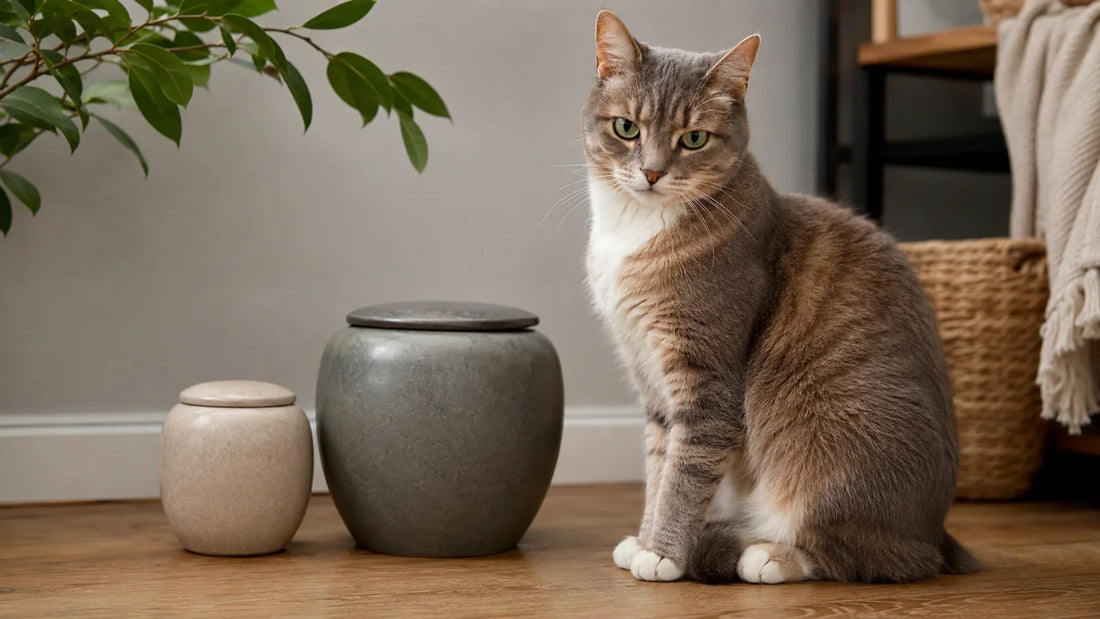
What size urn do I need for my cat’s ashes? In most cases, the simplest way to estimate urn size is to allow about one cubic inch of space for each pound your cat weighed before cremation.
That means a cat who weighed 10 pounds will usually need an urn with at least 10 cubic inches of capacity, while a 15-pound cat will usually need at least 15 cubic inches. If you are unsure, sizing up slightly is usually the safer choice.
For many families, this question comes up at a difficult time. You may be choosing an urn while also processing the loss of a pet who was part of your home and routine for years.
Because of that, it helps to know that urn sizing is usually more straightforward than it first appears. You do not have to guess based on the outside shape of the urn or buy the largest option just to be safe.
The main thing to remember is that urns are sized by capacity, not by how large they look on the outside. Once you understand how cubic inches work and how cremated remains are measured, choosing the right urn for your cat becomes much easier.
The Short Answer
A practical rule of thumb is this: choose an urn with about one cubic inch of capacity for every pound your cat weighed. This is the standard sizing method many funeral providers and urn makers use because it gives families a simple, reliable starting point.
For example, if your cat weighed:
- 8 pounds, start with at least an 8 cubic inch urn
- 10 pounds, start with at least a 10 cubic inch urn
- 12 pounds, start with at least a 12 cubic inch urn
- 15 pounds, start with at least a 15 cubic inch urn
- 20 pounds, start with at least a 20 cubic inch urn
That said, many families choose an urn that is slightly larger than the minimum. A little extra room can make placement easier, especially if the cremated remains are in an inner bag or if the urn opening is narrow.
Most adult cats will fit comfortably in an urn somewhere in the range of about 10 to 20 cubic inches, though very small cats may need less and larger breeds may need more.
Urn Size Is Measured in Cubic Inches, Not Just Height and Width
One of the biggest points of confusion is that urn size is usually listed in cubic inches. This refers to the inside capacity of the urn, not just the outer dimensions. An urn may look large on the outside but hold less than expected because of thick walls, decorative shaping, or a narrow opening. Another urn may look compact but hold plenty because the interior space is designed more efficiently.
That is why the most important number to look for is the stated capacity. If you are shopping online, make sure the listing clearly says how many cubic inches the urn holds. If the seller only provides height, width, and depth, that still does not necessarily tell you the usable interior volume. When there is any uncertainty, ask for the urn’s actual capacity rather than relying on appearance alone.
This matters especially with decorative pet urns. Cat urns often come in photo boxes, figurine styles, carved containers, and keepsake designs. These can be beautiful choices, but the outside design can make them harder to judge by sight. Capacity is the number that matters.
A Simple Cat Urn Size Chart
If you want a quick reference point, this chart gives a practical starting guide for common cat weights. The minimum size reflects the basic one-pound-to-one-cubic-inch rule. The suggested purchase size gives a little extra room, which many families find helpful.
| Cat’s Weight | Minimum Urn Capacity | Practical Size to Buy |
|---|---|---|
| Up to 5 lbs | 5 cubic inches | 6 to 8 cubic inches |
| 6 to 8 lbs | 6 to 8 cubic inches | 8 to 10 cubic inches |
| 9 to 12 lbs | 9 to 12 cubic inches | 12 to 15 cubic inches |
| 13 to 16 lbs | 13 to 16 cubic inches | 15 to 18 cubic inches |
| 17 to 20 lbs | 17 to 20 cubic inches | 20 to 25 cubic inches |
| Over 20 lbs | Use body weight as the minimum | Usually one size up from the minimum |
This chart is a guide, not a strict rule. If the cremation provider has already returned the remains in a temporary container, they may also be able to tell you the approximate capacity you need for a permanent urn. That can be especially useful if your cat was unusually small, unusually large, or if you simply want to be more exact.
Why Going Slightly Larger Is Usually the Safer Choice
Families often worry about buying an urn that is too large, but in practice, buying one that is slightly larger is usually much less of a problem than buying one that is too small. A little extra space does not harm anything. An urn that is too small, however, can create stress at exactly the moment when you are trying to finish arrangements respectfully and without more complications.
There are several reasons a slightly larger urn often works better. First, cremated remains are commonly placed inside an inner plastic or temporary bag before being transferred into the urn. That bag can take up a little extra room. Second, some urns have narrow openings even when their overall capacity is technically enough. Third, decorative urn shapes do not always use their internal space as efficiently as a plain cylinder or box.
Because of that, many families use the one-cubic-inch-per-pound rule as the minimum and then choose the next size up. For example, if your cat weighed 11 pounds, a 12- to 15-cubic-inch urn may feel more practical than an urn listed at exactly 11 cubic inches. It is a small adjustment, but it can make the final fit much easier.
What If My Cat Was Very Small, Very Large, or a Bigger Breed Like a Maine Coon?
The same general rule still applies, but very small and very large cats are the situations where people are most likely to second-guess themselves. Kittens and very small adult cats may need only a few cubic inches of capacity. Large cats, especially heavier breeds such as Maine Coons, can need considerably more room than many families expect.
If your cat was under about 5 pounds, the safest choice is usually a small pet urn with a little extra room beyond the exact weight estimate. If your cat was over 15 or 20 pounds, it becomes more important to check the stated capacity carefully rather than assuming a decorative cat urn will be large enough. Some cat-themed urns are made for appearance first and may be smaller than standard full-size pet urns.
When there is any uncertainty, ask the cremation provider or veterinarian whether they can tell you the approximate volume of the cremated remains or the size of the temporary container being used. That can remove guesswork. In many cases, they answer this question often and can tell you very quickly whether the urn you are considering sounds appropriate.
What If I Only Want Part of My Cat’s Ashes in the Urn?
Not every family plans to place all of the cremated remains in one urn. Some choose a full-size urn for most of the remains and then use one or more keepsake urns for smaller portions. Others place part of the remains in memorial jewelry, a glass keepsake, or a second urn for another family member. In those situations, you do not need to buy a full-size urn unless you want one.
This is important because many families see small keepsake urns online and wonder whether they are large enough for an entire cat. In most cases, they are not. Keepsake urns are designed to hold only a portion of the cremated remains, not the full amount. If you want all of your cat’s ashes in one place, you need a full-capacity urn that matches your cat’s weight. If you only want a portion, then a smaller keepsake option may be appropriate.
Before buying, decide whether your plan is to keep everything together or divide the remains among different memorial items. That one decision changes the size you need more than anything else.
Choosing the Right Type of Urn for Your Final Plan
Once you know the size range, the next question is what kind of urn best fits your plan. A home-display urn, a burial urn, and a keepsake urn may all look very different even if they hold a similar amount.
If you plan to keep the urn at home, you may want a style that feels personal and suitable for daily display. Many families choose wood, ceramic, metal, or engraved pet urns for this reason. The focus is often on appearance, durability, and the sense that the urn fits naturally into the home.
If you plan to bury the urn, the material matters. Some families choose biodegradable urns for burial, while others choose a more durable burial container depending on the cemetery or memorial plan. If burial is the goal, it is worth confirming whether there are any requirements about material or outer container before buying.
If you plan to place the urn in a niche or memorial space, dimensions become just as important as capacity. A niche may have a maximum height, width, and depth, so an urn can be large enough in cubic inches but still not fit the space correctly. In that case, ask for both capacity and outside measurements before purchasing.
If you want a keepsake or memorial jewelry option, remember that these are meant for partial remains. They can be meaningful, but they are not usually intended to replace a full-size urn unless you are intentionally dividing the remains.
Questions to Ask Before You Buy
If you want to avoid mistakes, a few simple questions can help you choose with much more confidence:
- What did my cat weigh before cremation?
- Is the urn capacity listed in cubic inches?
- Is that number the usable interior capacity?
- Does the urn have a narrow opening that could make transfer harder?
- Will all of the cremated remains go into one urn, or only part of them?
- Is the urn meant for home display, burial, a columbarium, or keepsake use?
- If I already have a temporary container, what size is it?
These questions are simple, but they prevent most sizing problems. They also help you focus on what actually matters instead of getting distracted by appearance alone. A beautiful urn is important to many families, but it also has to hold the remains safely and suit the final plan.
Bottom Line
What size urn do you need for your cat’s ashes? A good starting point is about one cubic inch of urn capacity for each pound your cat weighed before cremation. For most cats, that means a full-size urn somewhere in the range of about 10 to 20 cubic inches, with larger cats needing more and very small cats needing less.
If you are uncertain, choosing an urn that is slightly larger than the minimum is usually the safest approach. It gives you a little more flexibility, especially if the remains are in an inner bag or the urn has a narrow opening. And if you are planning to keep only part of the remains in the urn, then a smaller keepsake option may be appropriate instead.
In the end, the right urn size is the one that fits both the practical need and the kind of memorial you want for your cat. Once you know your cat’s weight, understand cubic-inch capacity, and think through your final plan, the choice becomes much more manageable.
Share
Continue reading


